Introduction
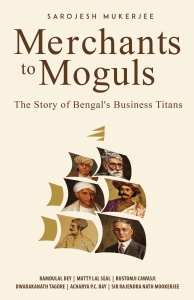
From the bustling riverbanks of eighteenth‑century Calcutta to the steel foundries of Bengal in the twentieth century, our industrialists shaped not only the economic destiny of a region but also the imagination of a nation in transition. This book traces the arc of their enterprise—men who, in the face of colonial constraints and shifting global markets, carved out spaces of innovation, resilience, and ambition.
They were merchants who became magnates, visionaries who transformed raw resources into trades and industries, and pioneers who balanced tradition with modernity. Their stories reveal the interplay of commerce and culture, of profit and philanthropy, of private aspiration and public responsibility.
In their ventures we glimpse the larger currents of Bengal’s history: the rise of Calcutta as a mercantile hub, the challenges of industrial modernisation, and the enduring spirit of entrepreneurship that bridged centuries. This volume is not merely a chronicle of factories and fortunes; it is a portrait of human endeavour, of the restless energy that propelled Bengal from artisanal workshops to industrial prominence. To read of these industrialists is to encounter the pulse of a society negotiating change, and to understand how enterprise became a language of identity, power, and possibilities.
Pre-industrial Bengal
The structure of the Bengal economy up until the seventeenth century was dominated by agriculture with crops such as cotton and rice being exported. There was a high-quality textile industry, too, that produced hand woven muslin, silk and cotton fabrics, which were much sought-after and exported as well. The other traditional component of the Bengal economy was shipbuilding, albeit of a primitive nature, estimated to be nearly ten times that of nineteen colonies of North America during 1769-1771.[1]
However, by the late eighteenth century, most of these lay in ruins. Bengal, which had been a powerhouse of international trade, saw its economy drained by its imperialist overlord, the British, who engineered the downfall in order to enrich themselves. Penal tariffs, for example, were imposed on Bengali textiles as a result of which cheap British machine-made textiles flooded the market, undercutting local handwoven fabrics and driving weavers into poverty. It was widely rumoured that British officials had cut off the thumbs of skilled Bengali weavers to prevent them from producing their exquisite muslin.
Even agriculture, the staple of the Bengal economy, was adversely affected. The Permanent Settlement of 1793, introduced by Lord Cornwallis, forced Bengali landowners, zamindars, to pay very high, and fixed, land revenues to the British which led to the zamindars forcibly demanding high rentals from peasants, regardless of their harvest success. This led to widespread indebtedness and famine.
Also, while the Moghuls treated the zamindars as agents or tax collectors, the British made them landowners, creating a landed aristocracy with the attendant Bengali aspiration to belong to that class, thus deflecting attention and investment away from commerce.[2] Thus, owning land became more prestigious than building a business, a mindset that would take generations to reverse and that would handicap Bengali entrepreneurship for over a century.
From an economic standpoint, this shift represented a move away from commerce-driven wealth towards a system of rent extraction. This transition solidified a pattern where capital was diverted from active production into the security of real estate, ultimately preventing the development of a local industrial class.
The British Drain of Wealth—the systematic extraction of resources and profits—crippled local businesses. The exploitation of Bengal’s raw materials for British industries left locals without sustainable means to develop their own economy.
****
However, opportunities for advancement for individuals in business arose for Bengalis who were closely associated with the British, particularly officers of the East India Company who traded in their own—and not official—capacities, for profit. Thus, we find Krishna Kanta Nandi, or Kanta Babu, for example, a grocer who had saved Warren Hastings from death at Cossim Bazar, appointed as banian—commercial agent—to Governor-General Hastings, and then making a fortune for himself by trading in silk and thus founding the Cossim Bazar Raj family.[3] Some other Bengali trading families of the time such as the Bysacks, the Seals, the Lahas and the Mulliks prospered by earning the trust of agents and officials of the Company by trading with them and by lending or guaranteeing loans to them.
The eighteenth and nineteenth centuries therefore marked the definitive era for the rise of the first Bengali tycoons. Centred in Calcutta, the burgeoning capital of British India, these entrepreneurs amassed their fortunes by navigating the commercial landscape shaped by the expansion of British colonial power.
We begin our account by looking at two of the most enterprising men of that age who rose to great heights in business—Ramdulal Dey and Mutty Lal Seal.
About the Author

Sarojesh Mukerjee
Joined: 20 Jun, 2025 | Location: Kolkata, India
My day job is teaching Economics and International History at The Cambridge School, which I founded in 2003. I am interested in the colonial history of my city, Calcutta, but also dip into other genres such as comedy and crime. I live in Cal...


Comments