Introduction
The Struggle Before Snacks
If Indian parenting had a history textbook, it would be one where every chapter contradicts the last, yet somehow, the story still makes sense. Like everything else in India, parenting has been a constantly evolving paradox: deeply rooted in tradition yet effortlessly soaking up every new trend on social media and adapting to external influences. We have journeyed from the rigid, rule-bound gospel of ancient texts to the chaotic buffet of Google-certified, Instagram-approved parenting advice that defines today’s generation.
Let’s be honest, the traditional “Indian parenting model” we often romanticise was hardly universal. The Gurukul system, for example, wasn’t a democratic daycare for all. It was an exclusive Amex Lounge reserved for upper caste, mostly brahmin boys who had the luxury of learning the intricacies of chanting Vedas under banyan trees. The parenting model, from what I could gather, as per our traditions, was simple: have children, love them, train them, and then pack them off to the forest. The Gurukul system was India’s first boarding school setup, except with fewer fees and more fire rituals. Young children (mostly brahmin boys, because patriarchy is always RSVP’d first) were sent away to live under the watchful eyes of a sage, returning home only after mastering the Vedas, martial arts, or at the very least, how to meditate without snoring. Parenting was a philosophical pursuit, best done from a distance. Children were seen as torchbearers of knowledge and dharma—a slightly overcooked idea for a ten-year-old who probably just wanted to play ball. But this was India, where pressure has always been the national sport. Imagine what pressure Arjuna might have been in to listen to Krishna’s logic and also succumb to it. Kunti must have had such an emotionally demanding job raising her children as a disciplinarian.
Of course, this wasn’t the parenting template for everyone. As we slowly urbanised ourselves over the feudal ages and onwards, parenting became more of a family group activity. Joint families were mini governments where power was evenly distributed between stern uncles, rationing grandmothers and opinionated neighbours who dropped unsolicited career advice between sips of chai. You clearly weren’t raised by parents. You were raised by a committee or an exceptional formidable matriarch. And every decision- from exam scores to hair length and your fashion sense—had to pass a 12-member panel. There was zero privacy but full emotional investment, which meant you were never alone in your embarrassment. Or your report card. But there was this undeniable support system as well.
Then came urbanisation, post-independence British government employment, the dream of a salaried, stable future with its confusing new parenting metric: respectability. The traditional parenting hangover introduced the great cultural identity crisis of Indian parenting. Now, you had to be fluent in Shakespeare, Tagore and chant shlokas at dawn. The changing times didn’t just bring in red coats and confusing accents. It also rolled out a schooling system that created an entire class of children trained for ‘respectable’ careers in government system. This also introduced the great cultural identity crisis of Indian parenting and this is also why a whole breed of spanked kids who have done decently well in life continue to exist. They grew up learning Sanskrit shlokas at home, yet they were a part of missionary schools. It was a cultural identity shift. Disciplining took on harsher tones. I think this was where it all started where ‘first rank or nothing’ began making its way into dinner-table discussions.
By now, the extended family was starting to thin out like runny cake batters, and we began entering the era of the nuclear family. I am a product of this shift. The rise of the middle class and with it came the Great Indian Obsession with stability. The village that once raised the child had packed up and moved to the city! The 90s kid (especially those born before liberalisation) knows this era well¾it was a time when homework was more sacred than religion, TV time was rationed like imported cheese, and being ‘good at studies’ was the only personality trait you were allowed to have. This was also the golden age of emotional suppression. Parents were loving but in their own peculiar way. Hugs were rare. Therapy was unheard of. And the closest thing to verbal affection was “Have you eaten?” The joint family system was slowly disintegrating, but aunties in the neighbourhood knew your grades, and family friends evaluated your worth based on your IIT prospects.
With all these changes and transitions in place, we slowly enter the Age of the Great Indian Parenting Paradox™. Everyone is hyper-aware, hyperventilating, conflicted, and utterly exhausted. Psychology tips and trends are downloadable and on everybody’s fingertips. We definitely have more information about child psychology than any previous generation, but they are also perpetually anxious about getting it right. We are all career counsellors, psychologists, psychiatrists, doctors. At times, watching us parents navigate tradition and modernity feels less like parenting and more like a paranormal activity. We all want children to be obedient yet independent, disciplined yet creative, high-achievers yet stress-free¾an impossible wish list that has created a generation of parents who are perennially second-guessing themselves. And so, Indian parenting has come full circle. From sending children away to Gurukuls to now obsessing over every aspect of their development, the philosophy has changed, but the underlying anxiety remains the same. We didn’t just move from ancient to modern. We moved from agricultural to aspirational, from extended family support to emotional outsourcing, from cousins as co-parents to Google Docs as chore charts. The truth is, no era has had perfect parenting, and every generation looks back at the previous one with equal parts nostalgia and horror. Perhaps the answer lies not in picking one method over the other, but in recognising that parenting is less of a science and more of an art¾one that is best approached with patience, understanding, and, most importantly, a sense of humour. Because, at the end of the day, whether you were raised in a Vedic ashram, a British convent, or a hyper-modern experiential-based school, one thing remains constant: your parents definitely thought they were doing what was best for you.
I spent an unsettling amount of time observing two vastly different parenting philosophies- and trying to survive them. On one side, we had non-invasive cloud-like parents, floating gently in the background, allowing children to find their own pizazz. These parents are chill, empathetic and fluent in the language of emotional validation. Their kids grow up surrounded by freedom and self-expression, which sounds amazing until the child is found at 2 a.m. debating whether they identify as Travis Scott or as a cactus. On the other end, I observed the helicopter parents¾meticulous project managers of their children’s lives, orchestrating each moment with the precision of a stage director. No decision, no milestone is left to chance. From curated extracurriculars to the carefully measured contents of the lunchbox, every aspect of their child’s life is optimised for maximum future success. Helicopter parents hover, ever-watchful, ensuring that their children do not falter, do not make mistakes, and certainly do not veer off the path deemed worthy by societal expectations. They curate their child’s every waking moment- from playdates to potty training- with the energy of a drug dealer on morning espressos. There is no space for spontaneity, mistakes or gluten.
All parenting models stem from a desire to do what is best for children. And frankly, I do not see any harm. And yet, both contain loopholes so wide, you could drive a school bus through them. With its utopian belief in self-regulation, the first often leaves children floundering in a sea of decisions with instructions repackaged as ‘guidance’ and coated with selectively curated words that will automatically land the instruction into acceptability. The second set of helicopter parents, suffocating in its need for control, can produce burnt-out perfectionists or adults so dependent on external validation that they are incapable of making independent choices.
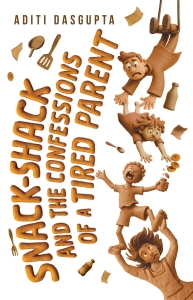
This book is my attempt to look at these parenting extremes through a lens that is often overlooked: humour. Because if there is anything more anxiety-inducing than trying to be the perfect parent (in both situations), it is attempting to recover from being a perfectly parented child. The truth is, there are no absolutes¾no perfectly balanced model of parenting that guarantees emotionally stable, high-functioning adults. I understood that parenting should not be a rigid manual but an evolving process, where mistakes are inevitable and necessary for growth, both as parents and as children.
About the Author

Aditi Dasgupta
Joined: 02 Feb, 2026 | Location: mumbai, india
Aditi is an Institute for World Literatures, Harvard, alumnus and completed a residential program at Yale University to understand the nuances of modern storytelling. In addition, she has authored Language Has No Homeland, which captures the fluidity...

Comments