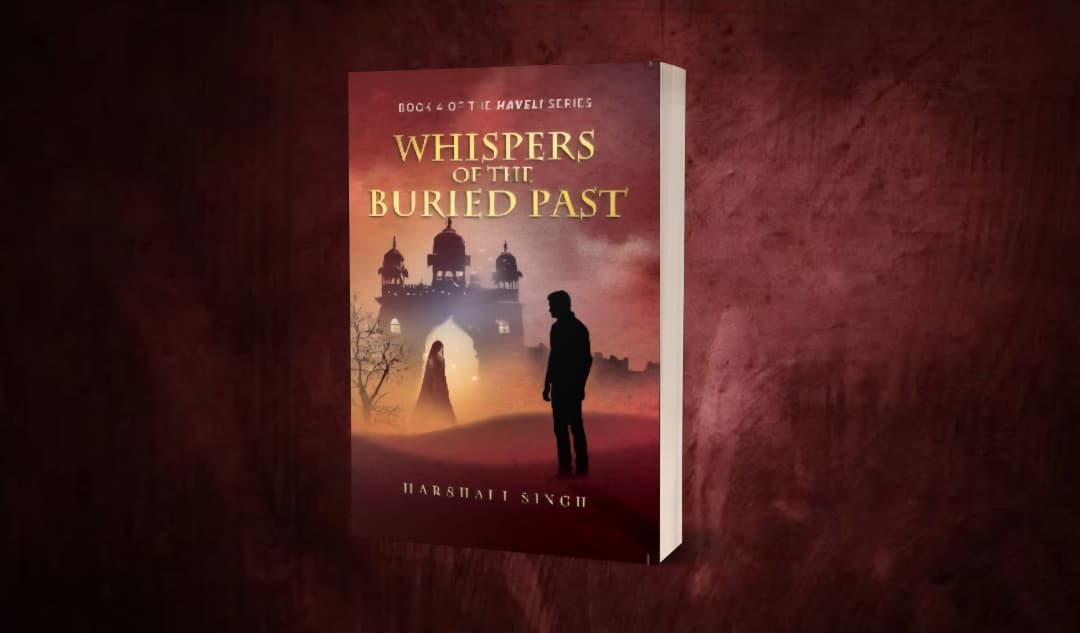
Whispers of the Buried Past
Why the Fourth Book of the Haveli Series Demands to Be Read
There are houses we live in; and then there are houses that live inside us.
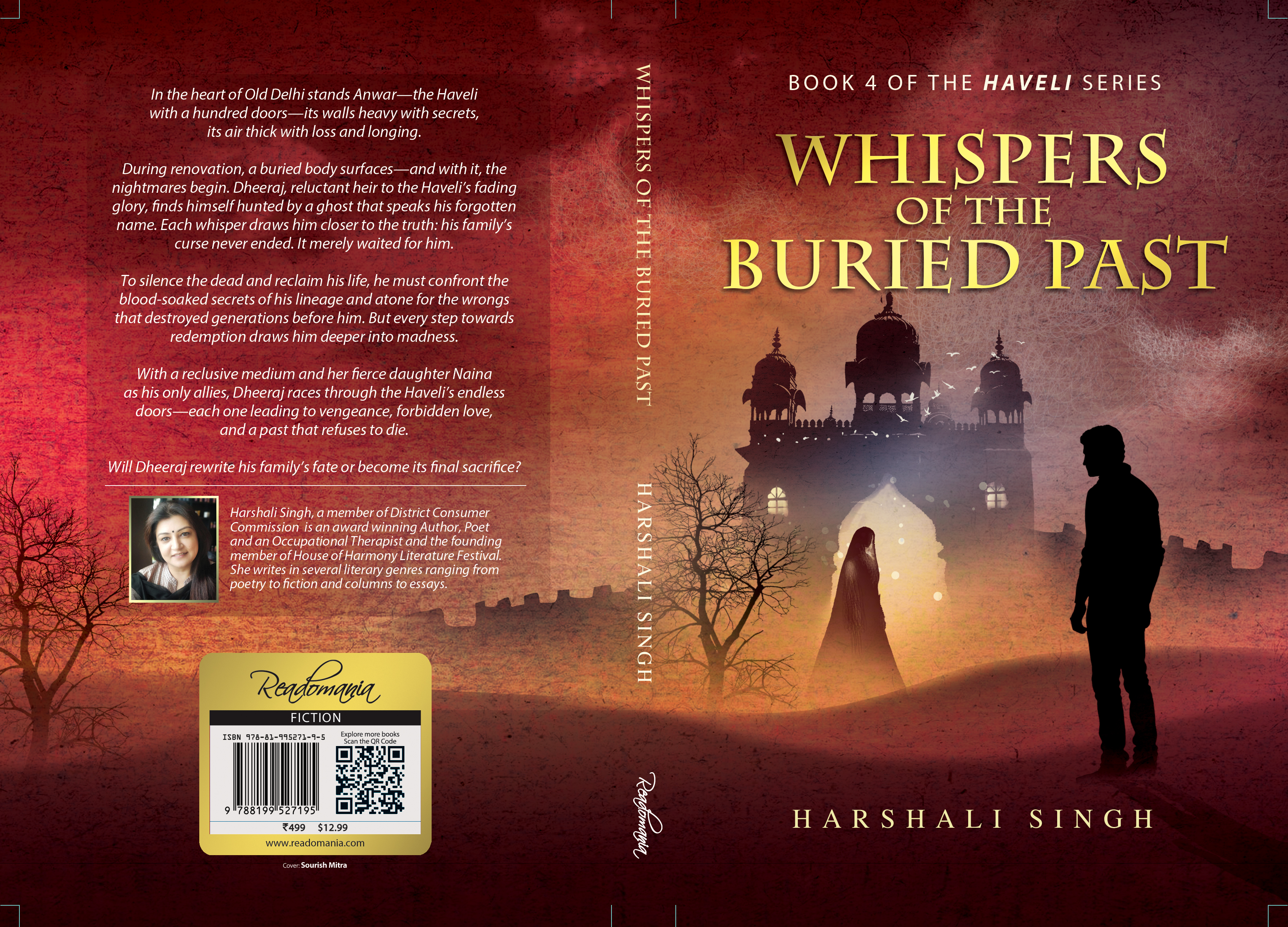
With the fourth instalment of the much-loved Haveli series, Harshali Singh returns readers to Anwar, the Haveli with a hundred doors, a place that has long ceased to be merely a setting. In this novel, the Haveli breathes, remembers, accuses… and refuses to forgive. What unfolds is not just a gothic thriller but an unsettling meditation on inheritance, guilt, and the price of silence across generations.
A Series That Evolves, Not Repeats
One of the great strengths of the Haveli series has been its ability to revisit the same heritage space of Old Delhi through different heirs of the Sharma family, each story adding a new layer to its mystique and aura. After sisters Aruna, Bhavya, and Charu, the fourth book turns its gaze to Dheeraj, the reluctant scion burdened not by ambition, but by legacy.
Whispers of the Buried Past rewards loyal readers with deeper revelations about the Haveli’s past while remaining accessible to newcomers. Each book stands on its own, yet together they form a tapestry of inherited sin, unresolved violence, and emotional reckoning. If the earlier novels exposed Anwar’s history and resilience, this one asks the most uncomfortable question of all: what does atonement truly cost?
A True-blue Indian Gothic Thriller
Indian gothic fiction has often remained underexplored, and this novel stakes a powerful claim in that space. Set in the heart of Old Delhi, the story uses its location not as picturesque nostalgia but as a layered landscape of decay, memory, and suppressed histories. When a buried body is unearthed during the Haveli’s renovation, the past erupts violently into the present, turning history into an active antagonist.
This is a gothic story where ghosts are not just apparitions but consequences. The haunting unfolds slowly, through whispers, madness, and dread, blurring the line between supernatural terror and psychological collapse.
Why Is This Story Relevant Today
At its core, Whispers of the Buried Past speaks to a deeply contemporary anxiety: the fear that unresolved wrongs do not disappear, they resurface.
In a time when societies across the world are reckoning with inherited privilege, buried injustices, and moral decay passed down through generations, Dheeraj’s journey feels painfully relevant. His struggle mirrors our own discomfort with confronting histories we did not create but are nonetheless responsible for addressing.
The book interrogates the idea of destiny versus choice. Are we condemned by our lineage, or can we rewrite the ending? And if redemption is possible, who decides when the debt has been paid?
Characters Who Anchor the Horror
Adding emotional depth and resistance to Dheeraj’s unravelling psyche are Gauhar, the reclusive medium, and her fierce, blue-haired daughter, Naina. Far from functioning as mystical devices alone, they represent alternative ways of engaging with trauma—acknowledgment, defiance, and survival.
Their presence complicates the narrative, shifting it beyond a solitary descent into madness and introducing themes of feminine resilience, inherited memory, and moral courage.
Harshali Singh sums up her experience of writing this book evocatively. “The Haveli series was the first dream I saw for myself as a writer. It became a space where I could ask difficult questions, listen for answers, and let my voice echo back to me. By the time I began the fourth book, the father-son conflict had already taken root, but the story demanded a darker language—ghosts, hauntings, inherited guilt. Writing it was unsettling, strange, and deeply immersive. There were nights when fear knocked louder than doubt, but I learned to acknowledge it and keep writing. This book asked more of me than the others—and in finishing it, I felt I had crossed a threshold, both as a storyteller and as a person.”
Editor Indrani Ganguly says, “Editing Harshali’s books is always a joy, but this one surprised me. Watching her step into horror so confidently and intuitively, was exhilarating. The story unsettles, but the voice remains unmistakably hers. This is a proof that her storytelling only grows bolder with each book.”
What You Can Expect from this Book
Readers stepping into this novel can expect:
- A slow-burning, atmospheric gothic thriller steeped in dread
- A Haveli that functions as a living character
- A protagonist teetering between sanity and self-destruction
- An exploration of forbidden love, vengeance, and ancestral sin
- Revelations that deepen the mystery of the Haveli while raising the emotional stakes
Most of all, readers can expect a story that lingers, long after the final door has been opened.
Whispers of the Buried Past is not just another chapter; it is a reckoning. It dares to ask whether silence is ever innocent and whether homes built on blood can ever truly be reclaimed.
In listening to the Haveli’s whispers, readers are invited to confront an unsettling truth: the past does not stay buried. It waits.
And when it knocks, every door must eventually be opened.

Comments