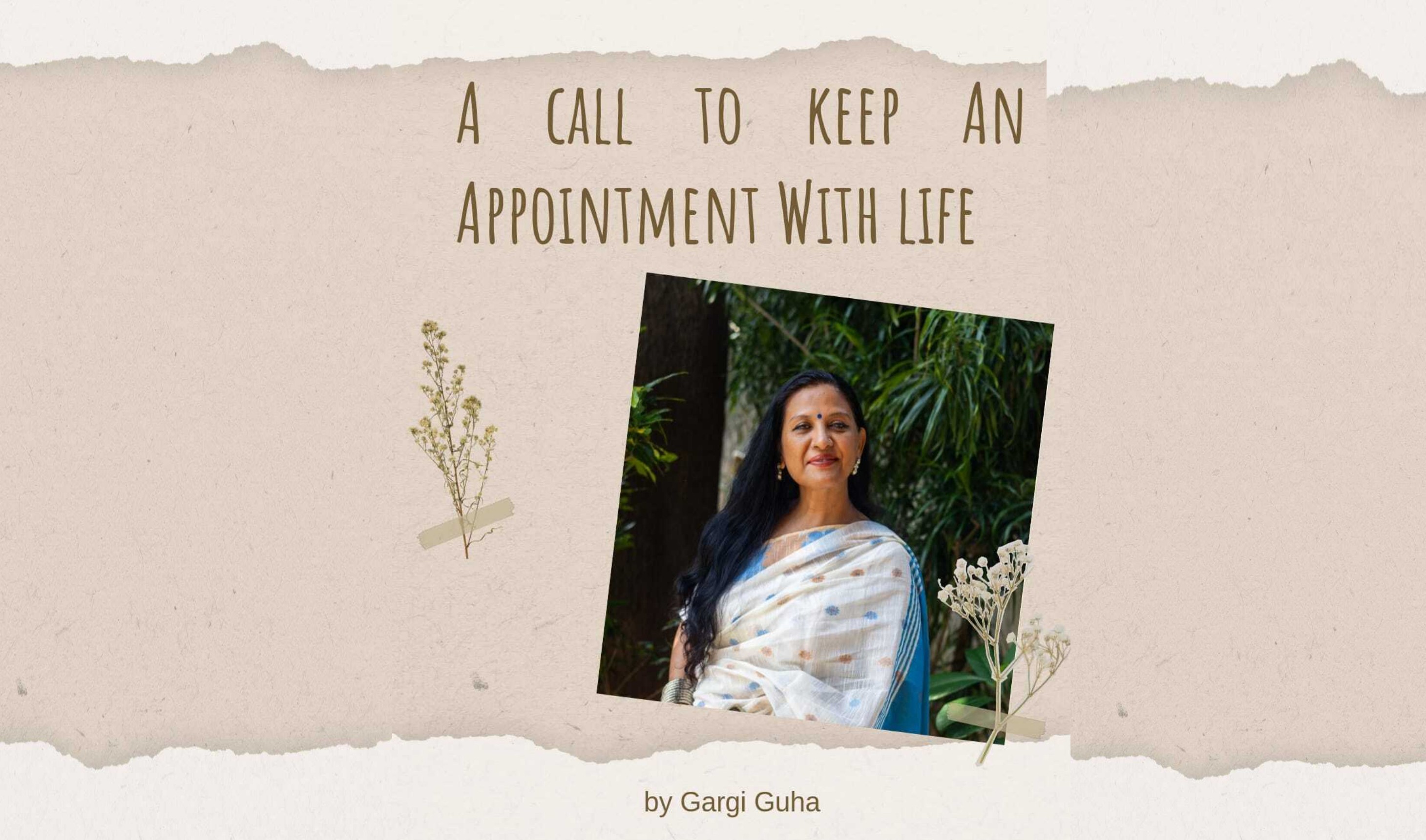
You know that juncture — that bend in the road — when you stop to think where you’re going? Or, more importantly, where you truly wish to go.
It’s a time for reckoning. A moment of deep reflection.
Usually, this comes in life when one has crossed the swaying bridge of overwhelm and reached a kind of nadir—or pit bottom—on the other side. Too many things have whirred around, pulling us into a vortex and causing us to veer off-centre. This was exactly what had happened in my case.
Try as I might, I simply could not bring myself to align with my deepest self…that core.
I was waking up each day and sleepwalking through it all—dashing from one meeting to another, checking things off the proverbial task list, and then resting my weary head on the pillow at night. Only to press Repeat the very next day. But of course, so many of us—burdened under the yoke of daily jobs and professional callings—have been caught in this trap.
As children, we had dreams of being something. Of creating. Of doing something meaningful. And then, life happens…real life. Slowly, we let it all slip away.
I’d been doing this for far too long. For years, under the trappings of a corporate career, I had allowed my creativity to lie stifled. Two decades spent within the highly predictable, carefully co-ordinated, ritzy confines of luxury hotels. Of course, I loved my job and everything that went into the making of it. I loved the connection side of communications—the soft power of it. Even the de rigueur of an exacting code of conduct had its appeal. But still, something inside was wilting away.
Redirections
I knew something had to give. And one thing I was certain of: anything stifled or repressed never ends well. So, in a way, there was a sense of urgency to this too. I had to come up for air. To breathe. Unfulfilled dreams are a potent weapon for self-inflicted harm—like a hara-kiri: a self-directed death with dignity, but born of remorse.
If I’m honest, I would attribute part of my reclamation to The Artist’s Way, Julia Cameron’s seminal book, first published in 1992. Written as a guided 12-week course that takes one into the depths of their own creative uncovering, the book is part spiritual journey and part wake-up call. In it, Cameron urges us to examine the payoffs of remaining stuck. She makes us study how we curtail our own possibilities—how we choose to settle for what merely appears good, instead of pursuing what is truly authentic.
Like I said, the book was a wake-up call. And so were the other telltale signs from the universe. I was feeling increasingly unwell as days went by—anxiety, mysterious aches and pains (like the persistent throb in the sole of my right foot), insomnia…the list was fairly long.
Taking a cue
I had moved to Goa a while back. And those flaming sunsets on Benaulim beach seemed to taunt me—pointing to my choice of status quo, a cowardly act, when all I really had to do was reach deep within and live my best, most authentic self.
This place carries a gentleness. The slow pace, the tender embrace of nature, and, most importantly, the cyclical rhythm all around felt like life’s lessons, crafted just for my feverish brain and heart.
I love watching the tides do their dance with the sea. At high tide, the water surges forward in rapture. At low tide, it recedes, almost sulking, leaving behind a long coastline of old plastic buckets, pails, children’s toys, combs, and shoes—studded with barnacles. The retreat feels real.
The most beautiful rhythm of the nature in Goa is, of course, the turning of the seasons. When the sun reigns high during season time, everything feels livelier. Days stretch long, and evenings blaze with sunsets of pure gold. As the monsoons arrive, brooding on the horizon, they cue the fishermen to slow down. For months there will be no fishing—only the rains, and men at home mending their nets. This gentle leaning into rest felt like a sign to me. A wink from the universe.
And so I did it. I resigned—and freed myself from the trappings of a corporate life.
Pausing to let life in
What followed was an exhilarating, yet frightening, period of coming to terms with what I’d done. The rains kept pouring, as the monsoons had well and truly arrived.
I paced through those days of doubt with heaps of self-compassion. If there was one thing I had learnt from my two decades of Zen practice, it was this: I had to show myself grace. And I did. And you know the thing about grace? In essence, it sprinkles a little stardust on an ordinary day.
I took refuge in spiritual dependence. The word was Surrender—and I held it as a verb.
“Trust that still, small voice that says, This might work and I'll try it.” as author Diane Mariechild put it.
I would wake up each morning to the wide vista of coconut palm-filled fields in front of my home in South Goa—bright, emerald, and rain-washed. From the third-floor balcony of my house in Benaulim, I was perched above a farmstead. I’d sit for hours with a cup of tea, watching the buffaloes, all restful without a care in the world. Little piglets frisking about. A cat washing itself on the roof. Hens clucking away, dispassionately. Every little thing, it seemed, held its own place in this ecosystem.
Making room for ‘flow’
I launched my journalistic career—scouting for stories, packaging and pitching them to publications, facing the brunt of rejections, and savouring the euphoria of a new byline.
But most importantly, the poetry came to me. I was a medium; and the words simply flowed through me. I was being written. I was doing nothing.
Creative living, I was beginning to understand, requires the luxury of time—of spaciousness. And I had allowed myself both.
‘Days of floating
From being to becoming
The clear light.’
I wrote this haiku, called Arte de Vivre—Art of Living—summarising my state of mind: that of floating like a gentle feather in the wind. It became the first poem in my book of fifty. The pages filled up. Words came through me.
Like I said, I was being written. I was in flow.
When Wish is a Wildflower
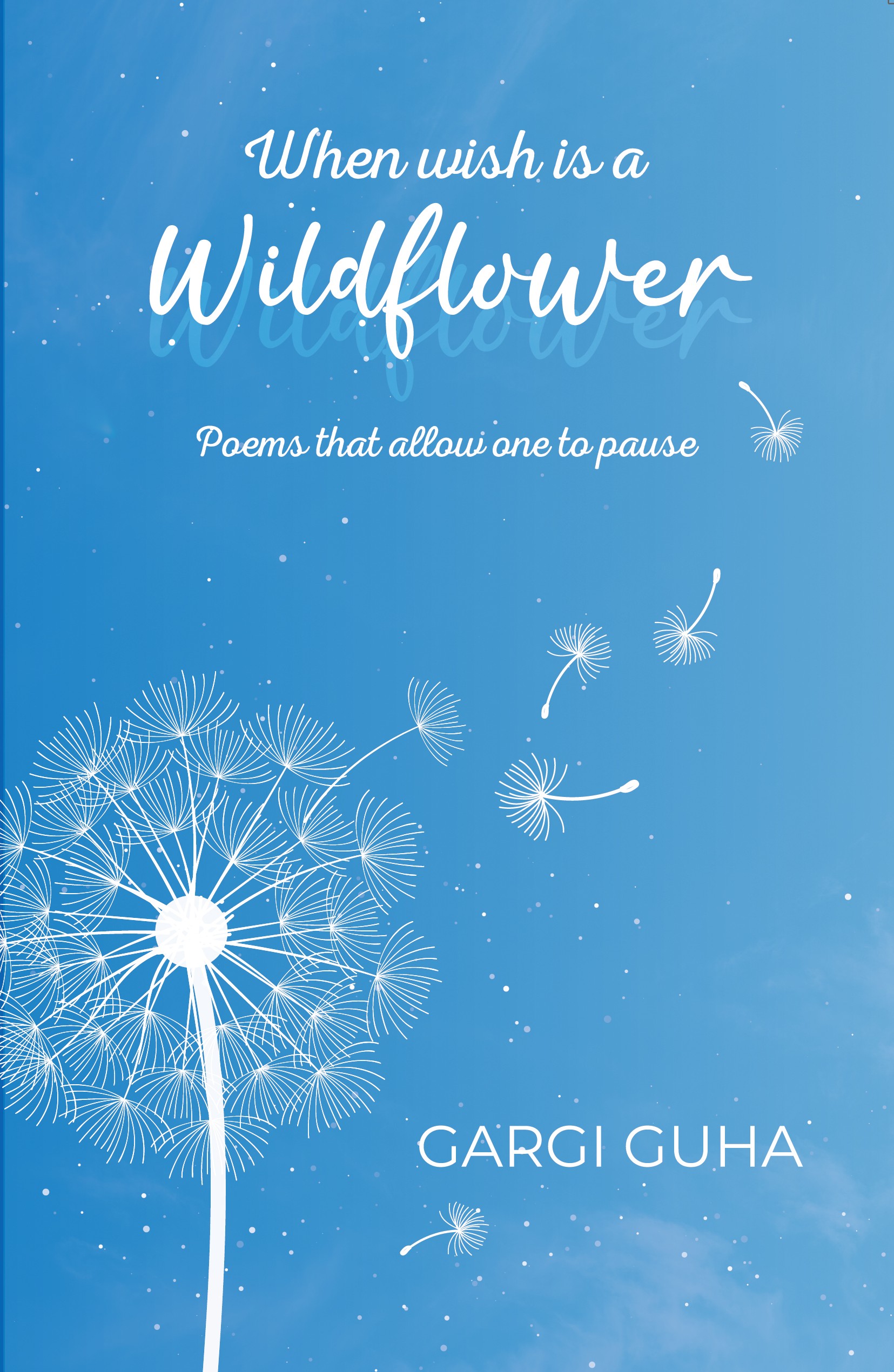 My book, When Wish is a Wildflower, is a compilation of fifty poems divided into four phases of living, loving, longing, and losing. I share with readers—as I discovered this myself—that life exists in the little moments that seem fleeting. Microjoys. The moments we must be present enough to witness. When the little red-whiskered bulbul comes by trilling, to notice that perky, pointy crest, those small flecks of orange-red on its moustache, and the soft blush on the underside of its belly.
To see—and really see. To listen—and really listen. To think of mindful noticing as sweet attention. To hold grace in the heart.
The book is a call to ‘keep our appointment with life,’ as the great Zen master Thich Nhat Hanh often said.
About the Author
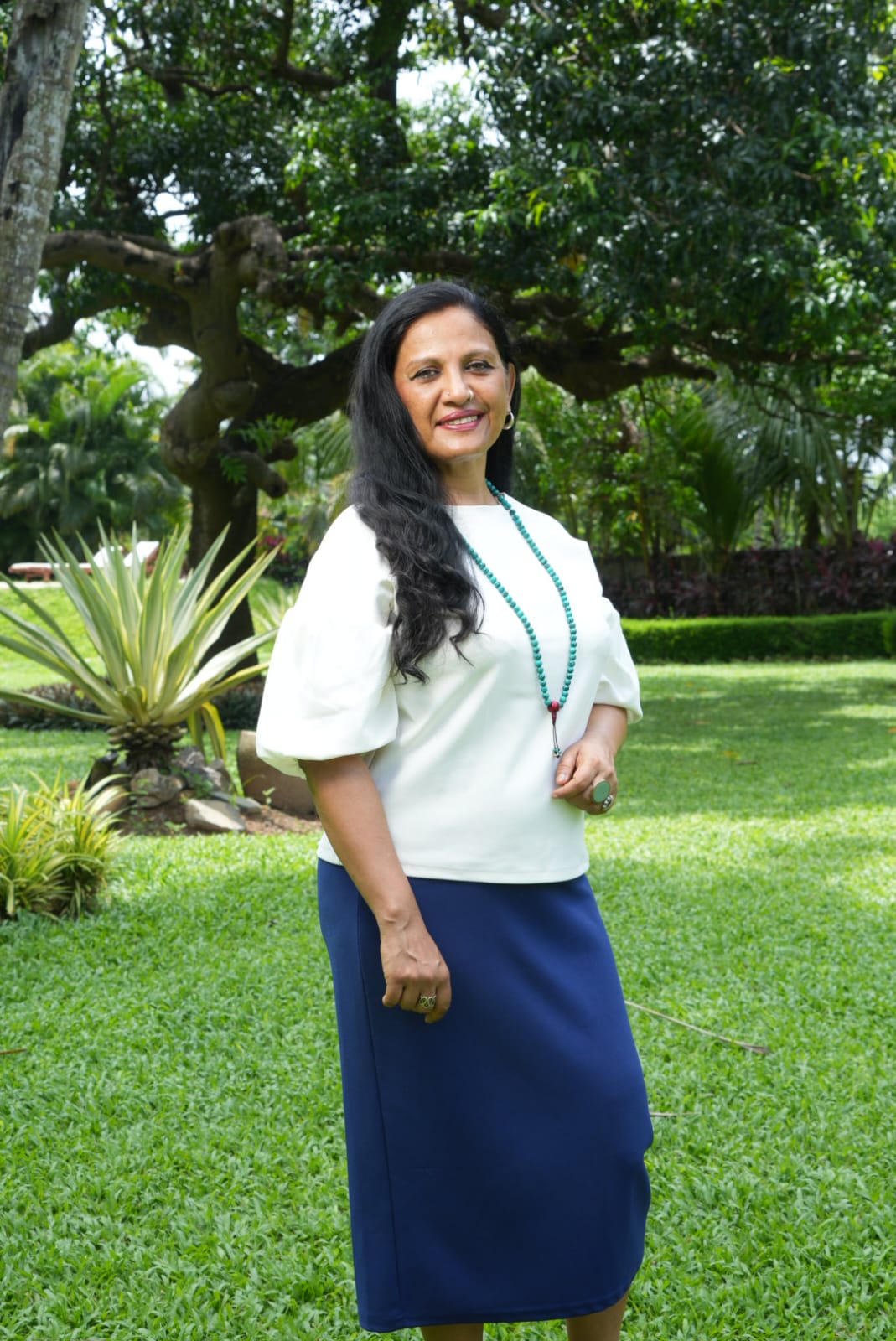
Gargi Guha is an ex-Communications professional turned freelance journalist, writing on travel and lifestyle for various publications. Her poetry borrows from the zen ethos of impermanence and is deeply informed by the beauty of nature. She writes simply and fluidly, out of a deep reverence for the present moment. Gargi is a mindfulness practitioner based in soulful and slow, South Goa.

Comments