When I was a child, I grew up surrounded by books. Week by week, month by month, their numbers multiplied until they felt less like objects and more like companions. My father’s frequent job transfers meant I attended five different schools, but in all that moving, it was the books that stayed. They shielded me from the ache of losing friends to distance, from the fragility of belonging. By the time I was seven, I had already learned that love and loss are constants of life, and perhaps that was when writing began to draw me in.

As a teenager, I found myself wrestling with questions that felt too vast for my years: Who am I? What is my purpose? Why must everyone die? Why does human pain exist? What does it mean to be alive? Around this time, I stumbled into the vast world of Tagore. His words became more than literature, they were companions, guides, mirrors. Through his writings, I began to see people and their struggles differently. He taught me to look inward, to listen to the rhythm of the universe, and to return to my books with new eyes. Slowly, I began to understand life and death not as absolutes, but as currents in an unending flow.

By the time I was 25, life had already played quite a bit of its give-and-take-game. I had lost my grandmother, Charu, and my paternal aunt, Binu – two women whose lives and loves left an indelible mark on my own. They were the ones who first made me see Tagore not as a distant, revered figure of Bengal’s past, but as someone whose words still breathe into the present. Through them, I learned to feel the pulse of literature, to understand that stories are never confined by time.
Their absence made me reflect more deeply. I began to notice how, beyond the universal and the traditional, Tagore’s writings still speak to the ache of today: how his words slip effortlessly into our modern wounds and desires, how, at the end of loss - after the goodbyes, the silences, the aching voids - it is his songs that we reach for. That enduring need for solace, for resonance across generations, made me wonder:
Why does his voice continue to steady us? And why do we instinctively turn to it when everything else has faltered? Why, at the end of the day, after all the deaths and losses have been endured, does the heart craves for his songs for solace?
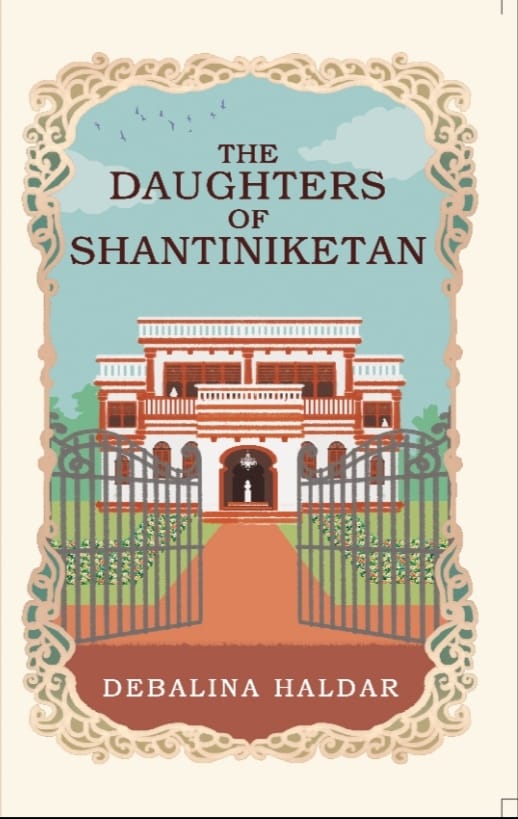
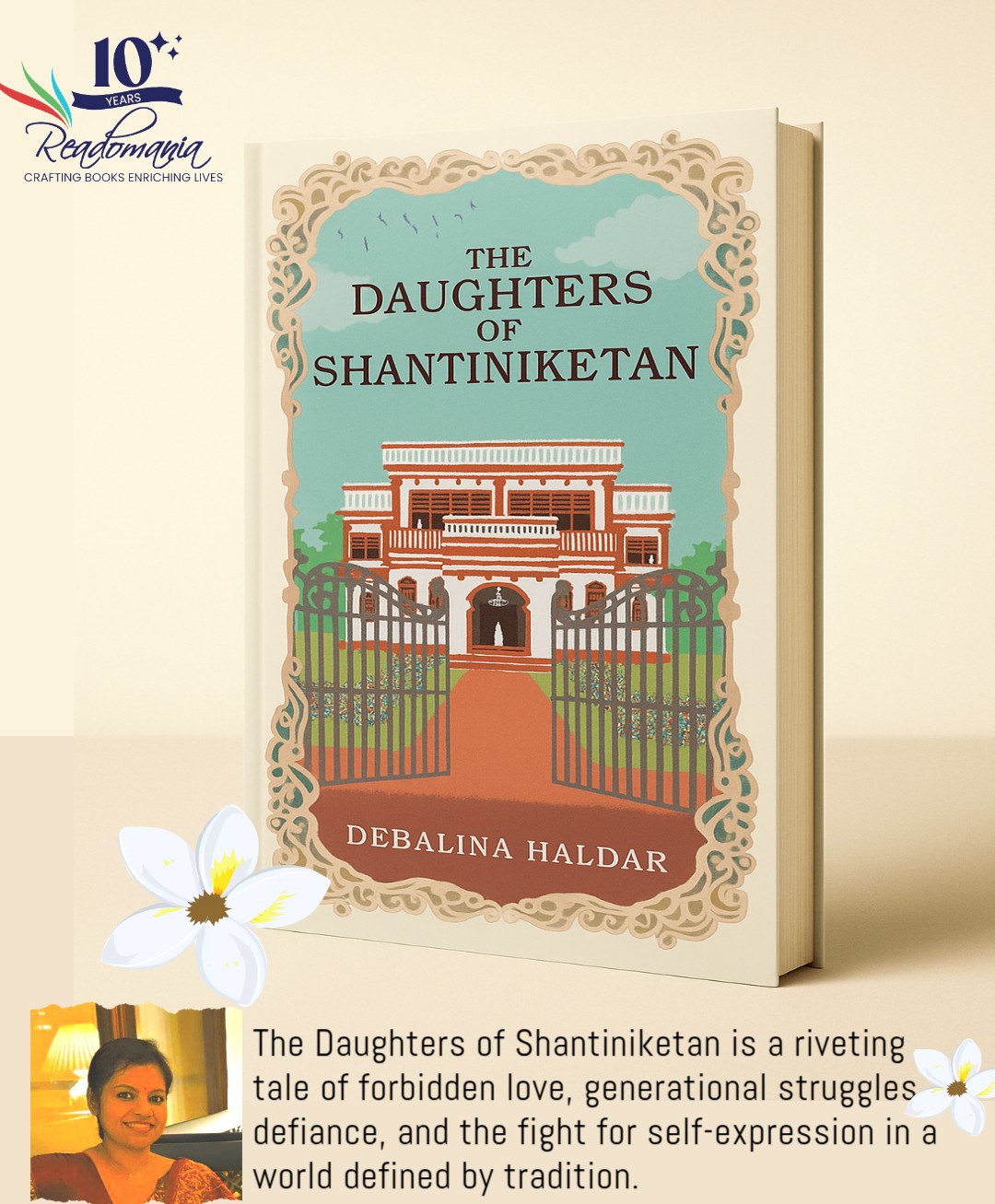
The Daughters of Shantiniketan was born from these questions. It is a novel that listens for the voices of women who, like Charu and Binu, carried the weight of their times yet left behind legacies of resilience and remembrance. The book asks what it means to belong to a lineage of women shaped by both memory and silence. It traces the ways in which loss becomes an inheritance. In weaving the characters and their many dimensions, the novel is both a tribute and a reckoning: with family, with history, with the unbroken continuity of women’s voices… where Shantiniketan itself becomes a character– an anchor, an escape, a witness to generations of resilience.
I am thirty-six years old now, and it has taken me almost a decade to write this book. Those ten years were also a decade of becoming - of becoming a wife, a mother, a woman expected to nourish and endure no matter what life might bring. As my own life unfolded through these years, my belief in the works of Tagore deepened. At one point, his words became like a single thread of hope. Thankfully so… I found myself weaving that thread into this novel.
Yet, the process surprised me. I had thought of myself as the weaver, but slowly I realized the characters were shaping themselves. When I began this book, I thought I was writing only of my grandmother Charu, my aunt Binu, and the women of Shantiniketan. But as the chapters unfolded, I realized the characters were also writing me—shaping my questions, holding up a mirror to my own becoming. Writing became less about control and more about surrender. I was only a spectator, watching as they took form. And as a mere spectator, my greatest takeaway has been this: The Daughters of Shantiniketan is, in the end, about what remains. After all the losses, after the shifting of generations, what persists is not only grief, but also the enduring rhythm of Tagore’s words - the same rhythm that has always given solace, and always will.
And yet, the impact of writing this book has gone far beyond the page. It has helped me make peace with my own questions - to see loss not only as an ending, but as a continuity of love in another form. It has allowed me to carry my grandmother and my aunt forward in memory, to let their voices live through mine. It has also helped me embrace the voices of women—both past and present—as part of my own identity.
In giving life to The Daughters of Shantiniketan, I found a deeper understanding of my own.

So, dear readers, when you pick up this novel, there are two things that will happen. First, you will encounter the stories of women—mothers, daughters, sisters, strangers—who walk through history carrying silence and resilience in equal measure. Their journeys may be rooted in Shantiniketan, but their voices belong everywhere… and you may realize that this is quite like Tagore’s words, which belong to everyone, everywhere, every day.
Second, you may also find a reflection of your own life. For though the names and circumstances may differ, the truths are universal: love and loss, grief and survival. These are not the stories of others alone; they are the stories we carry quietly within ourselves.
And if, in reading, while going through the little snippets by Tagore or a sudden plot revelation, you find yourself remembering someone you have lost - or listening more closely to the voices of those still with you - then this book has done what I most hoped it would do.
Get your copy now here
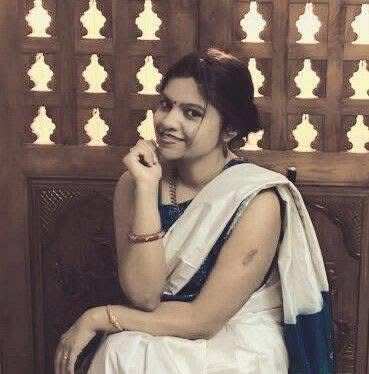
Debalina Haldar is an alumnus of IIM Lucknow, class of 2015. She has been writing since 2010. She writes in the literary fiction genre. Her novel, The Female Ward, was published in October 2012, by Thames River Press (UK). Her second book, Wrinkles in Memory, is a collection of 22 short stories. It was published in August 2016 by Lifi Publications. Wrinkles in Memory was shortlisted for the Sahitya Akademi Yuva Puraskar for books in English in 2020.
She has conducted multiple book launches in India for publicity of her books followed by press conferences. Her book launches are accompanied by celebrity writers and the media.
Comments