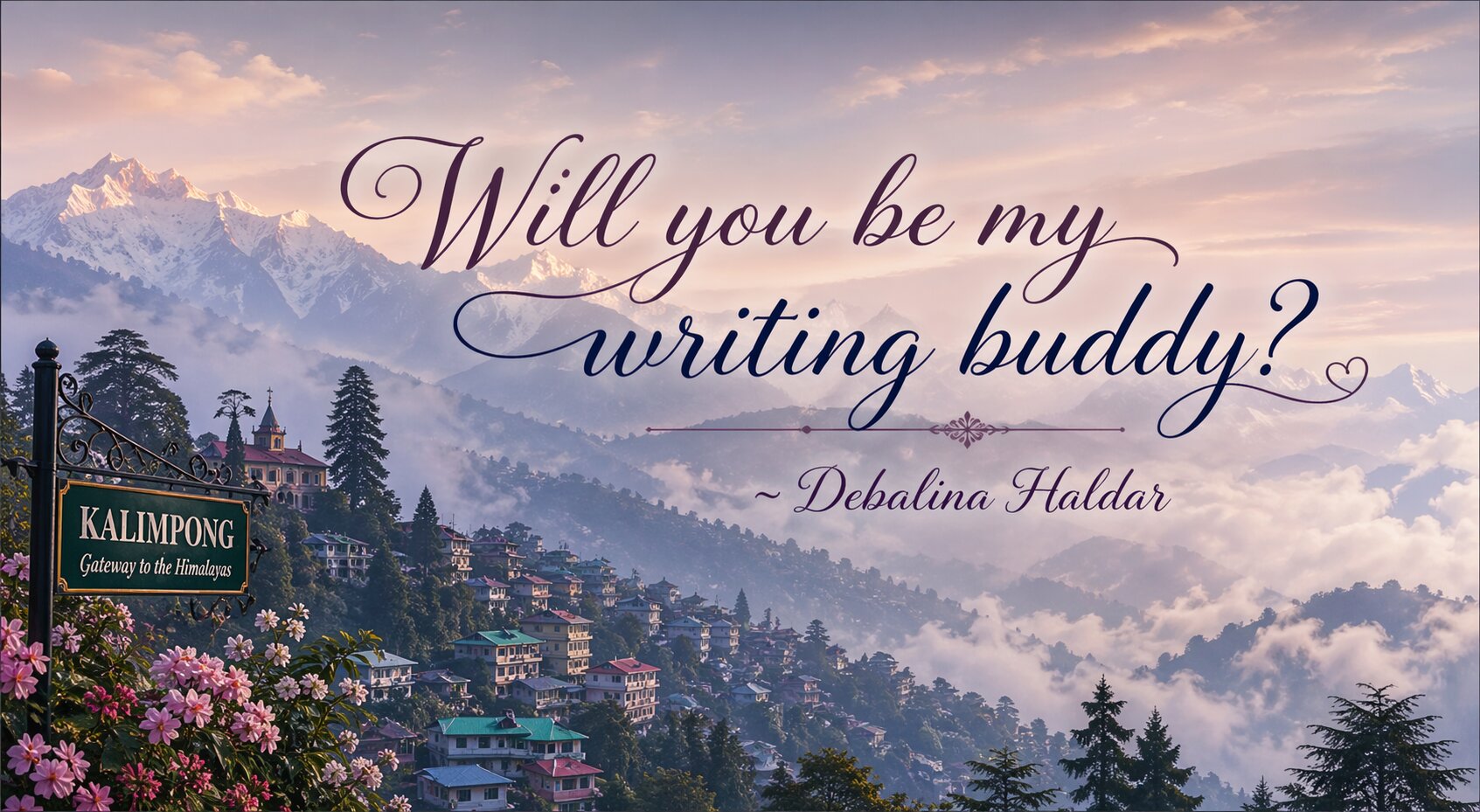
Chronicles Beneath the Clouds: The Beginning of a Novel
Part 1
I have wanted to be a novelist for as long as I can remember making sense of written words. That desire probably took root when I was seven—the year my first poem was published in a national newspaper. I remember the thrill vividly… the disbelief, the pride, the quiet conviction that followed. I kept writing after that, unaware of just how demanding, how consuming, this choice would one day become.
Today, there are two ways a book can be commissioned by a traditional publisher. Either an author writes a book and the publisher believes in it enough to take it forward, or the publisher entrusts an author with an idea and asks them to write it. For years, I remember telling my husband how distant that second possibility felt. How much trust, credibility, and belief must be required to reach that place.
And then, unexpectedly, I found myself there.
Halfway through the call, I was crying and laughing at once—pinching myself, smiling inwardly, barely able to stay present. I was the author being commissioned to write an idea. An opportunity I had once spoken about as improbable had quietly become real.
Once the initial euphoria settled, blank pages stared back at me. The imposter syndrome I thought I had learned to manage returned. The idea itself was both simple and overwhelming: Kalimpong, Tibet, and a woman protagonist. Nothing more. Nothing less.

In all my years of writing, I had never encountered a challenge that felt so open-ended… and so precise at the same time.
When we research a historical novel, what exactly do we research? Is it the chronology of events? The politics of the time? Cultural practices? Landscapes? Monasteries? The escape of His Holiness in 1959?
Slowly, one answer began to surface.
This would be a novel about migrants. About what it feels like to leave behind a lifetime of memory. About that moment when staying and leaving become equally unbearable. About the question that lingers long after borders are crossed: why do people move at all?
My research went deeper—into the deep coves of human emotions… the rumbling empty stomach of a boy… the helpless and desperate tears of his sister. I believe every drop of emotion in the ocean of feelings must be researched. And that, in no way, must be considered as less important than the history, culture and politics of the place. The research for this novel had started almost a year ago—long before the commissioning of this book was discussed. Being an avid reader since many years, this only reinstates my belief—the right book with the right context will find you and come to you at the right time. Why else then have all the books I’ve read in the last one year had something to teach me about this one that I’ve started writing—its premise, the characters?
This is one novel where I plan to include elements of magical realism, coming of age and dystopia, if possible. Honestly, at this point, all I have is a rough outline in my mind and a few words here and there. With that fixated anchor, I rely heavily on my characters to guide me—sometimes along the direction of the winds, sometimes against it, disrupting the anchor. One thing I am almost certain is that the clouds of Kalimpong will guide me through—as characters themselves. And for this very reason, let me call the novel—The Clouds of Kalimpong—at least for now. Naming a novel has given me a sense of responsibility and purpose towards completion.
Maybe the clouds will talk, listen, sing, and even dance—along with the progress of the storyline divided into four parts—The Mist, The Fog, The Dew and The Clouds. I don’t know yet how it will all come together. All I know is the clouds are listening—urging me to be patient as I begin this journey—and witness a breathtaking experience. The clouds are with me, are you?
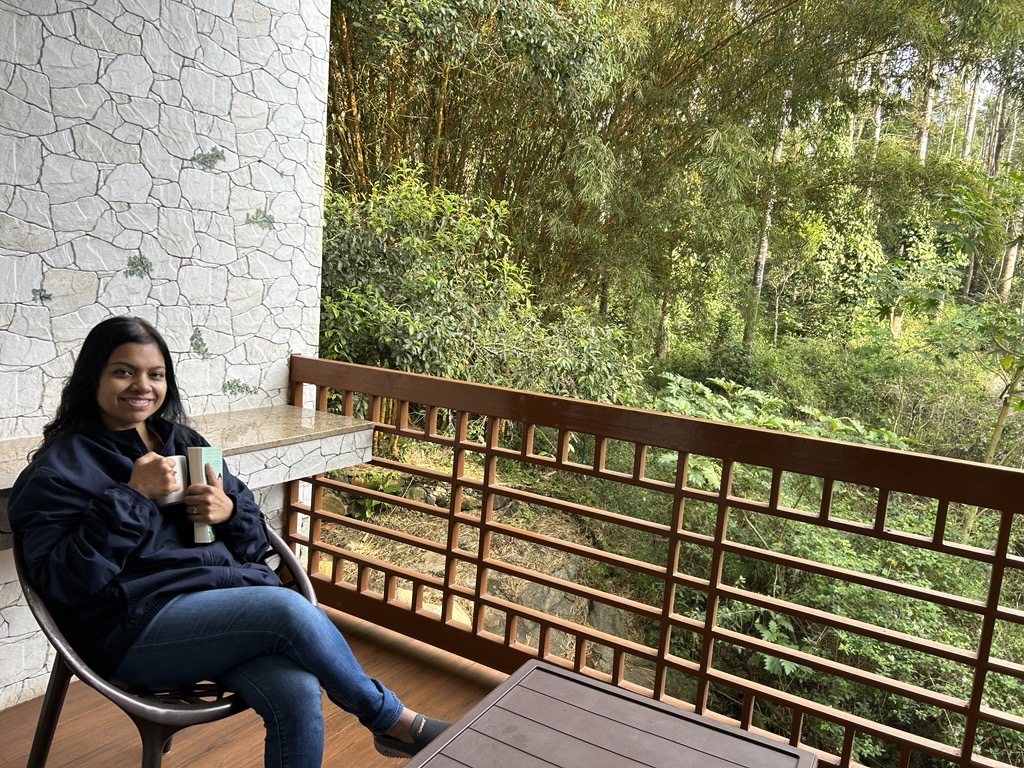 Debalina Haldar is an alumna of IIM Lucknow, class of 2015. She started writing when she was seven years old. She writes in the literary fiction genre. Her novel, The Female Ward, was published in October 2012, by Thames River Press (UK). Her second book, Wrinkles in Memory, is a collection of 22 short stories. It was published in August 2016 by Lifi Publications. Wrinkles in Memory was shortlisted for the Sahitya Akademi Yuva Puraskar for books in English in 2020 . Her novel, The Daughters of Shantiniketan, was published in August 2025 by Readomania Publishing. She is based in Bengaluru where she lives with her husband and her two children.
Get The Daughters of Shantiniketan here
Comments