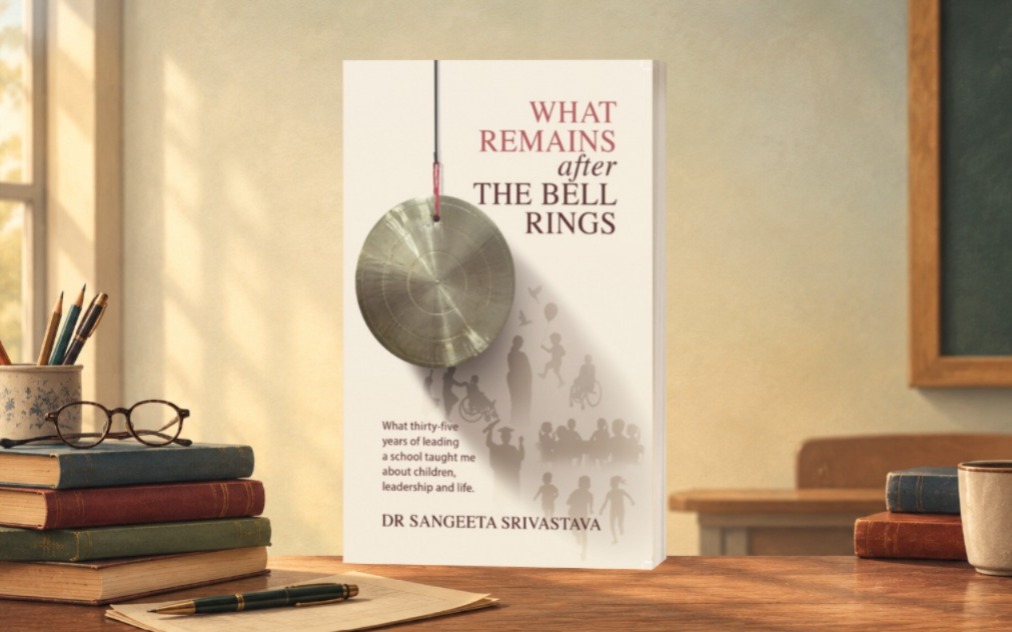
What Remains After the Bell Rings
Dr Sangeeta Srivastava Reflects on 35 Years of Shaping Young Lives
What makes a school successful? Is it the academic results it produces, the trophies it wins, the infrastructure it builds or the reputation it earns? Or is its true success measured by something far less tangible: the values it instils, the confidence it builds and the kind of human beings its students grow up to become?
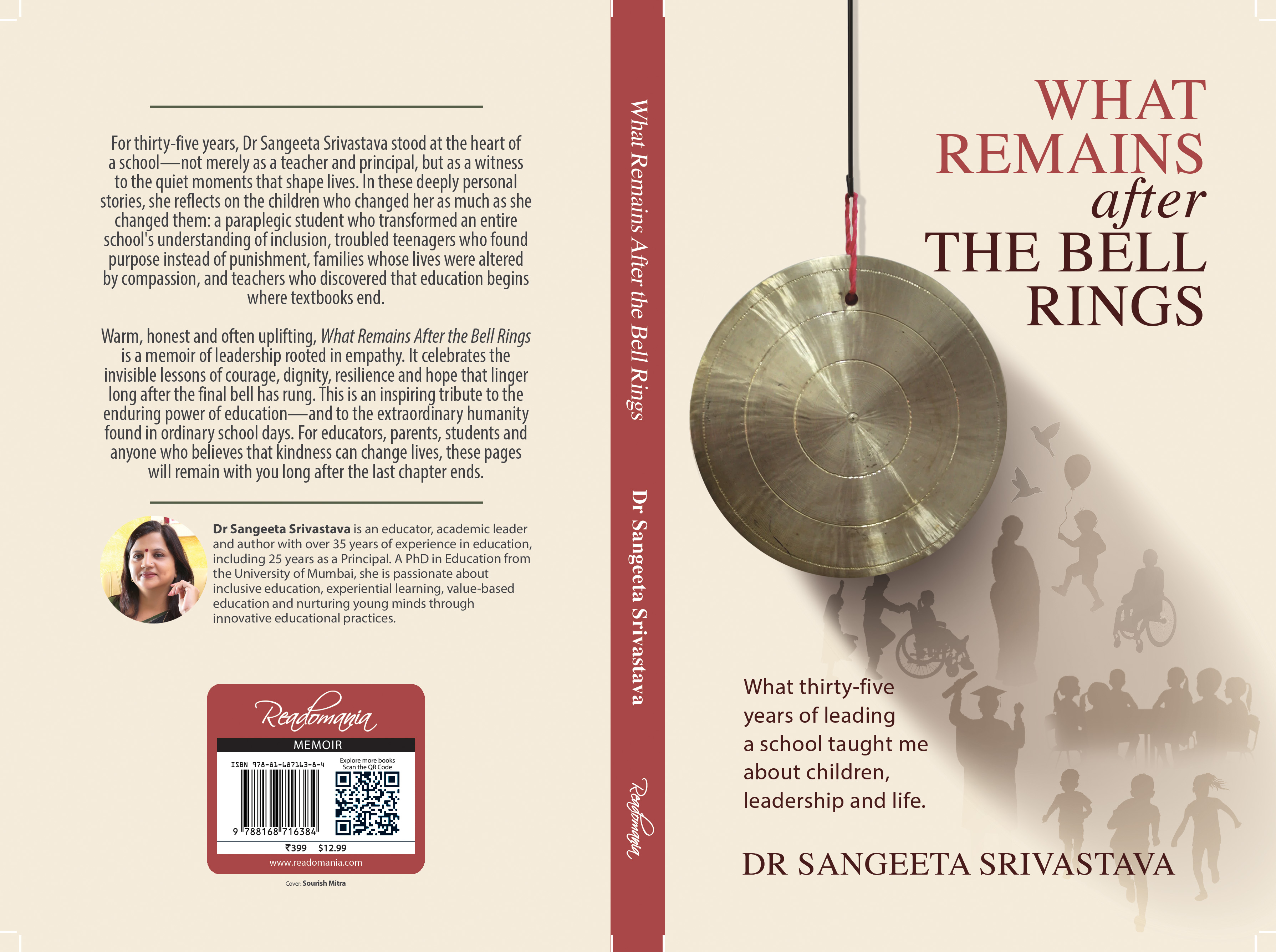
In What Remains After the Bell Rings, academician Dr Sangeeta Srivastava invites readers to look beyond report cards, examination results and institutional achievements to discover the human stories that define education. Drawing on more than 35 years in the field, including decades spent teaching and leading a large educational institution, she offers an honest, insightful and deeply personal account of a life devoted to shaping young minds.
Far removed from a conventional book on educational theory or school administration, this is a memoir of experiences, experiments, relationships, difficult decisions and moments of transformation. It is about the children who found their voices, the teachers who discovered new possibilities, the parents who learnt to trust and the many people whose contributions make a school much more than a collection of classrooms.
For Dr Srivastava, education has never been simply about completing a syllabus or preparing students for examinations. It is about preparing them for life.
When Inclusion Became a Responsibility, Not an Option
One of the defining aspects of Dr Srivastava's professional journey has been her commitment to inclusive education. The arrival of her first specially-abled student, a paraplegic child who joined the school in Class 5 and remained under her mentorship until graduation, became a turning point in her understanding of what a school must offer its students.
At a time when inclusive education had limited institutional support and was not yet embedded in the educational frameworks we recognise today, the experience raised difficult questions about accessibility, infrastructure, attitudes and the responsibilities of educators.
The school gradually opened its doors to children with visual, hearing, speech and physical impairments, recognising that inclusion could not remain a policy statement. It had to become a lived experience.
The book captures the challenges, adjustments and small victories involved in this journey, reminding readers that every child deserves the opportunity to learn, participate and belong. It also explores how technology, community partnerships and the support of NGOs helped make inclusion more meaningful, including initiatives that facilitated electronic wheelchairs for children with mobility challenges.
Trust Over Surveillance: Rethinking the Way Children Learn
What happens when students are trusted instead of constantly monitored? Can responsibility grow when authority steps back?
In one of the book's most fascinating accounts, Dr Srivastava describes the school's experiment with supervision-free examinations. With no invigilators hovering over students and no constant surveillance, children were given the responsibility of conducting themselves honestly during examinations.
The initiative challenged conventional assumptions about discipline and academic integrity. The result was a powerful lesson: trust can encourage self-regulation, while excessive control may leave little room for personal responsibility.
Another remarkable initiative was Swayam – Discover the Light Within, conceived to address behavioural and disciplinary challenges among students. Instead of treating difficult behaviour merely as a problem to be corrected, the programme encouraged children to discover their strengths through dance, music, dramatics, art and sports.
The underlying philosophy was simple: every child has potential, and sometimes the right opportunity can reveal what conventional classroom assessments fail to recognise.
These experiences offer a refreshing perspective on discipline, demonstrating that education must help children understand themselves, develop confidence and take responsibility for their actions.
Beyond Textbooks, Towards Holistic Learning
What Remains After the Bell Rings makes a compelling case for broadening the definition of academic success.
Through stories of experiential learning, outdoor education, skill-development groups, cultural celebrations and community engagement, Dr Srivastava illustrates how children develop abilities that cannot always be measured through examinations.
Dance, music, cricket, Scouts and Guides, road safety initiatives, art, craft and self-defence became integral to the school's educational environment. Girls taking up cricket, shy students discovering confidence through music and children finding their identities beyond their academic performance are among the experiences that bring these ideas alive.
The book also examines the role of digital transformation in education. From technology-enabled classrooms and digital resources to online career guidance and virtual exposure to universities, it explores how technology can make learning more accessible, particularly for first-generation learners and children who need additional academic support.
Yet Dr Srivastava is equally clear that technology must remain a tool rather than a substitute for human connection. Screens may facilitate learning, but empathy, encouragement and meaningful relationships remain at the heart of education.
The Challenges Behind the Principal's Chair
While schools are often presented through their achievements and celebrations, the realities of institutional leadership are considerably more complicated.
Dr Srivastava takes readers behind the scenes to explore the difficult decisions that principals must make, often under considerable emotional and professional pressure. Conflicts, complaints, legal challenges, administrative responsibilities and disagreements with parents and colleagues form an unavoidable part of the journey.
The book does not shy away from these uncomfortable experiences. It acknowledges that protecting students and upholding institutional integrity sometimes require decisions that are unpopular, painful and personally difficult.
It also explores the importance of non-violent communication, self-reflection and emotional intelligence in navigating relationships within a school. The emphasis is not on leadership through authority, but on building a culture where people feel respected, heard and accountable.
Equally significant is the attention given to teachers and non-teaching staff. From educators who devote themselves to discovering a child's potential to the support staff who quietly keep an institution running, the book recognises the many individuals who contribute to a school's culture.
The Most Enduring Lessons Are About People
Perhaps the most moving dimension of What Remains After the Bell Rings is its exploration of relationships.
Over the years, former students have returned as mentors, professionals, volunteers and even parents entrusting their own children to the same institution. Their journeys offer a reminder that education does not end with graduation. The values, encouragement and confidence imparted during school years often travel with individuals throughout their lives.
One particularly memorable account follows a student whose exposure to an international learning opportunity transformed her aspirations. From hoping merely to complete school and support her family, she began dreaming of pursuing scientific research. Years later, she secured admission to a reputed science programme with financial support. Her journey illustrates how access, encouragement and belief can expand a child's understanding of what is possible.
These stories reinforce the book's central idea: a school's real report card is not merely the marks its students obtain, but the lives they go on to lead.
Coming soon on Readomania!
About the Author
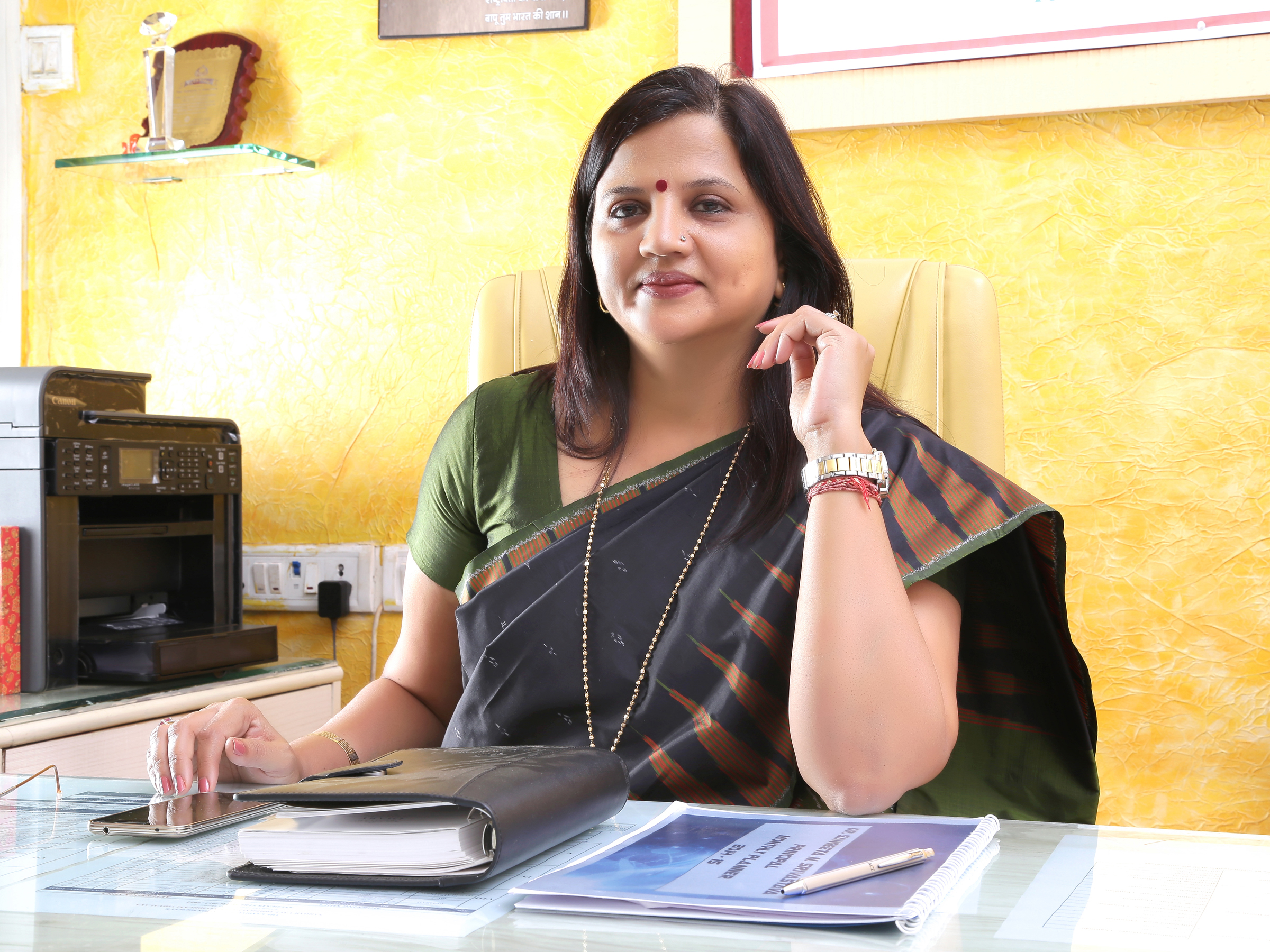 Dr Sangeeta Srivastava is an accomplished educationist with over 35 years of experience in education. She served as a teacher and principal at Kandivli Education Society's SVPV Vidyalaya and Shri T P Bhatia College of Science, Mumbai, and currently also serves as an Academic and Administrative Adviser.
Holding a PhD in Education from the University of Mumbai, she has presented and published research papers at several national and international educational forums. Her contributions have been recognised through several honours, including the prestigious Maharashtra Rajya Adarsh Shikshak Puraskar, presented by the Education Minister of Maharashtra.
A strong advocate of inclusive, experiential and multidisciplinary learning, Dr Srivastava has consistently championed the idea that education must extend beyond textbooks and examinations.
With What Remains After the Bell Rings, she brings together the experiences, challenges, lessons and relationships that have shaped her professional and personal journey.
Website: sangeetasrivastava.in
www.tpbhatiacollege.com
Instagram: @sangeetasrivastava95
Facebook: @SangeetaSrivastava
LinkedIn: @DrSangeetaSrivastava

Comments