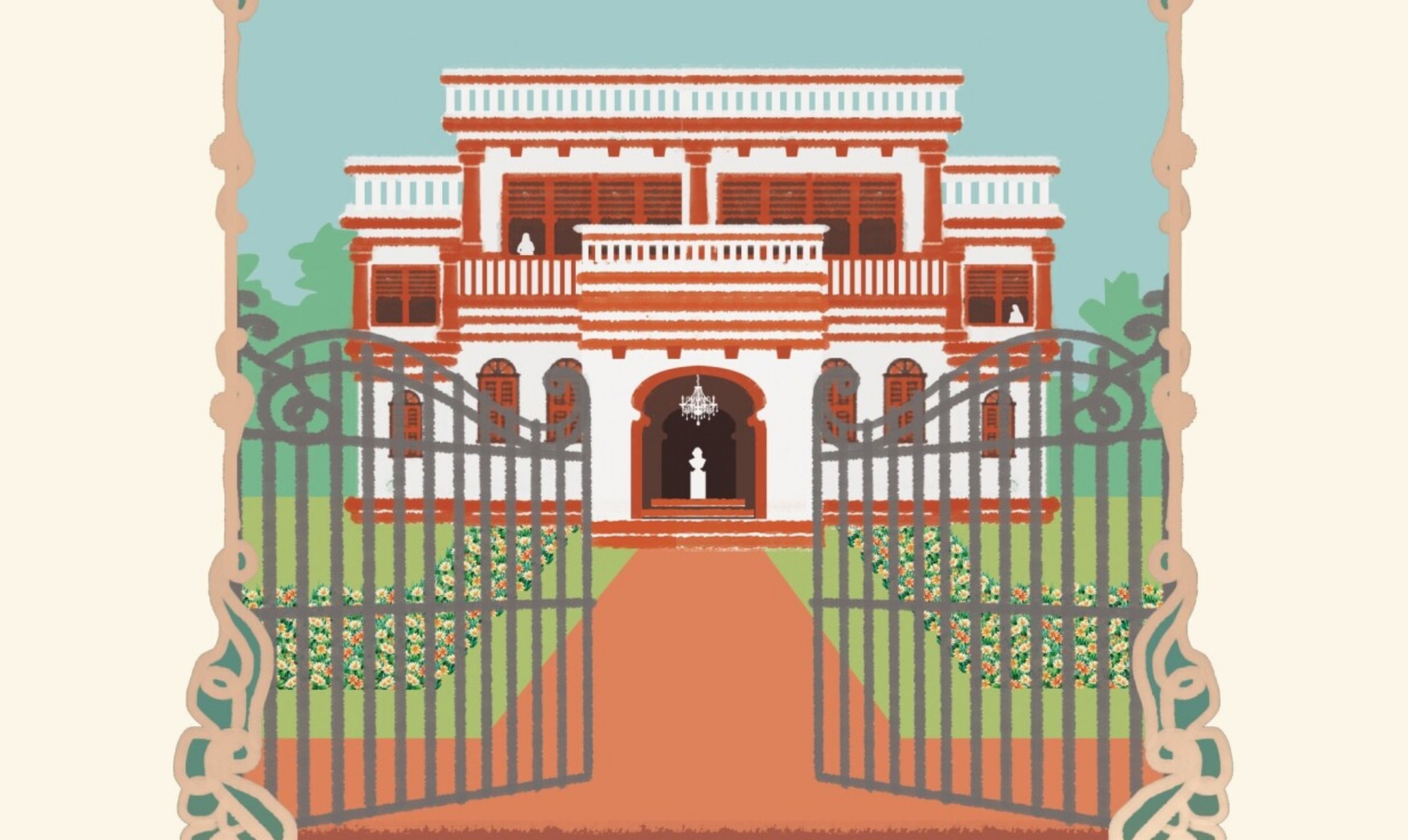
Hello Debalina, congratulations on the release of your book The Daughters of Shantiniketan!
Readomania: Your novel explores the tension between tradition and personal freedom in the context of Rabindranath Tagore’s legacy. What inspired you to set the story on this particular conflict in the context of Tagore?
Debalina: Growing up in the 90s and early 2000s in Calcutta, we were beginning to witness a slow change in the kind of music that was being made. This new, free-spirited music came to be known as Jibonmukhi Gaan, or Life-ward Music. I still remember having an essay topic for our exam—If we are now listening to life-ward music, were we listening to death-ward music all this while? These so-called life-ward music compositions had also begun to extend their reach into the songs of Tagore. In my impressionable young mind, this conflict took root deeply, and I’m happy to have freed myself from it so many years later.
Readomania: You mentioned the book took nearly a decade to complete. Could you share some of the challenges you faced in writing this novel, especially when dealing with sensitive subjects like patriarchy and rebellion in a revered cultural setting?
Debalina: Writing the book did not take as long as rewriting it over and over again did. Tagore and his compositions, not to mention his non-musical work, are like an ocean, a tricky ocean. The book is written in lyrical style, where the depth of Charulata, the protagonist, is expressed through appropriate Rabindrasangeets. While doing so, I imagined my readers listening to the songs as the story unfolded. And it was challenging in so many ways. To understand each of the songs used in this novel, I had to go back and grasp the context in which Tagore had composed them. Also, choosing the compositions to seamlessly merge with the flow of the novel, while being sensitive to the context of composition and the gravity of the scene, took me longer than I had imagined.
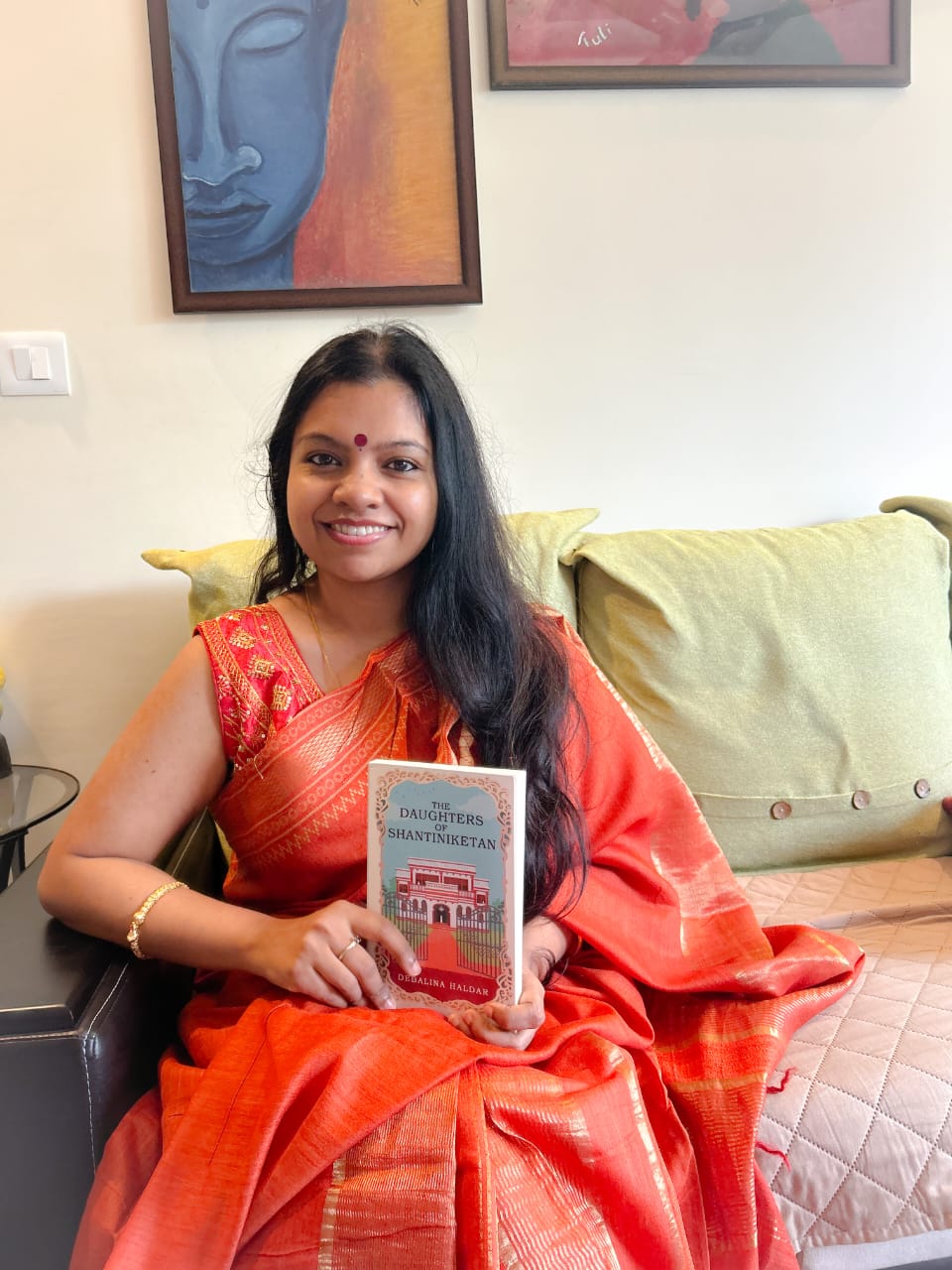
Readomania: The Daughters of Shantiniketan weaves Tagore’s songs and philosophy into its narrative. How did you approach integrating Rabindrasangeet into the story while also modernising it through your characters? Was translating Tagore’s lyrics difficult?
Debalina: For any scene, I had a few songs in mind. I remember sitting with the Geetobitan for hours, listening to songs on YouTube, and reading the lines repeatedly before finalising the ‘perfect’ lyrics for the situation. The rigour of the process was enriching yet surprising at the same time. I found Charulata’s songs slightly easier and more free-flowing than Bolai’s. That was where I faced the task of fitting the songs into a modern context. However, translating the lyrics was the biggest challenge… it felt like daring to touch the sky.
Readomania: The theme of women’s silent rebellions is central to your book. Did you draw inspiration from real historical events or personal experiences in crafting these characters and their struggles?
Debalina: Around the time that I was writing this novel, I was also reading a lot about the women in Tagore’s life, some of whom might have influenced his songs. I read Jorasanko and The Daughters of Jorasanko by Aruna Chakravarty, as well as the book on Kadambari Debi by Ranjan Bandyopadhyay, among many others. In these books, I discovered women and their silent rebellions—women from Tagore’s own family. How brave of these women were, to stand against the looming patriarchy embedded in every brick of that house, and yet still create a place of their own! That moved me deeply.
Readomania: In your view, how does The Daughters of Shantiniketan reflect the broader questions facing contemporary Indian society regarding tradition, gender roles, and freedom of expression?
Debalina: The Daughters of Shantiniketan are a group of women who are wise and have a mind of their own. They are aware of their duties, the family traditions and roles that must be fulfilled. Yet, as the secrets begin to surface, they do not shy away from calling a spade a spade. In doing so, the novel also explores a few strong (and good) male characters who support the daughters in their ultimate act of freedom of expression.
Readomania: Your blurb poses the powerful question: “What does it mean to be free when you’ve been taught to obey?” How did you personally wrestle with this question while writing the book?
Debalina: When I was ideating the novel, I had visualised the traditional being challenged by modern ideologies. Since this is the primary theme of the story, bringing out years of beliefs, deep-set notions and internal conflicts had to be done repeatedly, through multiple characters. This theme is revisited in the lives of every woman in Shantiniketan, each with a ‘fight of their own’. When Charulata, the ideal progeny of the house, realises this, she wonders, ‘’What her fight has been?’’ And in guiding her towards the answer, I found she was shaping herself—while I remained a mere spectator, watching. After losing all there is there to lose, what remains are Tagore’s words, giving solace in both good times and bad.
Readomania: As someone with a background in management, how do you balance your analytical training with your creative process when writing stories that are emotionally and socially complex?
Debalina: I believe what works for me is to leave my analytical mind aside while writing. These days, we find influencers on social media talking about best-selling book ideas, opening hooks, pinch points, first climax, second climax, and so on. The list already gives me a headache. I mean, it can work for someone else. However, at the end of a long day at work, giving my analytical side of the brain some rest works wonders. My writing process is to let my characters lead me through the chapters, through their transitions, while exploring what life has to offer.
Readomania: What do you hope readers will take away from The Daughters of Shantiniketan, especially in terms of the portrayal of women navigating heritage and modernity?
Debalina: There is a poem in the novel that Giribala writes on how silence is not golden. I hope the words of that poem will resonate every time there is a situation that demands action or protest. This is for both men and women… we need a generation of strong human beings who are fearless in the face of injustice. We are a young country that boasts of a rich cultural heritage, and I hope readers will believe that silence can never be golden if we truly want to navigate that heritage in today’s world.
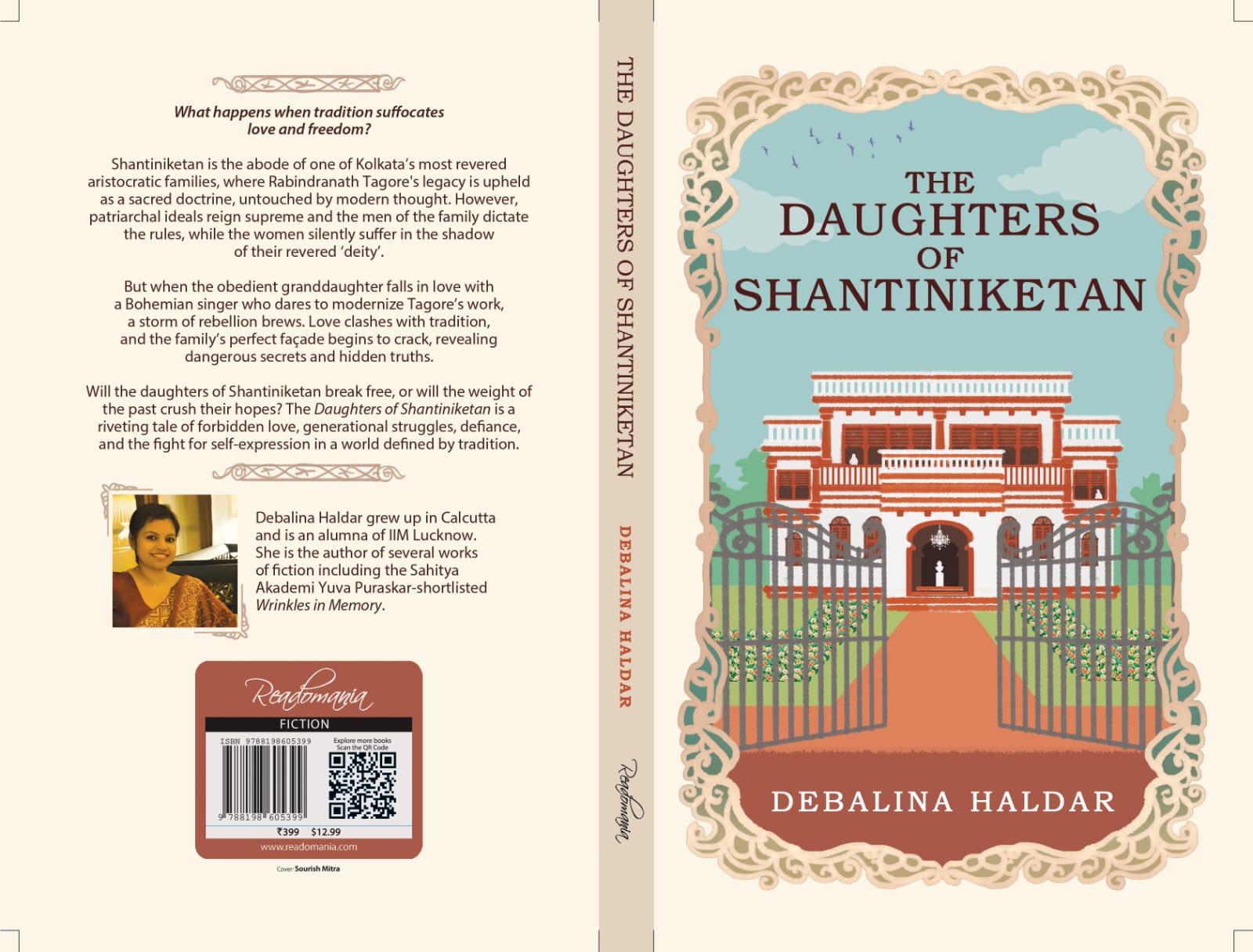
Readomania: Your earlier works, like Wrinkles in Memory, were also recognised critically. How does this novel differ in terms of style, theme, and personal significance for you as a writer?
Debalina: Wrinkles in Memory is a collection of short stories with the theme of remembrance and nostalgia. The idea was to evoke memories in readers, urging their minds to go back in time. The Daughters of Shantiniketan, on the other hand, is a lyrical novel that encourages the mind to consider what life would be like without standing up for oneself. It shows how society can collectively benefit if we all stand up for what is right. While Wrinkles in Memory dwells in the past, The Daughters of Shantiniketan is an attempt to build a strong future.
Readomania: Do you have any particular writing routine? Do you write every day as a habit or only when a thought crosses your mind?
Debalina: I don’t believe I would get very far if I waited for an inspiration. I write everyday and call it my 500-word gym. Sometimes, life happens… and even then, the 500-word struggle continues every day. I don’t worry much about the quality, to be honest, if I am writing the first draft. You cannot edit a blank page, can you? You can always revisit and polish the writing. To tell you the truth, I wouldn’t be able to sleep without having written 500 words.
Readomania: Tell us, were the creative arts part of your upbringing? What was the atmosphere at home while growing up?
Debalina: My grandmother, Charu, and my paternal aunt, Binu—two women whose lives and loves left an indelible mark on my own. They were the ones who first made me see Tagore not as a distant, revered figure of Bengal’s past, but as someone whose words still breathe life into the present. Through them, I learned to feel the pulse of literature, to understand that stories are never confined by time. We would spend our afternoons reading Tagore’s Golpoguchho and Shonchoyeeta—collections of stories and poems.
Ma encouraged me to write. I was seven when I started writing. We did not have a computer back then. Baba would take my handwritten poems and type them out, and print them from his office. By the time I was in sixth grade, I had this fat book of poems in printed words—unknowingly sowing the seeds of my dream to become a published author someday.
Readomania: Finally, can you share a little about your upcoming plans—are you already working on your next project, and will it continue to explore similar themes?
Debalina: I am wrapping up my next literary novel. While this work also features strong women characters who must support each other in adversity, it centres on motherhood and its many forms.
About the Author
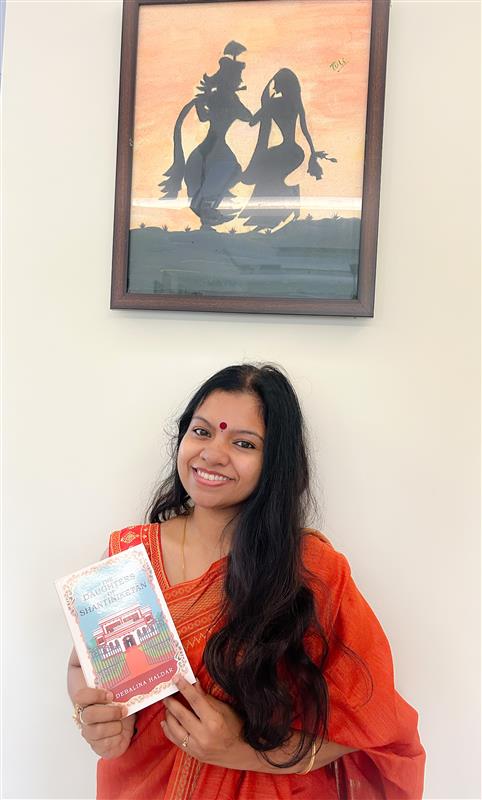 Debalina Haldar is an alumnus of IIM Lucknow, class of 2015. She has been writing since 2010. She writes in the literary fiction genre. Her novel, The Female Ward, was published in October 2012, by Thames River Press (UK). Her second book, Wrinkles in Memory, is a collection of 22 short stories. It was published in August 2016 by Lifi Publications. Wrinkles in Memory was shortlisted for the Sahitya Akademi Yuva Puraskar for books in English in 2020.
She has conducted multiple book launches in India for publicity of her books followed by press conferences. Her book launches are accompanied by celebrity writers and the media.
Social media handles:
Instagram: @Debbie.writes
Buy the book Here

Comments