
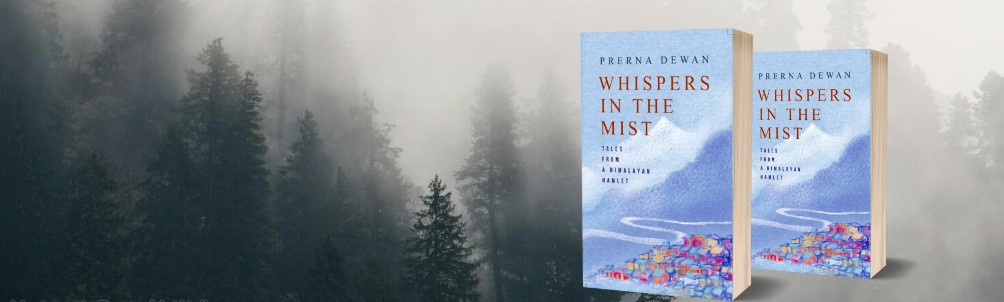
 Readomania: Hello Prerna, many congratulations on the launch of your book Whispers in the Mist. The book is a haunting, emotionally intricate tapestry of interconnected lives. What sparked the idea for this ghostly yet deeply human collection?
Prerna: As always, my writings deeply resonate with the spirit of my hometown and its people. And the more I write, I realise I cannot escape them. They are my inspiration. I initially began writing these short stories as part of a creative exercise. Each story became a tribute to the people and their way of life—how these happy-go-lucky folks survive a series of perennial adversities. As my writing progressed, I recognised a pattern: I never bid goodbye to the characters. A mention of a character in one story would lead to them-becoming the protagonist in the next. And Gayatri—given that she is a dead woman—appeared in all the stories, quickly becoming my guide to the finishing line.
Readomania: Gayatri’s spirit is the thread binding ten lives—what drew you to use a ghost as both narrator and witness? Was she always meant to be central to the narrative?
Prerna: To begin with, I never thought I would write a story that even remotely involved a ghost. I am petrified of the paranormal world. But I suppose life is irony exemplified. While writing the story of Gayatri, I was invested in her as a woman who felt betrayed by her husband—tapping into the anguish, the disappointment, the pain of a wounded wife. It was only when I had to write the 'chinta' ceremony, where the shaman connects with the dead, that the horror truly sank in. Of course, it’s not a nail-biting, hair-raising scene, but it is a little unsettling considering that she is, after all, a dead person. The night I wrote the chinta scene, I slept with the lights on. But the ghost that she is, she followed. Like a needle stitching pieces of fabric together, Gayatri pushed the narrative forward. All I did was obey.
Readomania: The setting of Darjeeling plays a powerful role in the book. How does your connection to the region influence the atmosphere and storytelling?
Prerna: I have realised that my writings will always bear the imprint of my identity, my homeland, and its people. What makes a community rich and unique are the stories it carries and the history behind them. The Himalayan civilisation is a repository of folktales and legends—orally preserved and passed down through generations. Adapting them into my stories immediately added a sense of mystique, rendering them distinct and compelling.
Readomania: Your stories blend Himalayan folklore with themes of loss, love, and resilience. How did you research or gather these folkloric elements, and how did you balance myth with realism?
Prerna: Much of my research was drawn from childhood memories. The history, particularly the cultural history, of my place and its people is largely preserved through oral tradition. The oldies pass it on to the younger generation. Growing up, these folklores served as bedtime stories, as time pass, or even as cautionary tales to straighten out naughty children—with terrifying accounts of monsters that ate misbehaving kids. It was always my wish to incorporate these folktales without being overbearing-adding them only where they blended naturally with my stories, and never just for the sake of it.
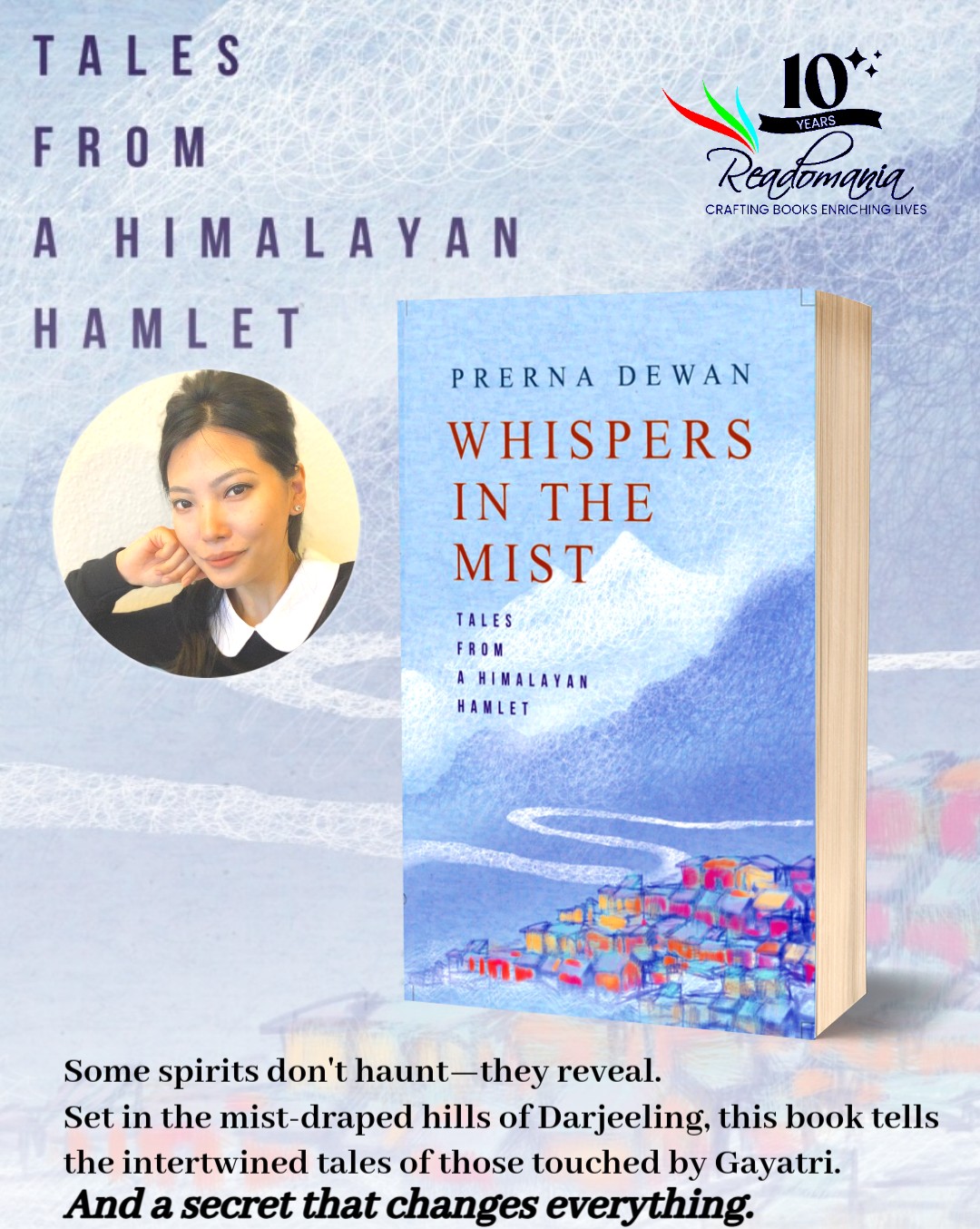
Readomania: The characters in your book range from a grieving couple to a rape survivor, each facing very different struggles. How did you ensure authenticity and sensitivity in portraying such a wide emotional spectrum?
Prerna: I think the greatest thing books have taught me is empathy—to truly feel someone else’s joy or sorrow. The moment we put this into practice, the world seems less noisy, less judgemental. To simply feel the character and their journey as our own is what artists are made of. Through reading—being introduced to diverse settings and characters—we absorb emotions we weren't even aware of. Exploring this exact space of empathy, the ability to feel for others, has helped me create an authentic reality for my characters.
Readomania: Baini the cat adds a subtle yet poignant dimension to the narrative. What inspired you to include her as a silent observer with a fate of her own?
Prerna: I guess this goes back to my childhood days, when I loved writing the autobiographies of inanimate objects like a pen, a tree, or an apple. As an animal lover, I have always wondered what they think of humans. And then there is Baini. Being a cat, she is allowed to move in and out of homes, listening to peoples’ stories, their secrets, their insecurities. Baini knows everything about everyone; and through her, I found the opportunity to tie up the loose ends.
Readomania: As a writer, what was the most emotionally difficult story to write in the collection—and why?
Prerna: It has to be the first two stories—'The New Bride' and 'The Little Prince'. As a wife and a mother, these stories,which explore themes of love and loss,have been somewhat intrusive to my thoughts.

Readomania: The book’s structure—interconnected stories tied by a ghost—breaks from conventional narratives. What were the challenges and freedoms this format offered you as a storyteller?
Prerna: Anything that breaks away from the normal and the accepted, usually has the odds stacked against it. So, when I chose this unconventional narrative—and being a fairly new writer—the project was naturally deemed 'difficult'. But I was adamant about sticking to this structure. The first thing I did was keep the writing simple and draw the readers right in for a meaningful, engaging experience.
But the good thing about this structure, however,was the liberty it gave me to explore characters beyond the boundaries of their individual stories. For instance, what happens to Gayatri, is told in parts by other characters, even as they reveal their own journeys.
Readomania: If Gayatri could speak directly to readers, what do you think she would want them to understand about love, loss, or forgiveness?
Prerna: Be careful—the dead can come back. Jokes aside, I think she would say something like: nothing in this world is permanent. Everything is here and now. Love, forgive and heal today, because tomorrow always brings a new beginning.
Readomania: You’ve previously published The Oblique Rays of Sunshine. How has your voice or vision evolved between that book and this one?
Prerna: I have definitely grown as a writer. I have learnt—or rather, I’m still learning to effectively implement the three C's—clarity, concise, coherence. I believe a writer’s potential, should not be restrained by limits, so I hope to continue growing, and perhaps explore new styles and genres.
Readomania: What is favourite genre to read? What kind of book influenced your writing?
Prerna: When I was a little girl, I was into thriller and suspense—Nancy Drew was my god. Later, in college, I was introduced to God of Small Things by Arundhati Roy. Life has never been the same since. I discovered that I enjoy books that dwell upon the human condition, celebrate life as it is, and are mostly character-driven.
I also adore Virginia Woolf, Sylvia Plath, Jane Austen. In recent times, Kiran Desai, Arundhati Roy, Ali Smith, and Ocean Vuong have become my favourites.
Readomania: And finally, what’s next for you as a writer? Are there more stories waiting in the mist?
Prerna: Definitely. I am currently in the chaotic draft stage of my third book. It is an epistolary novel in which a middle-aged woman writes letters to her childhood friend- who never writes back. Is the friend still alive, or was she just a figment of her imagination? The book explores the themes of dysfunctional families, motherhood, childhood trauma, and more. I hope to complete the work soon.
Get here book here here
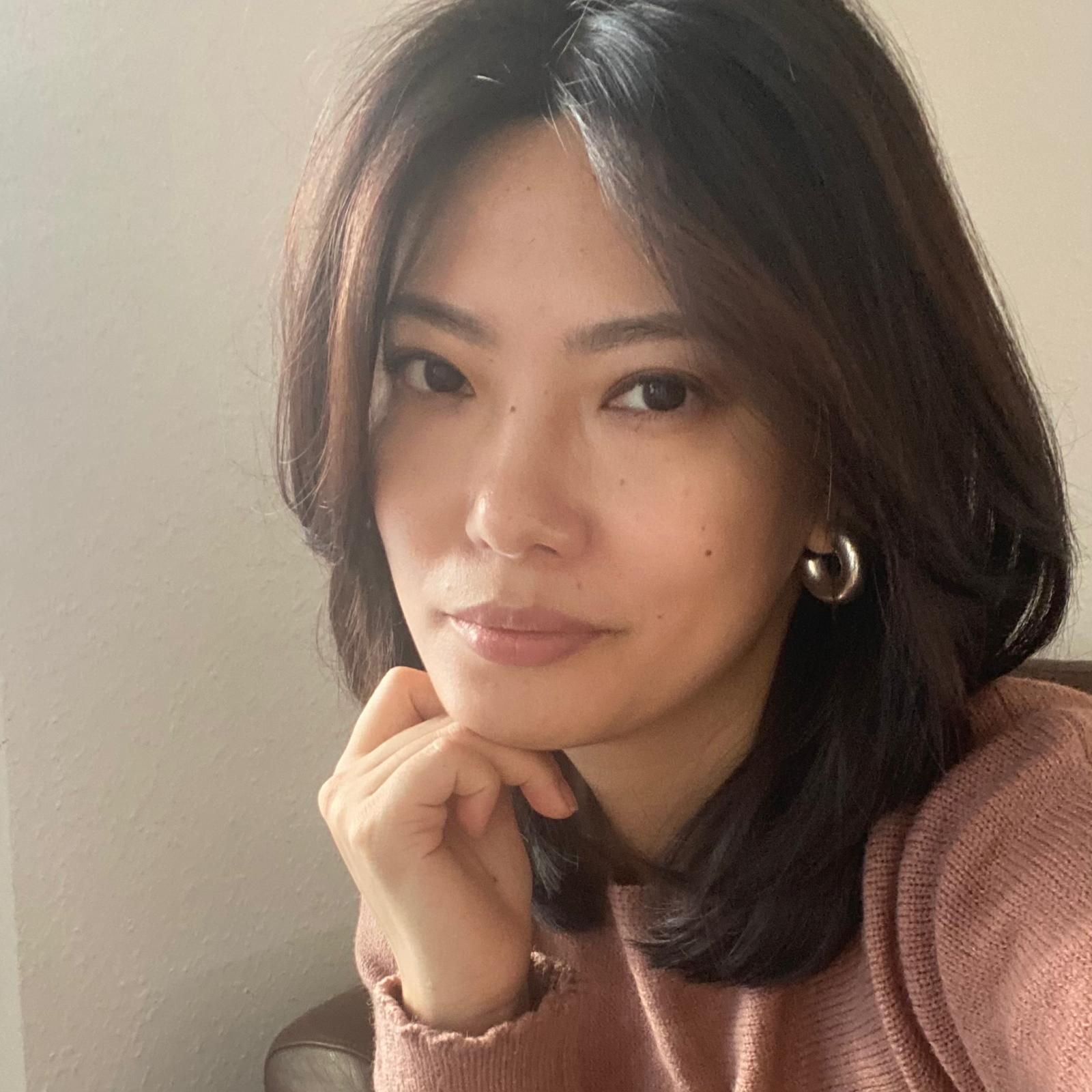
Prerna Dewan is a homemaker in her late 30s who has mustered the courage to share her writings beyond the confines of her bedroom walls. She describes herself as an avid reader and a homebody who finds solace and energy in the comfort of her own home. Prerna also has a passion for music and enjoys travelling.
Hailing from Darjeeling, Prerna currently lives in Germany with her husband and son.

Comments