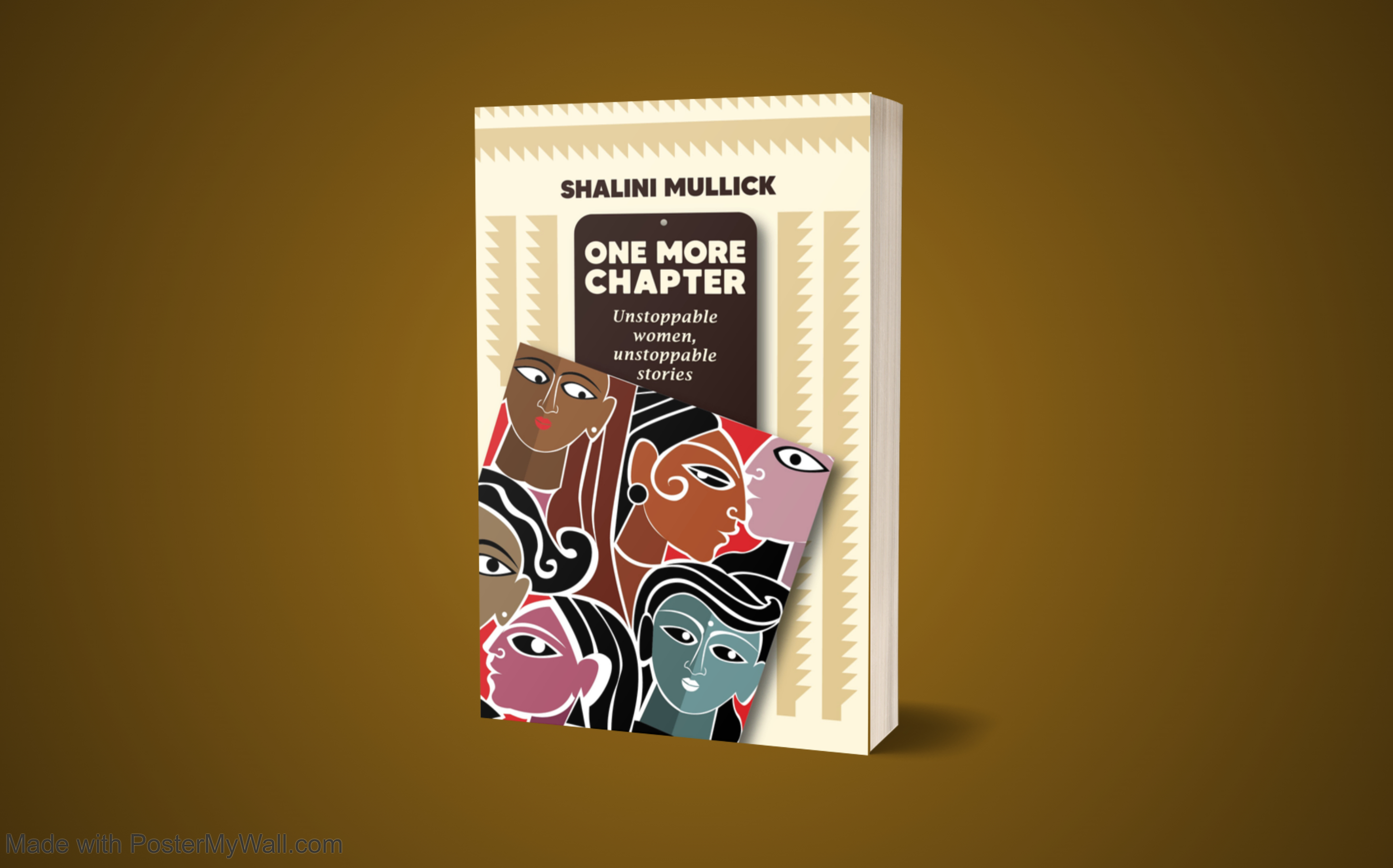
We caught up with award-winning author Shalini Mullick for a quick conversation and it made for a delightful read. Here is what she said.
Readomania: What inspired you to create One More Chapter? Was there a particular story or moment that sparked the idea for this anthology?
Shalini: Delving into the complexity of women's inner lives through fiction has been a constant thread in my writing. While I did not have the words for the concepts then, it was in my days as an undergraduate student at Lady Hardinge Medical College that I was first exposed to intersectionality and sisterhood. And it is these that lie at the heart of this collection —different women facing different circumstances, but showing a fortitude that is rooted in their inner strength, uplifting others, and bringing change. In One More Chapter, everyday women and situations are the muses. When I wrote these stories, each one was about distinct, unique experiences. But then I realised that stringing the stories together were threads of shared experience — loss, reinvention, protecting others, and finding inner resources they didn't know they had. That was when I felt that the stories could come together in the form of this collection.
Readomania: The stories span such diverse experiences. How did you choose which stories to tell?
Shalini: I think that for any writer, the stories chose themselves as much as they are chosen by the writer. The stories are diverse in that they feature a variety of women in distinct situations and facing different challenges. This has been done deliberately with an intent to show that the challenges of each woman are different, and also that each one’s way of dealing with them is also different. Lastly, it was very important for me to highlight the fact that resistance and resilience both are as much in daily endurance as in moments of heroism. If pathbreaking developments are a sign of resilience, so are the acts of quiet persistence or breaking generational trauma or stereotypes. The different stories in this collection are a window into this. In One More Chapter, you will come across Priya, Radha and Tamanna, who bring about sweeping changes in the law which will touch the lives of countless other people. And you will also meet women like Vidhya who are brave enough to step outside the constraints of their conditioning. Then, there are women in the book like Neetu’s mother, whose name does not find a place in the story or in the conventional family setups, who dare to make unconventional decisions and stand by them. And there are Ananya, who is overcoming the deepest of fears, and Reema, who remains spirited in the face of her circumstances.
Readomania: Were any of the characters or narratives inspired by real-life women you’ve encountered or admired?
Shalini: In writing fiction, the characters we create are always composites—bits and pieces of people we have known, overheard conversations, newspaper reportage, stories about communities, and experiences witnessed are all mixed together with imagination. No single story is about one specific person, but they are all rooted in real life, real people, and very real circumstances that women often find themselves in.
Readomania: One More Chapter explores both every-day and extraordinary acts of courage. What do you think connects all these stories at a deeper level?
Shalini: I think that there is a recurring character archetype that threads the stories together. This archetype is of women who refuse to accept limitations placed on them, whether by society, family, or circumstances— characters who make difficult choices that prioritize their own growth or values over others' expectations. Women who rebuild themselves after loss, betrayal, or failure. Protagonists who challenge authority or break from tradition, often paying a personal cost for their independence.
Readomania: The title One More Chapter suggests continuity, maybe even addiction to inspiration—why did you choose it?
Shalini: ‘Addiction’ is such an interesting choice of word. Your usage of it here made me stop and introspect. I chose the title as to indicate that we always have the power and the agency to script our lives. And that, as long as we believe that we have that power, there is always one more chapter in our life stories. Sometimes life throws a lot of curveballs our way, but we have the power to play those curveballs and change the course of the game— maybe even rewrite the rules? Coming back to the word you used… perhaps being addicted to reclaiming your power is the secret sauce of a life lived on your terms?
Readomania: Which story in the collection was the most challenging for you to write—and why?
Shalini: The story of Ananya Shah, an Air Force officer who battles a fear of heights. In this story, the conflict was completely internal. There was no external person or system that she could blame for her fears. There was no villain for her to rave and rant against. For her to become the person that she aspires to be, she has to look within herself. And that is perhaps the most difficult thing for anyone to do. This is not a theme that I have explored for the first time. If you recall, in The Way Home, Roy tells Anya how change can be hard and messy, and how the motivation to change has to come from within. For Ananya to overcome her fear and her guilt, the mental journey would have been hard and unpredictable. More importantly, it was a journey that she didn’t have to undertake… yet, she chose to. That is a unique strength in itself. And that is what so many of us experience in different forms, don’t we? Pushing ourselves out of our comfort zones, exploring our innards, healing ourselves is not an easy choice to make. But only when we commit ourselves to that do we come closer to being the person we can be, to actualising our potential.
Readomania: Did writing these stories change the way you see resilience and strength in women?
Shalini: Yes, of course. I think writing is fundamentally a tool for authors to make sense of the world around them —at least it has been like that for me. In Stars From The Borderless Sea, I was trying to understand the complexities of human relationships. In The Way Home, when my characters navigated their challenges, I was making sense of the busy, hyperconnected world we leave in —one where we are more alone than ever. In One More Chapter, while crafting the arcs of the protagonists, some of them took on a life of their own. I discovered they show unexpected courage, and respond in ways that I might not have thought of when I started writing a particular story. Inhabiting these different characters—women from backgrounds unlike mine, facing situations I'd never encountered—stretched my ability to understand experiences beyond my own. I realised , many terms later, that resilience comes in many forms. It was also a humbling window into my own privileges.
Readomania: The stories challenge deeply rooted societal norms. What conversations do you hope this book will spark among readers?
Shalini: hope this book will inspire meaningful conversations about gender roles, equality, and the diverse ways women demonstrate resilience and strength. I hope readers will ask themselves: 'What rules am I following that I never chose?' and 'What would I do if I weren't afraid?' These stories are meant to be mirrors as much as windows. I hope it makes each reader ask: "What's my next chapter?"
Readomania: From patriarchy to the judicial system to internal fear—your characters face it all. What do you believe is the first step in overcoming such deeply ingrained barriers?
Shalini: Believing that whatever happens to you, you still have the power and the agency to respond to it. And that , while sometimes we may feel that we have lost the power, we can always reclaim it. That how you respond to any situation is what matters more than the situation itself. A favourite quote by Viktor Frankl, from the book Man's Search for Meaning is perhaps the best way to sum this up. “Everything can be taken from a man but one thing: the last of the human freedoms—to choose one’s attitude in any given set of circumstances, to choose one’s own way.”
Readomania: You highlight the journey of self-discovery through adversity. Why do you think women’s strength often reveals itself most during difficult times?
Shalini: Unfortunately, society often doesn't give women permission to be 'difficult' or demanding until there's a crisis that justifies it. Adversity provides the moral authority to finally say no, to set boundaries, and to choose themselves. It's sad that we often need a crisis to claim space we should have had all along.
Readomania: How do you see the role of storytelling in shaping more inclusive and empowering narratives for women today?
Shalini: Stories have a unique ability to amplify voices, challenge biases, and inspire inclusivity. Neuroscience tells us that engaging narratives release oxytocin in the brain, promoting empathy and altruistic behaviour. More than data or policy, storytelling humanises diverse experiences and catalyses change. Storytelling humanises. It breaks down barriers by allowing us to step into another’s shoes, to feel their joy, pain, triumphs, and struggles.
Stories can also help different groups of women understand each other's experiences. A suburban mother might better understand a working-class immigrant woman through fiction than through statistics or news stories. Empathy creates solidarity. Every women's story can be a small act of revolution.
Readomania: As a practicing doctor as well as an award-winning author, how do the twin roles of a medic and a writer help in your two jobs?
Shalini: As a doctor, we get a window into the most important, most intimate, and life-changing moments and experiences of people across different demographics. We see them in pain, afraid, facing mortality, making impossible choices. We also see them find joy and relief. This exposure to raw human experience provides a deep well of authentic emotion and motivation for creating characters. Writing, on the other hands, makes one aware of the nuances of life that otherwise get missed in the busyness of being a doctor, increasing empathy.
Readomania: Do you see One More Chapter as a celebration of where women are today—or a call to action for where we still need to go?
Shalini: Both. The very existence of these stories celebrates how far women have come. Each character who makes an unconventional choice, who speaks her truth, and who refuses to settle represents progress that previous generations fought to make possible. The book honours the women who paved the way and acknowledges the expanded range of choices available today. But celebration without continued progress can become complacency. These stories reveal ongoing struggles—women still navigating impossible choices, still paying costs for authenticity, still fighting for space to be fully themselves—and they are showing how much work remains.
The same is also reflected in the title, which implies completion as well as continuation…many chapters of women’s progress have been written, but there is always one more chapter to write.
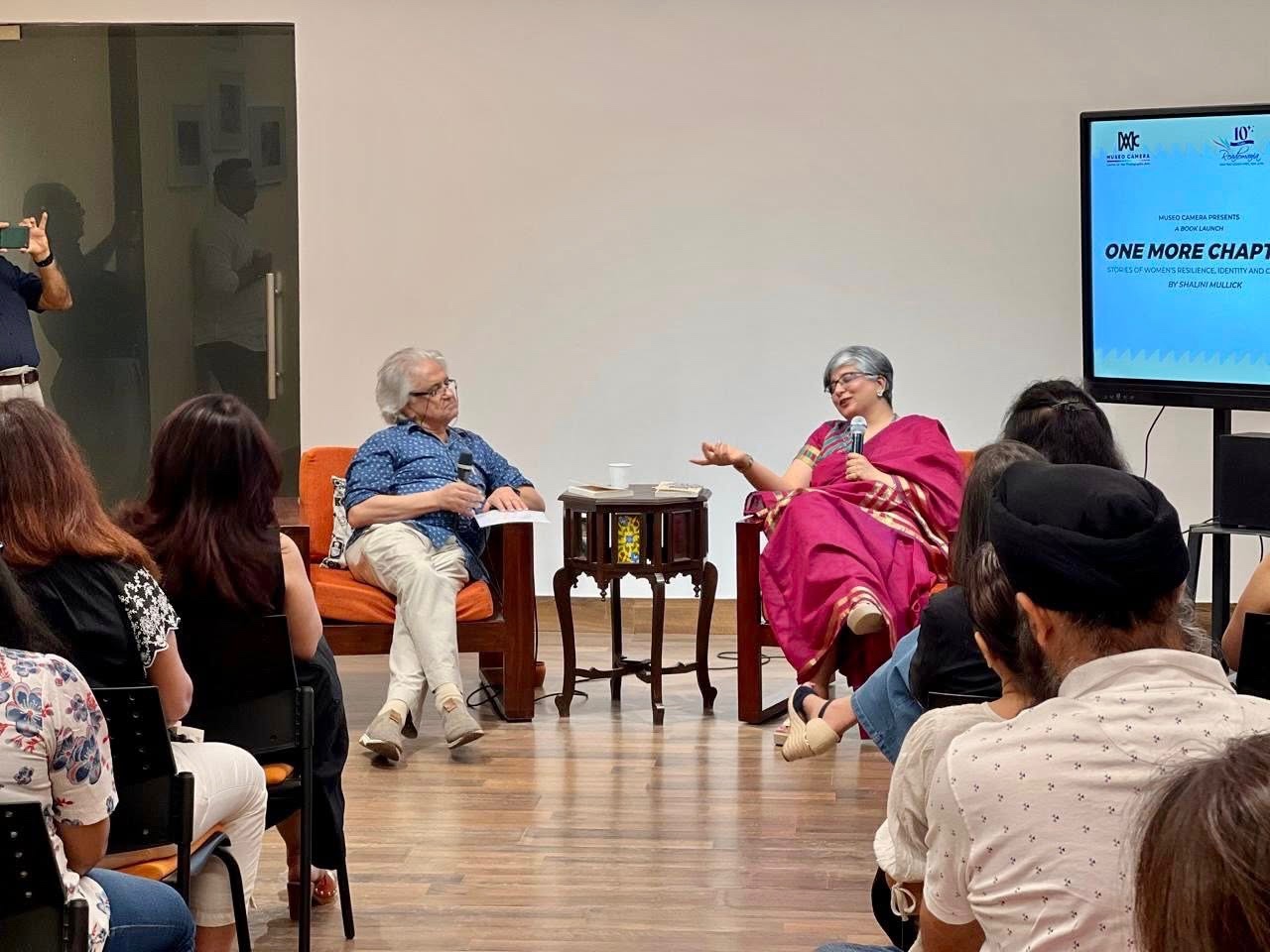
Readomania: What was the most rewarding part of writing this book for you personally?
Shalini: The resonance that it is finding with the audience. For any reader or writer, the circle of their work is completed by the reader. I am fortunate that readers are finding pieces of the people they are, and the people they can be, in the pages of my work.
About The Author
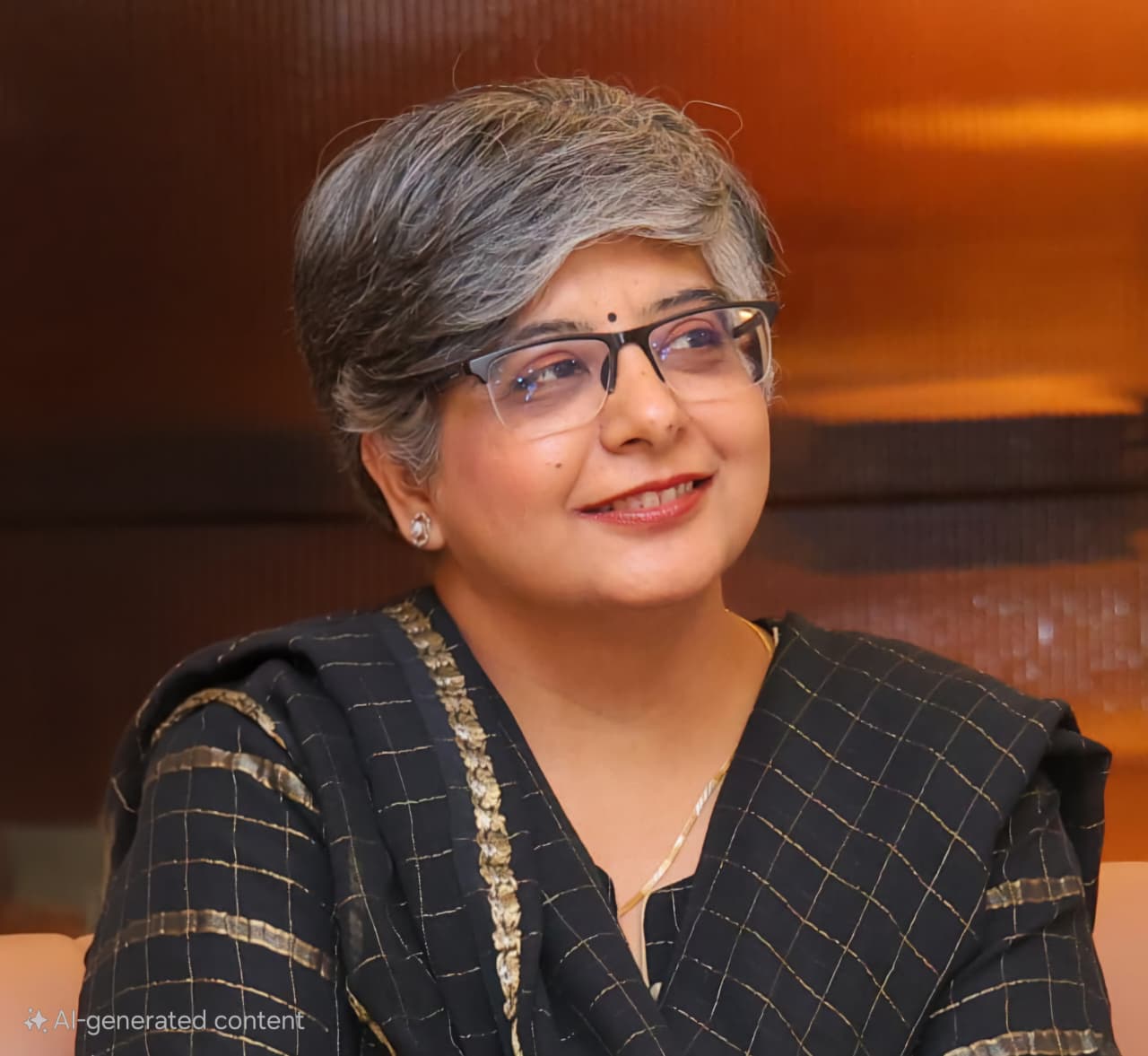 Shalini Mullick is the winner of the IGF Archer Amish Award 2025, one of the largest global literary prizes.
Her contemporary fiction is rooted in the reality of the world in which we live, love, feel and struggle. Creating work that resonates with readers navigating their own journeys of love, loss, life, identity and self-discovery brings her joy.
She is an introvert who enjoys meeting people. She finds that writing takes her away from the noise, and towards silence.Raised in a family where books were cherished, she cannot imagine a world without books.She believes that libraries are the most magical of all places, and that stories have the power to touch, transform and redeem.
Shalini is happiest in the company of books, chocolate and old hindi movie songs. She loses herself in the melody of ghazals, and finds herself in their lyrics. Poetry touches her soul, and she belives there is a perfect Rumi quote for every situation in life. Shalini loves both the magic of the sunset and the promise of the sunrise.

Comments