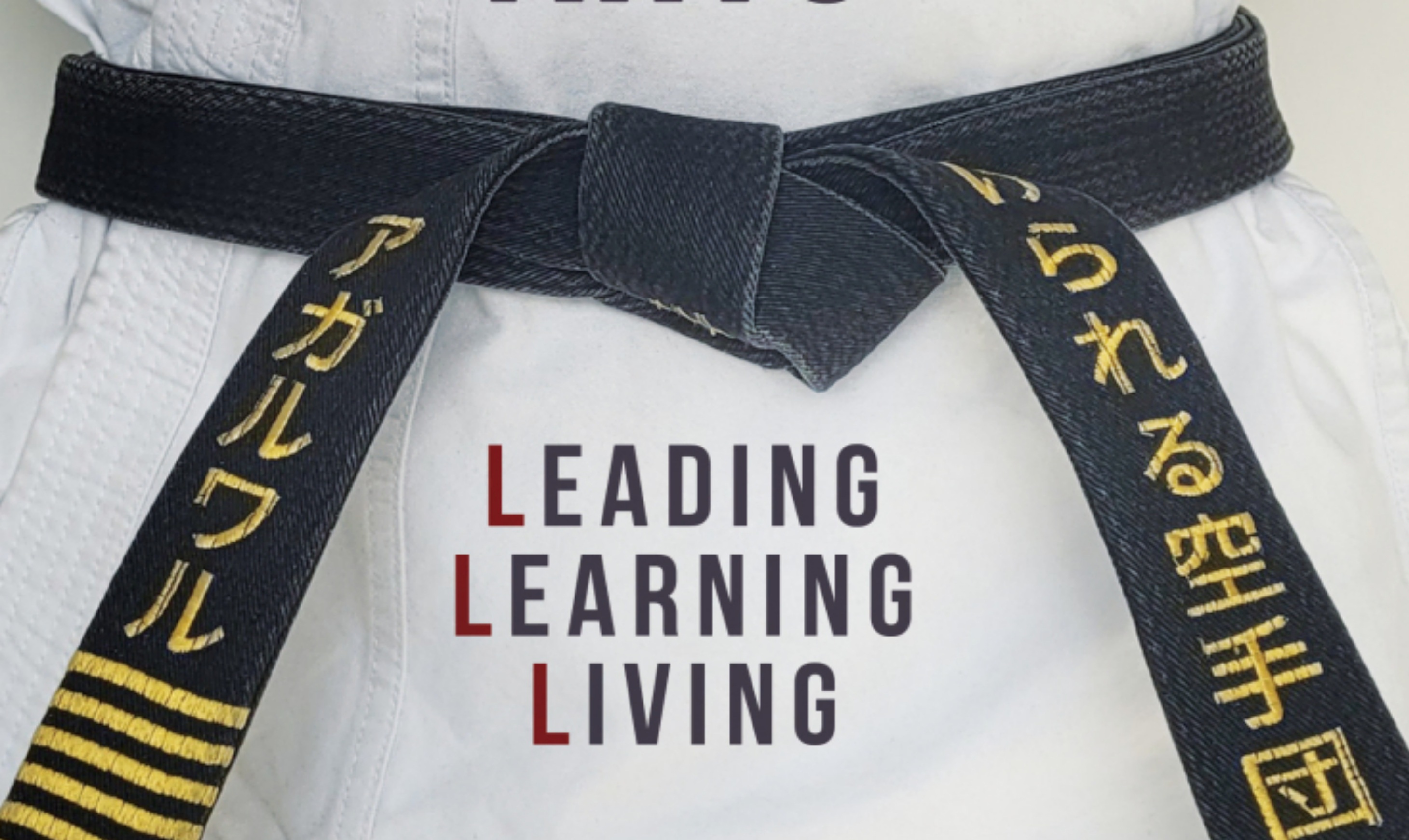
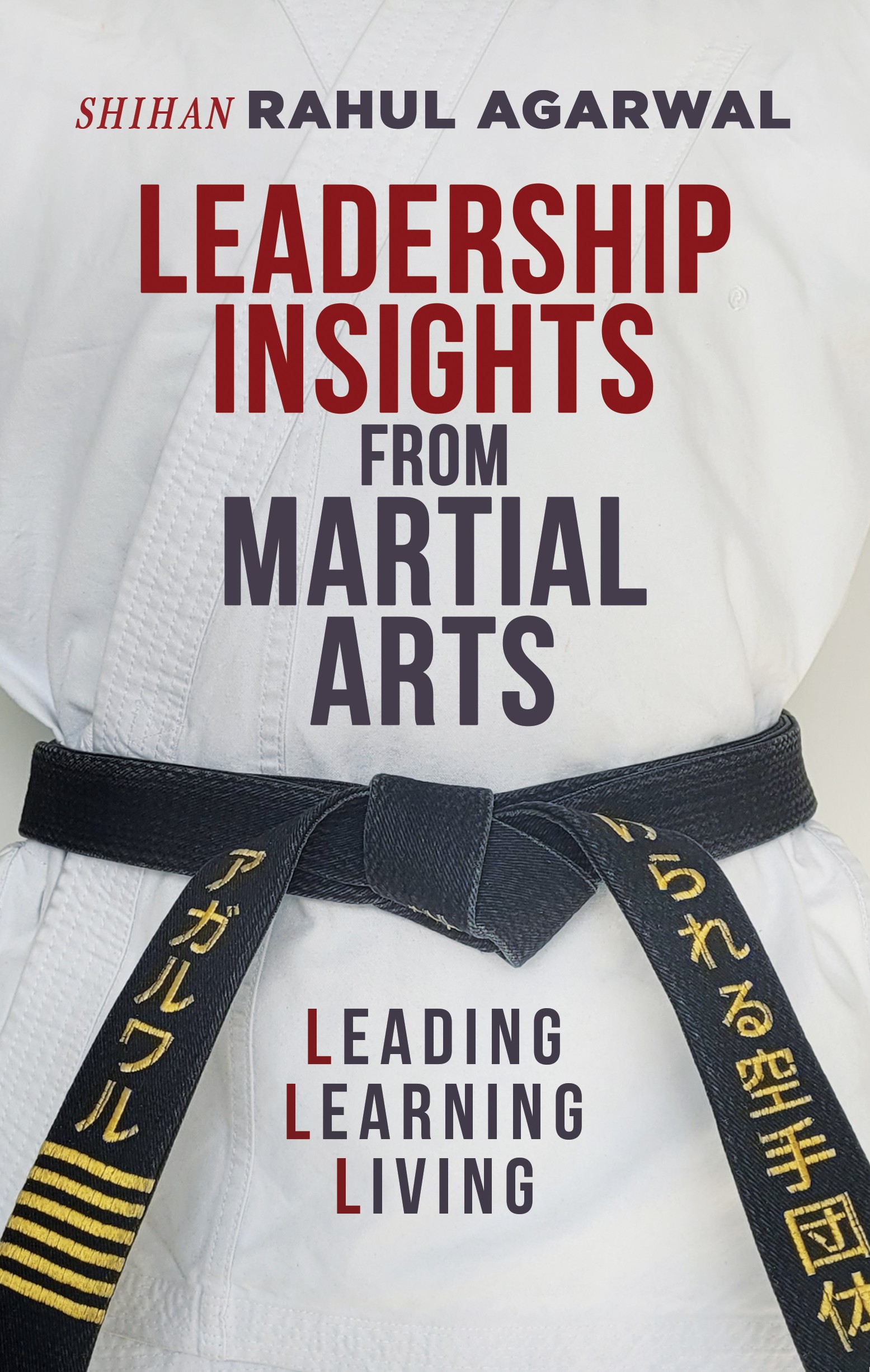
Shihan Rahul Agarwal talks to Readomania about his life as a leadership development coach and how it shaped his book Leadership Insights from the Martial Arts.
A black belt in Karate, Rahul’s personal pursuits crafted the idea for a book that delves deep into a living experience enriched by passion, professional ethics, and the possibility of development for leaders in all walks of life.
Readomania: What inspired you to write Leadership Insights from Martial Arts? Was there a specific moment when you saw the connection between the dojo and the boardroom?
Rahul: All the experiences that I had had as a student and a teacher had deep connections with leadership per se. Thanks to popular media, Karate/ martial arts are typically seen as a sport, sometimes even a hobby or a personal interest. There is very little known about martial arts wholistically, as an art form that deepen people’s experiences of their professional lives. Through the book, my endeavour is to reach out to both practitioners and non-practitioners of martial arts to help them explore this world of self-mastery and discipline.
Readomania: How has your experience as a Karate practitioner shaped your approach to leadership and coaching over the years?
Rahul: If I were to sum it up in three words – it will be compassion, courage and curiosity. Having had a huge diversity of students and experiencing how each goes through challenges in their lives, yet tries to bring their best to the dojo brought compassion and respect for each individual’s life.
Staying honest about my values so that I could stand up as an example of a true leader for my students brought courage. I have faced some of the toughest phases and decisions of my life over all these years of teaching and practicing Karate.
Living through those required courage. Pushing through towards excellence made me curious to learn more and keep advancing. This I encouraged in my own profession as well as with my students.
Readomania: Can you share a moment from your martial arts journey that deeply influenced your understanding of leadership?
Rahul: There are so many moments. The entire book is a journey of these milestones in my life!
2016 was a turning point in my life. This was when I had to stand up for my students against top leadership for the sake of one of my students who was unjustifiably being accused of wrongdoing. While so called well-wishers and leaders around me advised me to safe-guard my own interests and throw the student under the bus, every cell in my body screamed to do the just the opposite.
Which is what I then did – stood up for my values so that I could look my students in their eyes and maintain the respect that they had for me. It came at an immense cost, yet I would do the same thing again. Leadership in the corporate world is not just about producing results but also about doing so with integrity. We have a long list of examples where big names have fallen due to lack of integrity, or by ignoring their values in such critical moments.
Readomania: The book blends personal stories with leadership strategies. How did you strike a balance between storytelling and practical advice?
Rahul: By preference, I am a pragmatist. I like things to be practical that have a tangible value and impact. So, it led me to structuring the chapters such that they started with a story from the dojo. Then a leadership insight would follow, and a connection would be established with situations in real life. I wound up with questions so that readers themselves could reflect upon their own leadership and/ or coaching approach.
Readomania: You mention self-mastery, emotional intelligence, and adaptability—why are these qualities so crucial for today’s leaders?
Rahul: Everything in one’s life emanates from desires, aspirations, preferences, fears, choices, decision one makes. The satisfaction or dissatisfaction from these leads to an experience that creates a landscape of emotions, thoughts and reflections on pathways to follow. Unless we are aware of all of this, our behaviour may not be aligned with what will ultimately lead us to our desires and goals. Intent and impact are two separate things – not necessarily the same. Our world today has become extremely complex, unpredictable and emergent. Not just small things around us, but even major world events can suddenly overtake daily life.
The only way one can maintain sanity and ensure that one’s actions lead towards what is wanted is by staying aware and adaptable. As it is said, what doesn’t move is dead. Even water that doesn’t move becomes stale and doesn’t support life.
Readomania: In the book, are there lessons that surprised even you when you looked at them through the lens of martial arts?
Rahul: Many of the experiences and stories were surprising to me in the initial years of teaching. Which is where my own mind became more receptive towards Karate as an art form. For example – there is that one time when a student managed to use lessons from his dojo practice to approach his ex that reunited them to build their lives together! Who would’ve thought that a martial art could unite people in their hearts?
Readomania: You’ve worked with corporate leaders for 25 years. Do you find any recurring gaps in leadership that martial arts could address?
Rahul: Compassion, courage and curiosity. In some combination or the other. Living with purpose, above these. Leadership isn’t about authority, nor about a title. It is one’s passion and sense of purpose that inspires people. With every stage of one’s journey in karate, the question as to why does one want to continue comes up. This makes practitioners ask the same question to themselves in other aspects of their life as well. Particularly in one’s career.
Readomania: Many leaders struggle with emotional regulation. How can martial arts’ practices enhance emotional intelligence in high-pressure environments?
Rahul: There cannot be as ‘real’ a high-pressure as one experiences when facing an opponent during kumite (sparring), knowing that a weak defence or the opponent’s strong offense could lead to them being hit. While the opponent is a partner in practice, defending oneself is still one’s own responsibility. Control over fear and anger – and everything in between is tested every moment of one’s time during kumite. Fear leads to stiffness and pulling back while anger leads to acting without thinking. What is required is emotional regulation all through to be able to act effectively for both offense and defence.
Readomania: Do you see martial arts more as a philosophy of living or a toolkit for specific outcomes? Or both?
Rahul: I would say it is a philosophy for living. The practices therein make us better prepared for life’s challenges and for living meaningfully. There are no fixes or quick solutions for specific outcomes. It is the diligent following of the core practices that enable us to act in ways that help in productively managing those specific situations that come up in life.
Readomania: How can organizations start incorporating martial arts principles without formal training in the art itself?
Rahul: In two ways – one, it is not about training in a martial art that is essential, any art form that is followed as a philosophy of living can offer similar benefits. Be it theatre, painting or others. Immersion is what is essential.
Second, in the book I have mentioned several approaches in each chapter that can be implemented as practices for organisations to enable certain outcomes. For example – adaptability and openness to change. In karate, after training for a certain time doing the same thing the same way over and over, we change it. Either the direction or left/ right side of the body, or the sequence of techniques, in a combination, are changed. This keeps the mind nimble. Same can be done in organisations by encouraging active experimentation, holding contests regularly, encouraging employees to find better/ different ways of doing things.
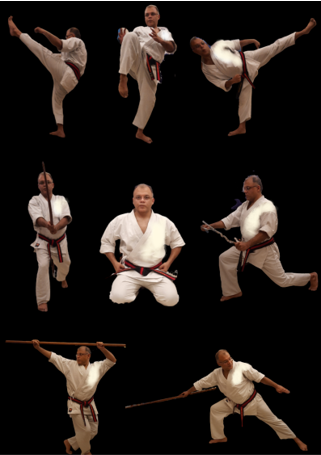
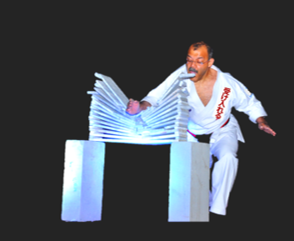
Watch Rahul on the floor: https://www.instagram.com/p/CEdgsivpQb9/
Readomania: What do you hope readers walk away with after reading this book?
Rahul: An appreciation for the art form beyond what is available in the popular media.
Specific insights and practices that they can apply to their own life – whether they follow a martial art or not.
And, for leadership development professionals and coaches, to see that there is immense potential in leveraging art forms for supporting development and growth of people.
Readomania: Do you plan to explore other areas where martial arts intersect with life—like parenting, education, or community building—in future work?
Rahul: Hmmm, those are good ideas, I’d like to explore them too! I am still considering what comes next. Having devoted 31 years as a practitioner and 23 as a teacher, this book is about spreading the messages from the dojo and my experiences. Leadership is omnipresent, or let’s say, it plays a role everywhere. In parenting, education and in community building. For every dimension of human life, we need leadership – again, not as a title or a position. But for people to come together to create positive impact and meaning. As it is said, the core role of a leader is to build future leaders in an expansive and inclusive manner (and not just as a coterie of followers). I am sure we would want tomorrow’s children, students and citizens to be leaders who can pass on the same values to generations ahead of them.
Rahul’s book is a must read for all those thinking about their own leadership goals and professional development.
Click to buy the book now.

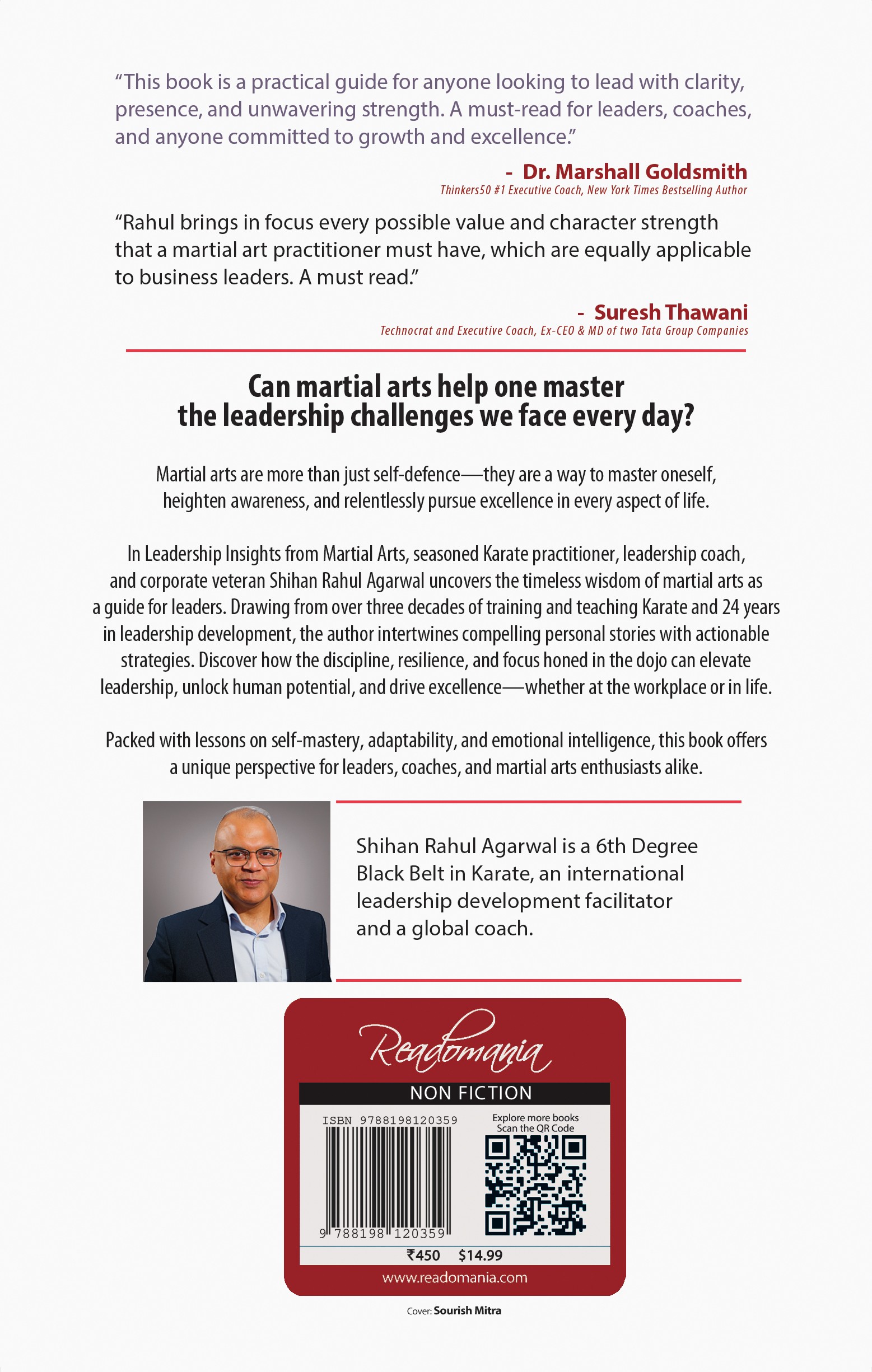
Shihan Rahul Agarwal is a 6th Degree Black Belt in Karate, an international leadership development facilitator and a global coach. With over 25 years of learning and organizational change experience, Rahul specializes in aligning leadership and organizational practices with business strategy. His consulting focuses on building leaders and cultures that attract, retain and develop talent.
Connect with him at LinkedIn: @Rahul Agarwal

Comments