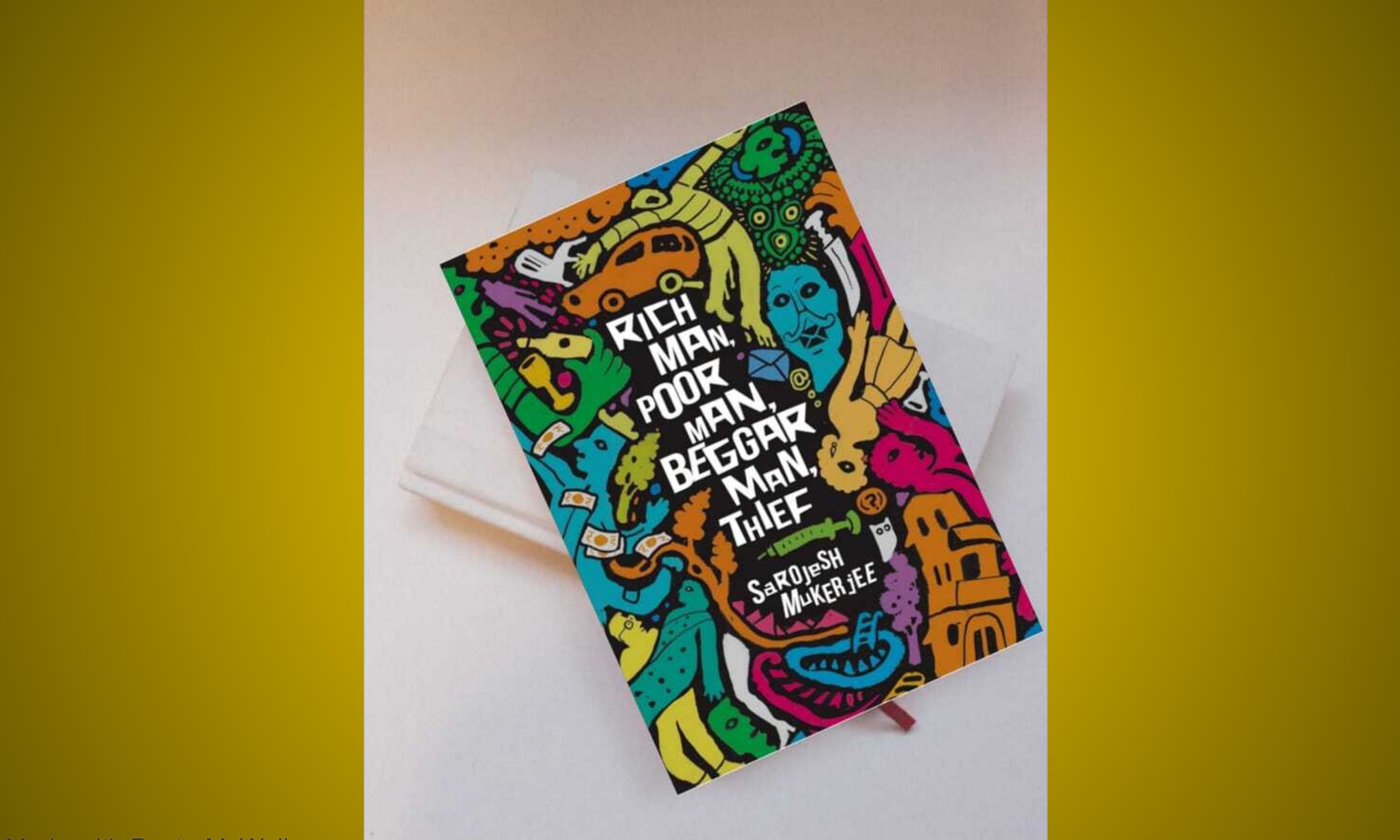
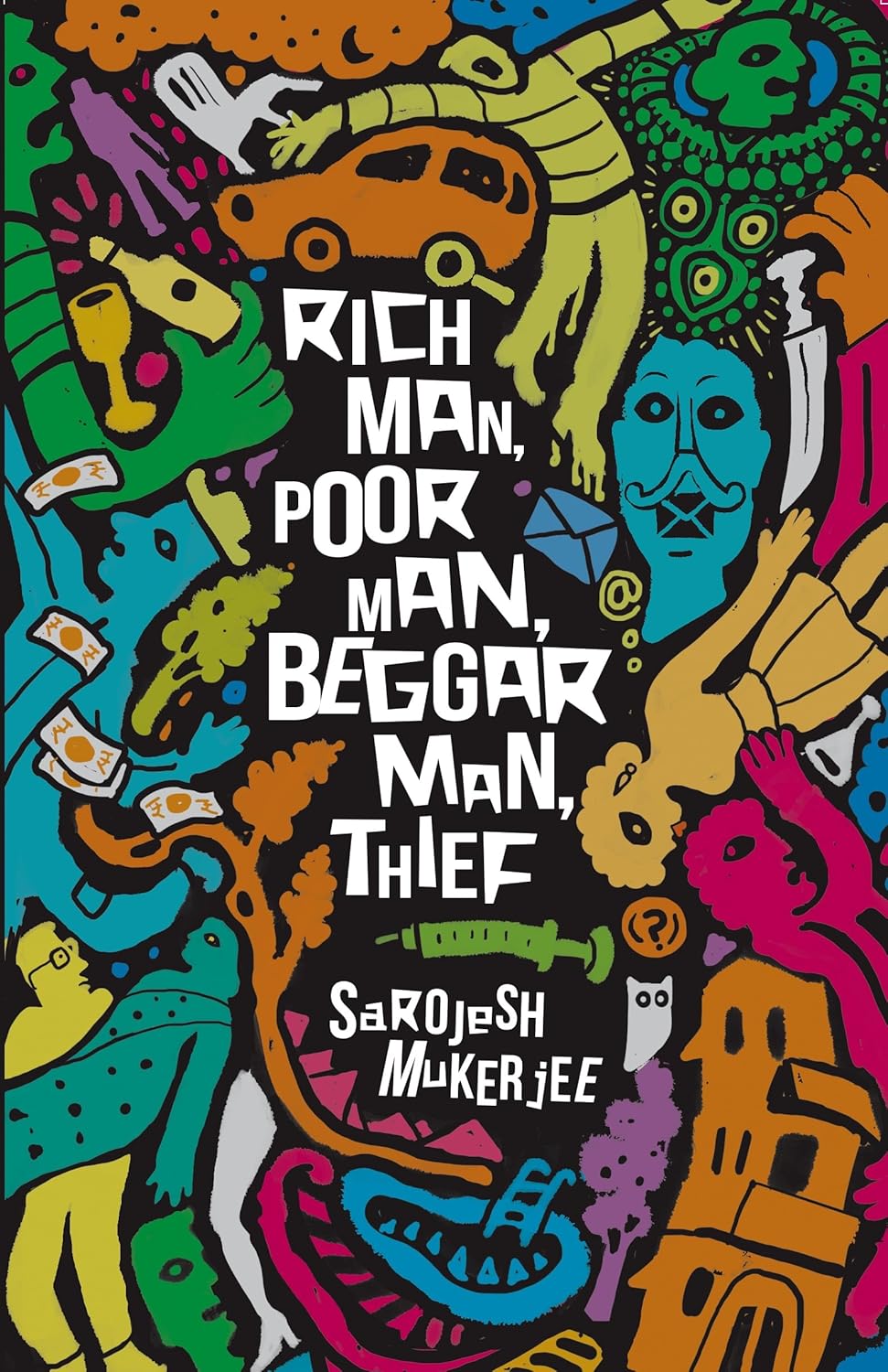
Dial C for Crime – Murder, a daring jewellery heist, a tax evasion scheme, hidden fortunes, the disappearance of a key witness, or accidents gone awry… each twist more treacherous than the last. Dial D for Dozen – Twelve lifelong friends, bound by history, clashing over their shared past, their unspoken rivalries, and the secrets they’ve kept hidden for decades. Dial E for Evil – The dark force that ties these crimes together, propelling this speeding inferno of a thriller you’ll never want to end. Rich Man, Poor Man, Beggar Man, Thief will leave you breathless, gripped, and questioning whom you can trust.

Readomania: Hi Sarojesh, congratulations on the release of your crime thriller Rich Man, Poor Man, Beggar Man, Thief.Why did you choose to frame a story of long-term friendship, betrayal, and crime through a series of emails? Was there a moment or idea that led you in this direction, and how did the epistolary structure challenge or enhance the way you revealed key twists and built suspense?
Sarojesh: I have been a voracious reader of crime fiction from a very young age, starting with Agatha Christie and Ngaio Marsh, and then moving on to more complex and modern novels of Ruth Rendell and P. D. James. In recent times, I’ve read some excellent work by Nilanjana S Roy and Abir Mukherjee.
So, it was that one fine day The Appeal by Janice Hallett fell into my crime-fiction-marinated brains, as it were! It was epistolary—told through emails and messages—and as soon as I put it down, I knew that I had to write one.
Hallett’s milieu is a theatre group, a world I didn’t know much about and I didn’t want to write a replica either. However, I did know a circle of friends who have been close for a long time, nothing like the characters in the book, but people I could draw on to imagine a sequence of fictional crimes.
That’s how this book came to be written.
Readomania: The novel explores how quickly decades of friendship can fall apart. What drew you to this psychological dynamic?
Sarojesh: I’ve seen and read about fallings-out over far less than the crimes portrayed in the book. The making and breaking of friendships has always
fascinated me—right from historical ones like that between Mark Twain and Nikola Tesla, to personal and political ones too many to mention here.
But I’ve also observed that friends often turn upon each other and when they do, it is usually with a ferocity that surprises, perhaps reflecting the depth of the bond that once existed between them.
I hoped to bring a little bit of both into the book.
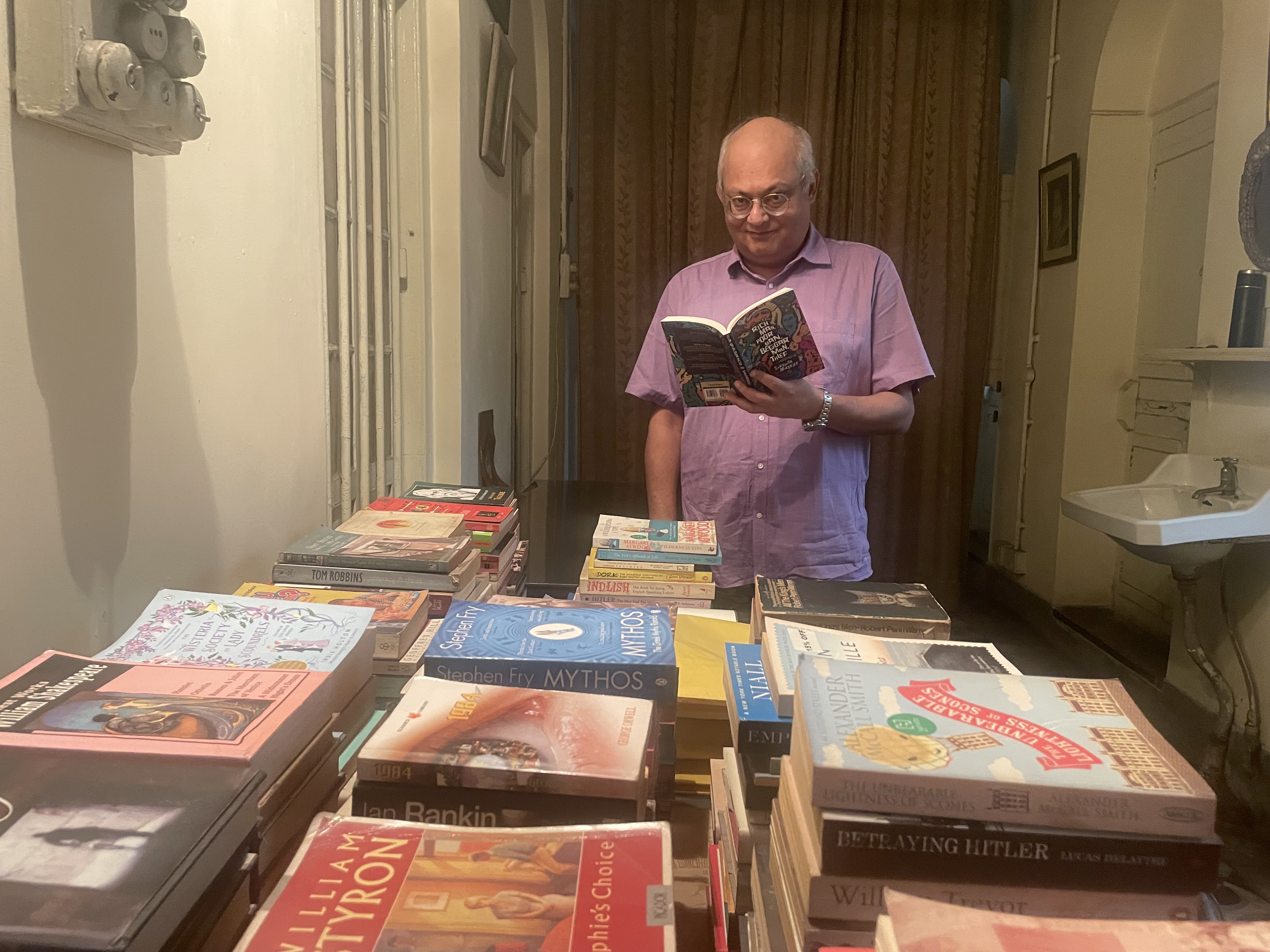
Readomania: Each character seems to wear a mask that slips as the story progresses. Was there a particular character who surprised you as you wrote them?
Sarojesh: Yes, Malati. It was when I was writing that the idea of having her do what she ultimately does came to me. I had no premonition it would turn out that way, but I think it worked out well.
Readomania: Did you base any of the characters or relationships on real-life experiences or people you've known?
Sarojesh: No one resembles anyone I’ve known but there are bits and pieces of a whole lot of people from the characters—not just from the group of friends I referred to. It’s more about what they do—like a doctor who works in a large hospital and has also invested in a small one—than about their character traits, which are entirely imagined.
Readomania: How did you approach pacing and tension, especially with so many twists—jewellery theft, a suspicious accident, a murder, and even a disappearing witness?
Sarojesh: As I said earlier, I enjoyed reading detective fiction, but I also get bored very quickly if nothing happens in the narrative for too long while the author explores motives, contexts, conflicts and so on. Hence the quick-fire crimes. I was very wary of a reader like myself who would hop, skip and jump to the last page if there weren’t enough twists to keep her hooked!
Readomania: The story moves between the heart of Kolkata and its outskirts. How important was the setting in building atmosphere and tension?
Sarojesh: Very much so. This is undeniably a Calcutta novel. You’ll know what I mean if you imagine it set in Ranchi, where life is what happens between sleeping intervals, or in Bombay, where the supari assailants would probably get stuck in traffic for two hours.
The setting is kept sparse, though, with no other locales mentioned except Singur, Bowbazar, and E M Bypass. This, again, is because I didn’t want to wander off into the lanes and by-lanes of Calcutta, leaving my readers wondering when the next crime was going to unfold!
Readomania: The crimes in Rich Man, Poor Man, Beggar Man, Thief feel very familiar in today’s urban landscape. Were you consciously reflecting on rising crime and social breakdown in cities?
Sarojesh: Yes, of course. This book would have been thrown out of the window as a fairy tale if it had been written only twenty years ago. These days, you only have to read the newspapers to find these crimes—in fact, you almost find nothing else in the city sections.
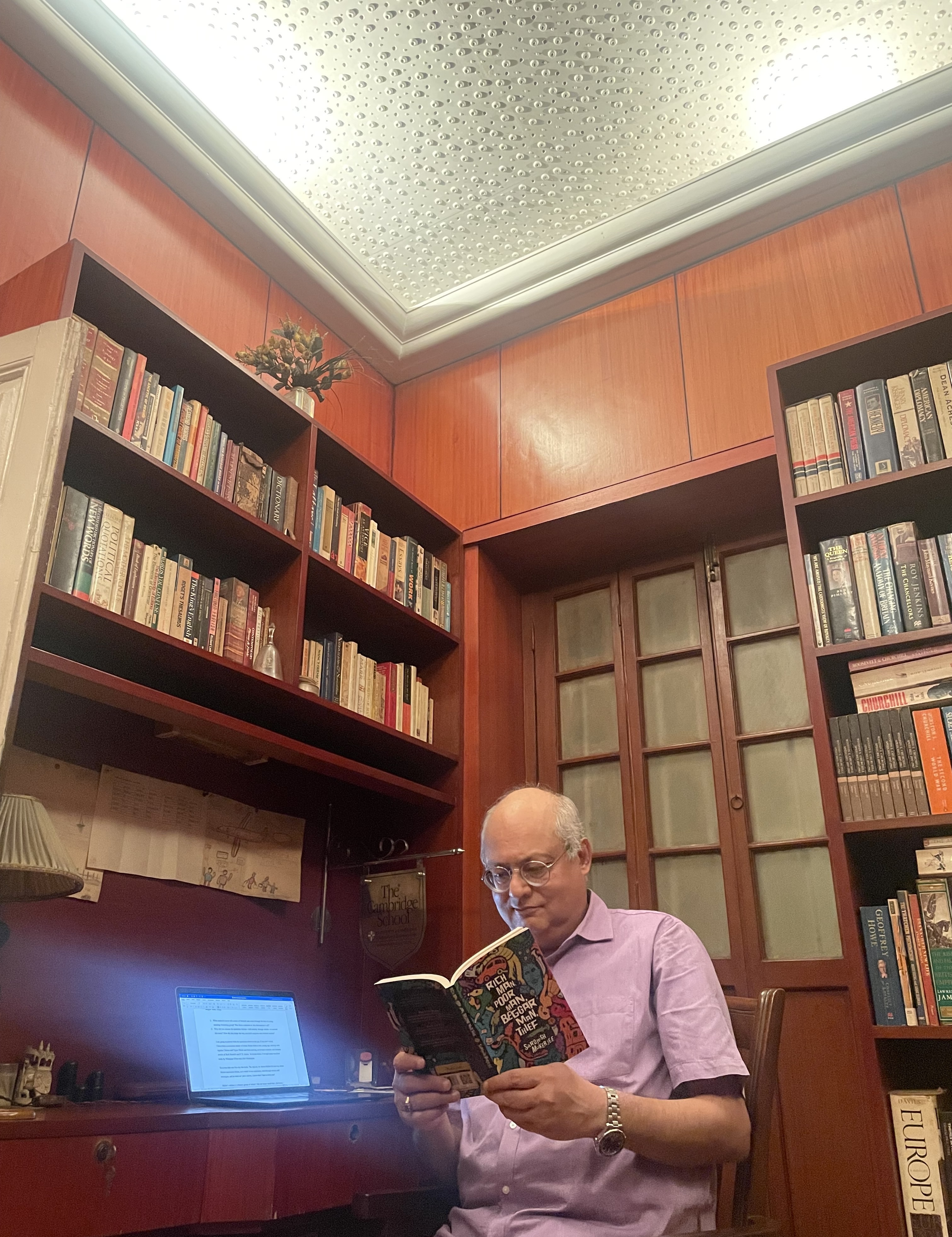 Readomania: There’s a strong undercurrent about the fragility of human trust. Do you believe intense pressure always reveals the worst in people—or sometimes the best?
Sarojesh: Mostly the worst. From experience, I find that apart from parental bonds of trust, every other relationship is fragile to some degree these days. And even parents can now descend to levels of depravity that were once unimaginable—only the other day, I read about a mother and daughter running a brothel after having killed the son/brother. You’ve probably read about similar crimes being committed by sons and daughters against their parents.
On the whole, though, I think crimes against parents and children are still, mercifully, rare.
Others are a dime-a-dozen.
Readomania: How did you manage the challenge of creating distinct voices and personalities for twelve different characters, all communicating through email?
Sarojesh: I had a structure for the novel that I followed while writing. So the psychiatrist was always going to be a bit of a psychiatric case himself, and I modulated his voice accordingly. The lawyer was meant to be clinical and dispassionate and that’s exactly how he speaks.
Readomania: What was the most difficult scene or moment to write, and why?
Sarojesh: Not really, because it is all fictional. That said, there is just one character in the book—whom I shall not name—whose personality is loosely modelled on a friend who has passed away, for more or less the same reason. It wasn’t difficult to have the character follow the destructive trajectory of my friend’s, but it was saddening.
Readomania: Do you have a specific writing ritual or a particular time when you prefer writing the most?
Sarojesh: I write fiction to relax and that means whenever I get the opportunity. I am not much of a people’s person, which is why I end up with plenty of time to leave people to themselves while I write the worst about them. : )
Readomania: What do you hope readers walk away feeling or thinking after they finish Rich Man, Poor Man, Beggar Man, Thief?
Sarojesh: Sumptuously entertained, I hope and left with some lingering memories and reflections, which I believe are the hallmark of any writing one truly enjoys.
Readomania: What do we expect next from your writing desk?
Sarojesh: My next book, provisionally entitled In Justice or Injustice ~ Early Cases from the Supreme Court of Calcutta and the High Court of Calcutta, should be published sometime in 2026.
I am now working on a history of my family and the city that should see the light of day in 2027.
Readomania: Thank you for talking to us.
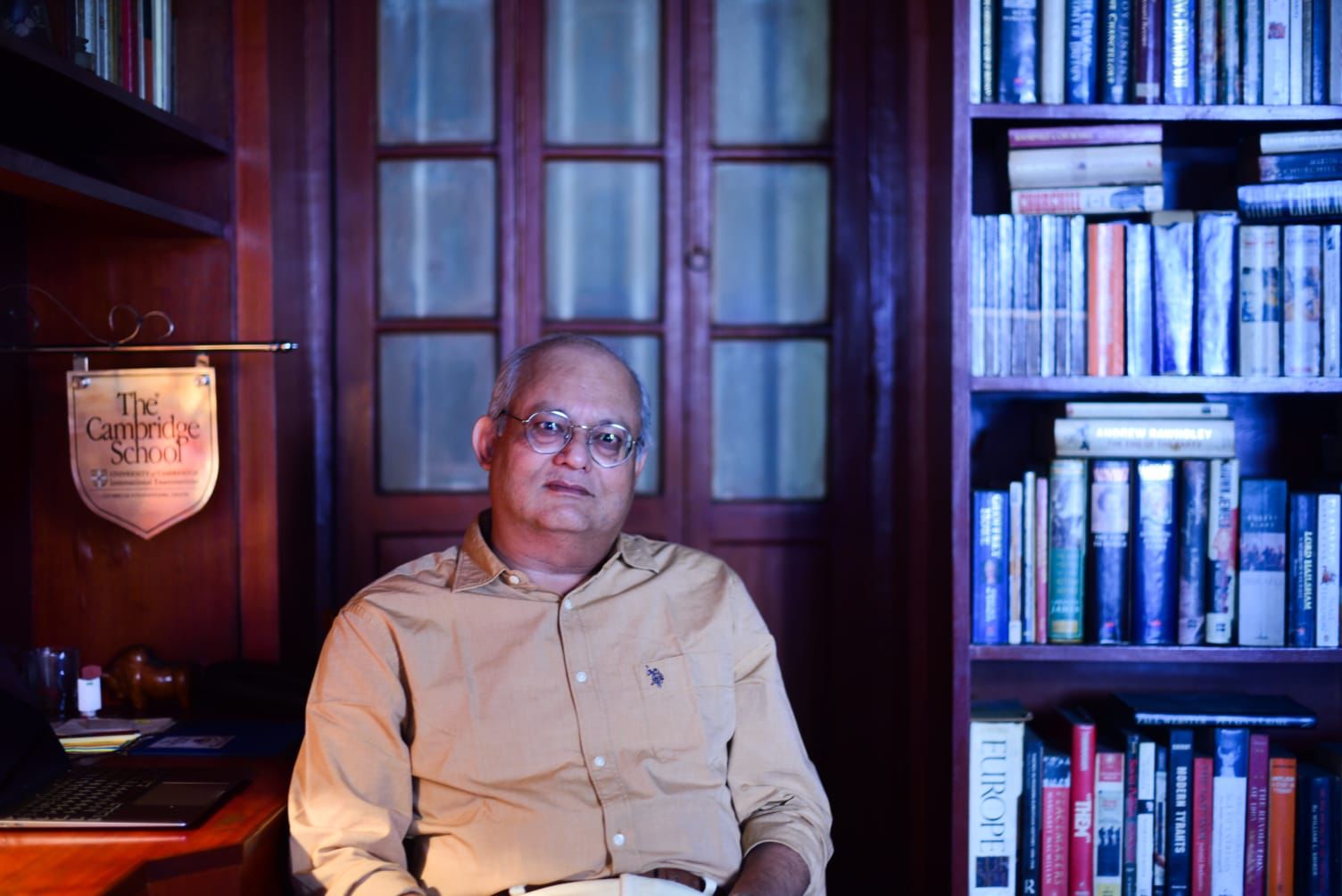 SAROJESH MUKERJEE is the author of the well-received The Life and Times of David Hare: First Secular Educationist of India, published in 2023. He has also written a satirical novella, The Ascent, published in 2024. This is his third book. He is the founder of The Cambridge School in Calcutta where he teaches Economics at Advanced Levels and, occasionally, International History. He lives in Calcutta with his family, including Pongo, Bingo and Bertie.
Get the book here here

Comments