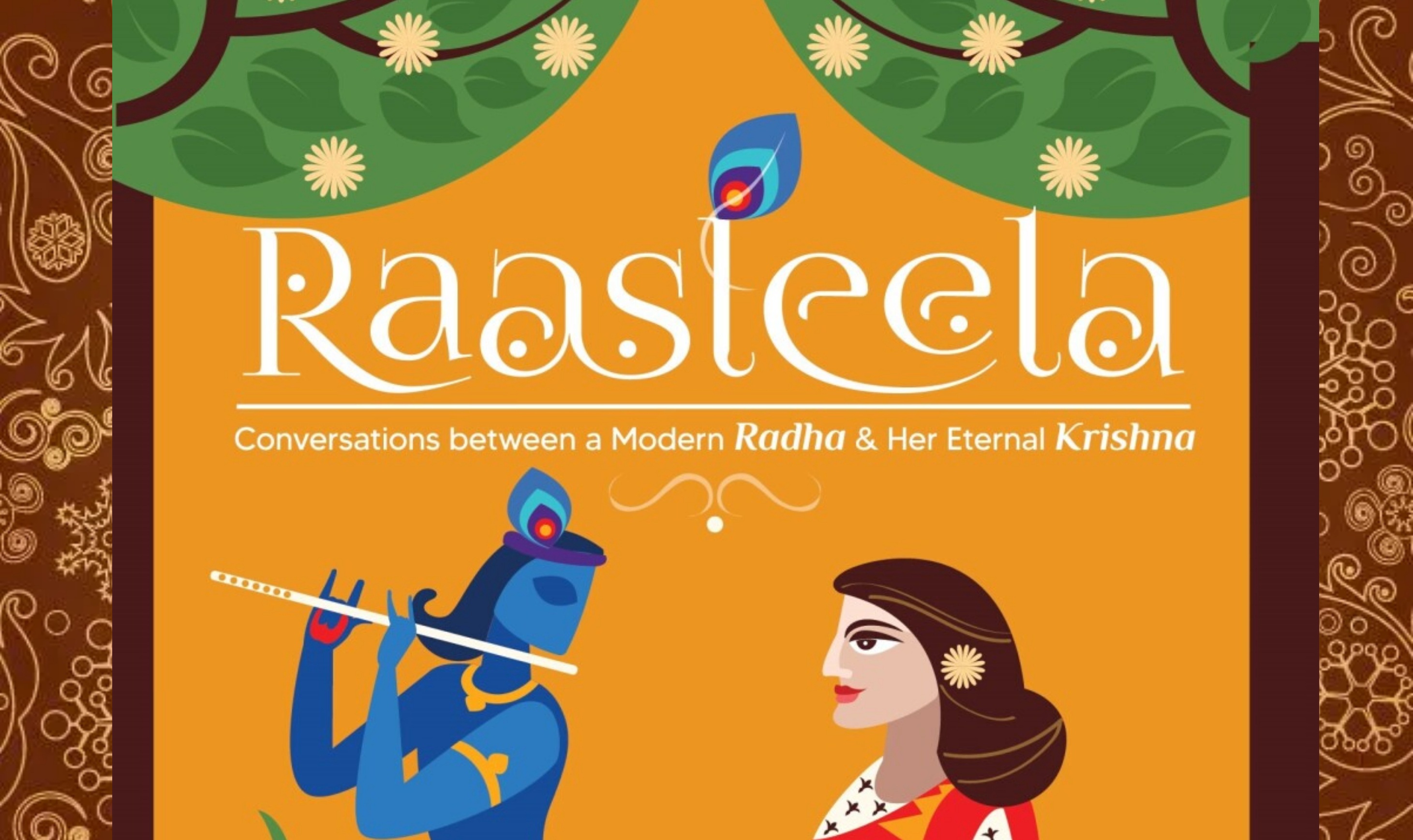
Raasleela, In this captivating reimagining of the timeless Radha-Krishna legend, Radha takes on multiple roles, navigating the complexities of modern life, conversing with her eternal companion, Krishna. Sometimes she is a working woman struggling with work-life balance, sometimes she is grappling with health, environment, social and gender issues, sometimes an artist searching for creative inspiration, and sometimes exploring the meaning of love, musing over the past, reflecting over the changing dynamics of life. The book attempts to capture the allure of Rasleela, entwined in a dance of words, beyond the boundaries of time and space, weaving together ancient wisdom, spirituality and modern sensitivity.
Readomania: Raasleela draws from the timeless story of Radha and Krishna. What inspired you to revisit this
narrative, especially after your earlier work, Being Radha?
Tripti: I have always written non-fiction books. My earlier ones were anecdotal, based on my experiences as a doctor. I wanted to write again—only this time, it was about those we have always felt around us. I’ve long been fascinated with mythology. The Hindu gods and goddesses, with the multitude of roles assigned to them, have always intrigued me.
My first book in the mythology series was Being Radha. I chose to write about the much-celebrated but enigmatic goddess, Radha. She was never the stereotypical mother—she was the balsakhi. She wasn’t just older than Krishna; she was even married to someone else, though there are many variations in the narratives. Neverthelss, she filled me with a deep sense of intrigue. I, a woman living in the 21st century, struggled to understand her. I chose a modern narrative even while writing Being Radha, because the idea was to help the present generation, especially, relate to her.
My second book in the series was Devis & Divas, where I tried to fictionalise the lives of those who have, until now, existed mainly in our religious and spiritual texts. I wrote about four powerful women—Parvati, Ahalya, Sita and Radha—who are
portrayed as modern women. Their trials and tribulations mirror those of their mythological namesakes, but the way they
confront them, as modern women of today, sets them apart.
Being Radha had instilled in me the habit of conversing with Krishna. Whenever something truly moved me, I would turn to Him. Sometimes, it was something as mundane as going for a swim- where every breath I took in the water brought a sense of calmness, a serenity that felt like His presence was engulfing me. At other times, it was something as disturbing as the gruesome rape and murder of #Abhaya, when I found myself questioning His fairness as God. These conversations became my moments of reprieve—moments that gradually shaped themselves into an idea. An idea that eventually transformed into a book.
Readomania: You describe Being Radha as more metaphysical. How does Raasleela differ in terms of tone, approach, and thematic exploration? How does it relate to mythology?
Tripti: Being Radha can be read as a love story between a God and a Goddess, between a man and a woman, or as a relationship between a devotee and the Divine. The book is full of metaphors and becomes truly philosophical if you read between the lines. It is more a metaphysical love than a romantic one. To me, Radha symbolises love, devotion and an endless wait. She teaches us the value of love and patience.
The title of my recent book, Raasleela, refers to the divine dance of Krishna with the gopis—often seen as a metaphor for the soul’s longing for union with the divine. I used this mythological context to explore themes of love, longing, and spirituality in a more modern setting, contrasting the eternal love of Radha with the fast-paced rhythms of contemporary life.
I believed that Radha and Krishna were soulmates. They took many births, but their destiny remained the same. The essence of their being was always unchanged—a playful camaraderie, a love that transcends the boundaries set by society, and one that does not always culminate in a traditional union. And yet, despite parting, they remain connected.
Raasleela is set in a different time and a different world, yet the tone of the book remains the same as that of the previous one, Being Radha. Both are written in free-flowing verse. The love and devotion between the eternal couple remain unchanged, though the challenges they face are different. Radha is a modern-day woman, and she is bound to be different from the Radha who once played with her Krishna in Vrindavan. And that is where the book takes a different turn—especially in its thematic explorations.
There’s pain, longing, love, and a search for meaning woven into each page. Radha continues to talk to him, and he remains her eternal lover, friend, and guide. A deeply personal and evocative work, Raasleela invites the reader to pause, reflect, and perhaps find echoes of their own journey within its pages.
Readomania: How does the book portray Krishna?
Tripti: Krishna is the main protagonist of the book and the core of the story. He stays in the background. He listens to her; He indulges her. You can feel Him grinning, feel Him teasing. You can feel His presence- even His absence. He moves away from her but still stays around her. He is Krishna. He isn’t given a single dialogue in the book, yet you hear Him. He is everywhere.
The world is Him, and He is the world. And where else would Radha be—His soulmate—but in this world, waiting for Him?
She talks to Him about the world He has made, one that is ever-growing and transforming—sometimes for good, sometimes not. She is critical; she is questioning. She sometimes reflects on her past, too. At other times, they come across as an ordinary couple living only this life, unaware of their eternity. These are the poetic liberties that I have taken.
Krishna symbolises a deep emotional connection. The book explores themes of love, spirituality, and the search for the divine in everyday life, using Radha’s perspective to convey a sense of yearning and devotion to God. You can draw parallels
between the divine love story of Radha and Krishna and contemporary life.
Readomania: You describe the verses as oscillating between the past and present. Can you talk about how you blended the ancient with the modern in your writing?
Tripti: There are verses where Radha seems to brood over her past life. But then comes the growing civilisation—the high-rises, the smog, the fog, the rising cases of assault on women, gender discrimination, health issues, professional growth—all of which hint at the challenges of the modern world. It is urbanisation versus spiritual connection. The verses convey a sense of yearning and separation, love and longing in modern times. The book weaves these themes together, offering reflection on spirituality and the human experience.
Readomania: What challenges did you face in writing Raasleela, particularly in terms of balancing the ancient spiritual themes with the complexities of modern life?
Tripti: The biggest apprehension when writing on any theme connected to religion is the risk of antagonising people. I didn’t want to hurt religious sensibilities. Presenting Radha and Krishna in a modern context was a daunting task and could challenge the preconceived notions of God. I was very particular about not inviting any backlash, so I kept the language and content simple. My Radha comes across as critical and questioning, but only on topics that are relatable to people. I kept the element of devotion intact throughout all the verses. Even when Radha shares her angst with Krishna on His ways, the love and longing are there for all to feel. Even on sensitive topics like rape and assault, the narrative remains gentle, not harsh.
My other challenge was reinterpreting their story in a way that would be relatable to contemporary readers while staying true to its original theme. I had to carefully balance core elements of spirituality against the backdrop of modern life’s complexities to create a cohesive narrative.
Writing in verse was, again, a challenge, as you have only a few words to convey a wealth of intense emotions and experiences of Radha and Krishna- and at the same time,
connect with modern sensibilities. Serious issues like patriarchy, reproductive rights of women, gender bias, and sexual violence had to be handled with care and sensitivity. And above all, ensuring the core essence and spiritual significance of Raasleela.
Readomania: You mention the book’s aim to "guide you on your own journey of love and self-discovery". What do you hope readers will take away from their experience with Raasleela?
Tripti: As one of my readers wrote, ‘the Book dares to question, provoke, and heal. Rasleela is not just relevant—it's necessary. A powerful read for anyone unafraid to confront the deeper truths of the human heart.’
The book feels like an open diary—a deeply personal conversation between a woman and her Krishna. The verses pour out the silent struggles, quiet joys, and unspoken thoughts of a woman who juggles many roles, yet finds solace in her divine connection. The verses are raw, they are intimate. The book is structured as a collection of disjointed, yet flowing, verses- each with its own unique wisdom and insight.
Readomania: In what ways did your personal spiritual journey influence the writing of this book? Was it cathartic?
Tripti: To an extent, the book is inspired by my own journey and shaped by my views on issues that deeply affect me. My monologues with God are my way of coming to terms with my reality. By drawing from my own reflections and self-awareness, I was able to create a more authentic and relatable portrayal of Radha’s character—one that resonates with readers in modern times.
Sharing your angst with God soothes frayed nerves and calms the soul. And writing is undoubtedly cathartic. This book has not only brought me closer to my God, but has also filled me with a sense of peace and wisdom.
Readomania: How did you balance the devotion and emotional depth of Radha’s character with the intellectual and philosophical aspects of the narrative?
Tripti: I balanced them, first, by using poetic language. Traditional storytelling in India has always been rooted in verse. I used free-flowing verses to allow greater freedom of expression and to bring in more depth, intimacy, and vulnerability. I explored complex philosophical themes such as the meaning of love and spirituality to add both emotional depth and intellectual curiosity. I employed symbolism from Hindu philosophy to convey deeper meanings and themes, inviting readers to interpret and reflect on the narrative.
Radha’s character is portrayed in a contemporary world with an emotional authenticity that makes her story emotive, relatable, and accessible to readers. The seamless interplay between emotional and intellectual aspects creates a nuanced narrative that engages readers on multiple levels.Furthermore, writing the book in the first person—using Radha’s voice—allows readers to experience her perspective firsthand.
Readomania: Is writing in verse tougher than plain prose? Why did you choose this format?
Tripti: I would say both are easy, provided they come spontaneously and aren’t forced. I have no compulsion to write; I’d rather wait for the story to strike me. I write only when something crops up in my mind. Verses are sometimes easy because one needs only a few words to convey a multitude of emotions—and the beauty is that everyone interprets them differently. That is why poetry is rightfully called the republic of imagination. But verses are also precise; they do not beat around the bush. There is beauty in brevity. At the same time, this can be difficult for those not inclined to writing in verse, and may even become a daunting task.
Prose is more elaborate. It gives you the freedom to convey more incidences, go into greater detail, and bring in more characters. This can be taxing for someone who isn’t prepared to write at length, but at the same time, it can be liberating for another who’s eager to say more. I consider myself blessed that I can write both verse and prose with equal ease. I let the story come to me, allowing it to take whichever form it’s most comfortable in- without straining either the story or myself. That is what makes storytelling fluid and simple.
I chose to write in verses, as it has always been the traditional Indian way of storytelling. They flow—rising with the tide of life and then ebbing away—oscillating between the past and present. In a carefully crafted play of words that brings together the greatest force of life into a rhythm, the verses play a divine song and bring alive the essence of life, which is RadhaKrishna.
The book is a humble attempt to capture the allure of the Rasleela, entwined in a dance of words beyond the boundaries of time and space. I hope the readers can feel them together, experience the divine dance as ancient passion meets modern verse. May it transcend through the mystique that’s forever enchanting- the mystique that’s Rasleela.
Readomania: What role do you enjoy the most—that of a doctor, an author or a poet?
Tripti: I enjoy each one of them—completely and deeply—but only one at a time. I don’t allow them to interfere with each other. They don’t compete; rather coexist with harmony and peace.
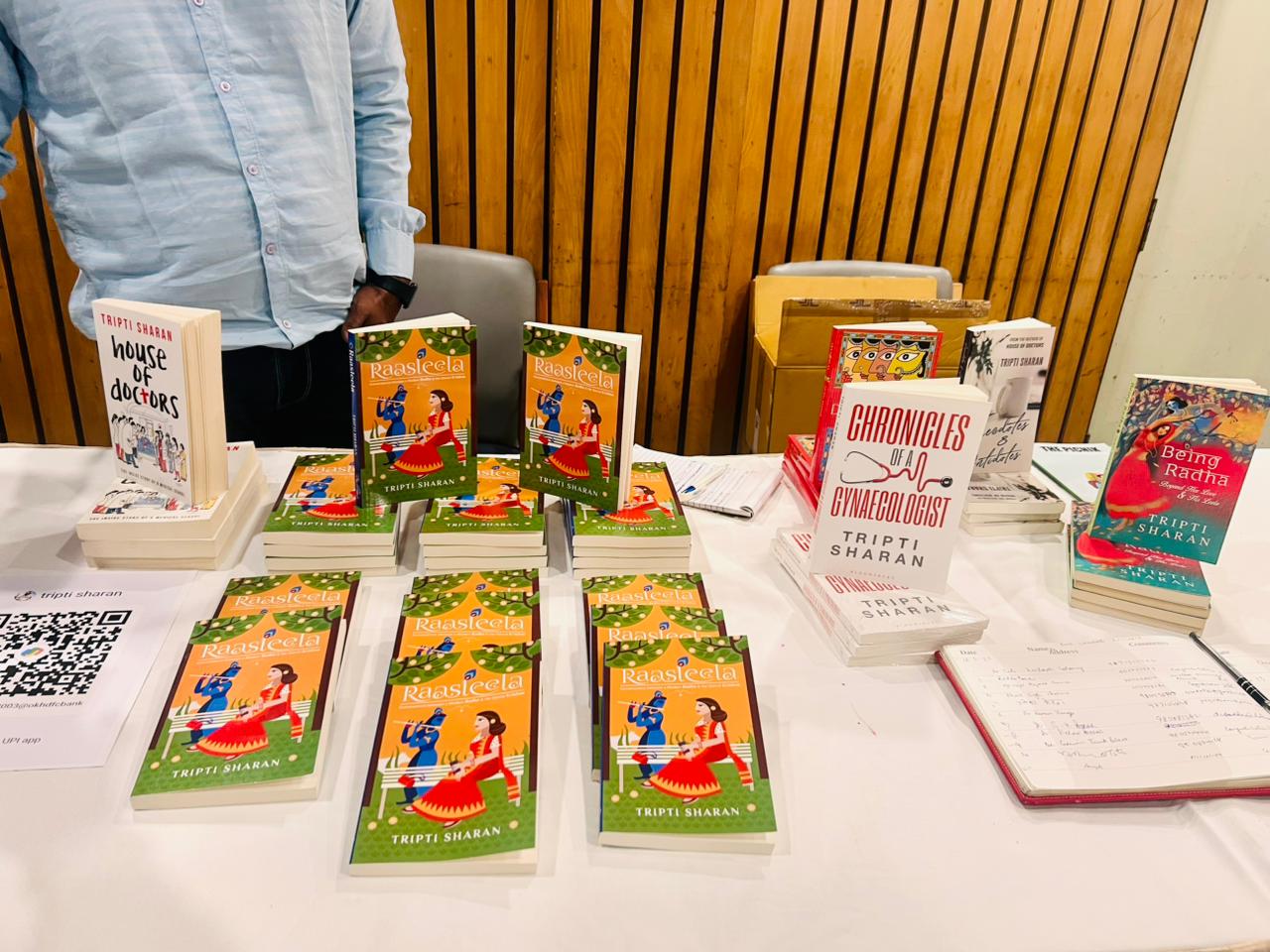
Grab your copy of Raasleela here
About the Author
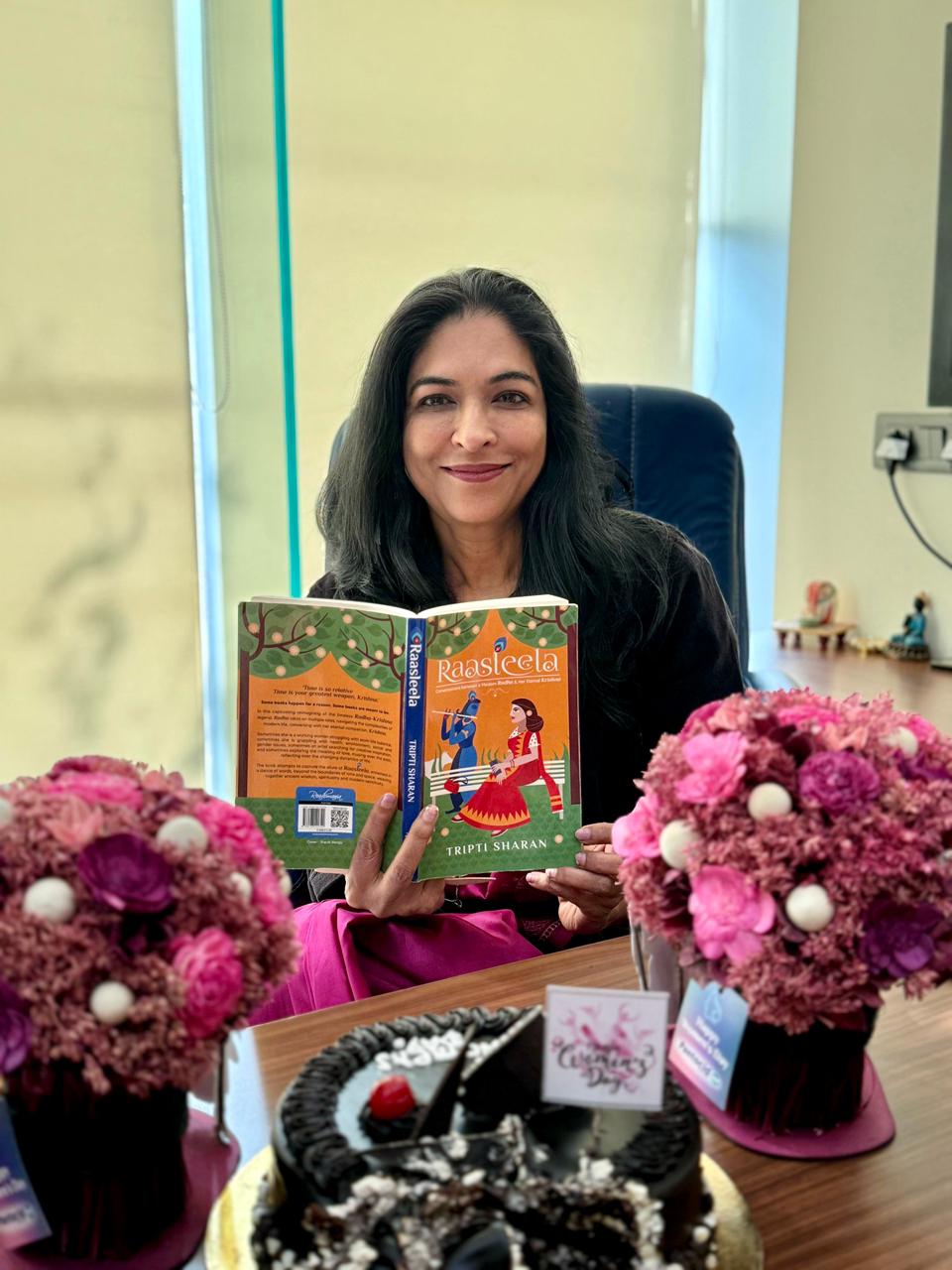
Dr Tripti Sharan is a gynaecologist by profession. She is presently the Director, Dept of Obstetrics & Gynae at BLK MAX Hospital, New Delhi. She is a keen academician and has several publications and awards to her credit.
With her dual role of a doctor-author and her distinctive style of writing in both prose and poetry, she occupies a significant place in the hearts of literary enthusiasts.
Writing for her is like a journey into the self. As she paints the canvas of life with the colors of myriad emotions, she uncovers a little more of the truth that is hidden in their realms. Writing brings meaning to her life.Writing is also a tool to bring about a change. The author of powerful women centric, anecdotal books like Chronicles of a Gynaecologist, House of Doctors, Anecdotes & Antidotes, she has also written books based on mythology, Devis & Divas and Being Radha, beyond Her Love & His Leela besides contributing to anthologies.
Her poetry work includes ‘Shadows of a fading twilight’, ‘Dewdrops, a journey begins’ which won the award for best poetry anthology in English. ‘Water’, a poem based on dialysis patients also won her an award for best poem.
She is also a blogger and a columnist with NDTV everylifecounts, The Better India, different truths. An erudite speaker, she tries to spread awareness about the travails of women and doctors.
An ardent swimmer and a fitness enthusiast, her profession keeps pushing her to the edge. She finds solace in music and her family. She loves to sing and dance. And in between she writes to rejuvenate her soul. Music is her soul, words her salvation. They make her world happier and more spiritual.
Her tryst with literature continues.

Comments