
Readomania: Hi Kamalika, congratulations on the release of your book Build Your Career, Your Way!
What was the moment or experience that made you realize this book needed to be written?
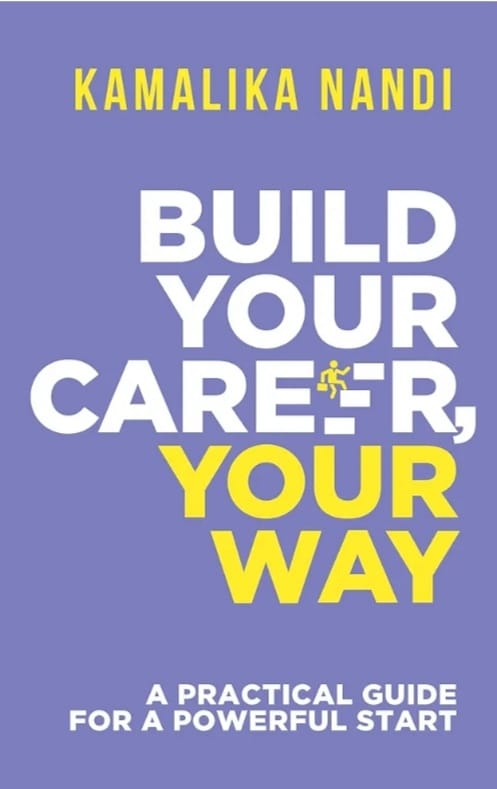
Kamalika: Over the years, while setting up teams across multiple companies and functions, I noticed a pattern. I would hire from top universities—the best and the brightest—but soon, I would see them dim. They began to look unsure, even scared. On the other side, their managers didn’t look too pleased either. It made me pause. What was going wrong?
I started speaking to both sides. That’s when I realized there was a massive gap we had never addressed. We never told these new joiners about the things that actually mattered here—the unspoken expectations. No one talked to them about taking initiative, communicating with clarity, building relationships, or adapting to the culture. We assumed they’d figure it out. They assumed someone would tell them.
Readomania: You speak candidly about the psychological toll of early corporate life. Did you personally experience this, or was it something you observed in others—or both?
Kamalika: Both. I joined corporate life straight after university and went through it all—feeling lost, second-guessing myself, facing unsaid expectations, unclear culture, and people who seemed like they were there to guide you, but weren’t. It messes with your confidence in quiet, subtle ways. And back then, I thought it was just me. But over the years, I saw it repeat with others too. Same questions. Same anxieties. Same internal tug-of-war. No real answers—just a silent struggle that most people never talk about.
Readomania: Who is this book really for—fresh graduates, young professionals, or even seasoned managers?
Kamalika: All. Fresh graduates and young professionals, for sure—often overwhelmed and confused by the gap between academic success and corporate reality.
But also seasoned managers, or even HR professionals, who are looking to truly understand the emotional and psychological journey of new hires. That understanding can help them address their issues more effectively, better support, and build strong, high-performing teams.
Readomania: You talk about the ‘hidden curriculum’ of the workplace. What are a few of the most crucial things no one tells new professionals?
Kamalika: The hidden curriculum is everything no one tells you but everyone expects you to know- things like navigating office politics without burning bridges, dealing with toxic or difficult bosses, figuring out how to “fit in”, how to speak professionally, how to build visibility, recognising the early signs of burnout before it hits you hard, and-maybe the hardest of all-knowing when to keep pushing through and when it’s actually okay to quit.
Readomania: What’s the one myth about corporate life you wish everyone would stop believing?
Kamalika: That a snazzy title or a fancy brand on LinkedIn means success.
Readomania: What do you hope someone on the verge of burnout takes away from this book?
Kamalika: I’ve been at the edge myself, and the hardest part is recognizing that it is burnout. This book will help you spot the signs, recognize the patterns, and ask the hard question: Is this still worth the fight, or is it time to pack your bags? And if it’s the latter, know that leaving isn’t quitting. It’s prioritizing yourself-when your workplace clearly isn’t.
Your well-being is non-negotiable. Walking away just makes room for the bigger, better stage that’s waiting for you.
Readomania: You highlight the importance of authenticity and human connection. How can someone stay authentic in a culture that often rewards conformity?
Kamalika: The answer lies in finding balance. Yes, you’re expected to align with an organization’s culture and values—but that doesn’t mean losing yourself. The goal is to stay authentic, not turn into a corporate robot. Stand your ground on what you believe in, what interests you, what makes you, you.
There are many ways to do that-like choosing the right organization and the right role, surrounding yourself with the right people, and joining teams or initiatives that resonate with you. But before any of that, you need to know yourself. Who are you? What motivates you? What drives you? That’s where it all begins.

Readomania: Is there a healthy way to be ambitious in a system that often pushes people to the brink?
Kamalika: Absolutely—and it starts with recognizing that success isn’t just about promotions, fancy titles, or fat salaries. It’s not about chasing status or ticking boxes to please society. Real success includes our well-being, our growth, our health and the autonomy to make choices that work for us.
Once we stop chasing only the external and start prioritizing it all—mental health, physical health, purpose—we build a career that’s not just impressive, but sustainable and fulfilling. That’s when we truly start leading our careers, instead of letting others lead them for us.

Readomania: What’s your take on feedback culture in organizations? How can young employees learn to filter useful feedback from micromanagement and control?
Kamalika: Feedback, as a mechanism, is incredibly important. It helps us see ourselves clearly—where we stand, what we need to improve—but only when the intent is genuine growth, both for the individual and the organization.
However, this tool is often misused. Some people use feedback not to build, but to manipulate, control, and push their own interests. And that’s where it gets tricky. The difference between honest feedback and feedback used for control is extremely hard to spot. You feel something is off, but you can’t quite put your finger on it. That confusion can be very damaging.
That’s exactly why I’ve dedicated an entire chapter to this: to help people understand the difference between toxic and tough so they can protect their mental well-being and respond—not just react.

Readomania : If you could redesign the onboarding process in most companies, what would you change first?
Kamalika : Onboading programs are currently designed around organizational needs—compliance, legal, technical skills. I would balance them with what employees genuinely need: ways to read the culture, navigate office politics, understand people, escalate issuesand know when to highlight concerns.
New hires are desperate for guidance, but the people they turn to—managers, mentors, buddies—are either too entrenched in the system or too cautious to tell them the truth. These corporate mentors give vague, textbook advice, spouting clichés and skirting the stark realities of the workplace. They won't openly say, "Stay away from that person," because they’re part of the same environment and can’t rock the boat. They’ll never admit the games that go on behind closed doors or expose the people working to sabotage others—behind their smiles.
Readomania: What does ‘success on your own terms’ mean to you today, and how has that changed over your career?
Kamalika: My early years was full of ambition, performance anxiety, 14-hour workdays and a quick rise in the corporate world. However, somewhere along the way, I realized my days were now controlled by feedbacks, other people’s expctations of me, and how well I met them. It seemed I had no control over either my life not my calendar. It was exhausting and unfulfilling.
Fifteen years later, my definition of success has changed. I took time to understand myself and my priorities. I chose organizations no longer based on what society thinks are good; I choose my role based on my passion. I value autonomy and my well-being as much as anything else.
Readomania: If you could give one piece of advice to your younger self starting their first job, what would it be?
Kamalika: Read my book!
Readomania: Are you working on your next book? What can we expect from your pen next?
Kamalika: I want to keep writing about corporate life because it’s not just about work. Corporate life shapes us so much more than our careers. It spills into our health, our relationships, our confidence. It affects how we see ourselves, how we make decisions, how we dream. It’s where we spend most of our waking hours—and I find that fascinating. There’s so much beneath the surface, and that’s the space I want to keep exploring, writing about, and making sense of.
Thank you, Kamalika. It has been a pleasure talking to you. We wish you all the best for all your future endeavours!
Get the book here

Kamalika Nandi specializes transforming talent into high-performing teams. Over the past 15 years, she has turned around multiple teams, guiding them from uncertainty to success and shaping individual journeys into powerful success stories.
Organizations consistently turn to her expertise to create dynamic teams that thrive. For her, it’s personal—she doesn’t just recruit and onboard; she empowers new hires for a lifetime of success. Where others see inexperience, she sees potential. For Kamalika, it’s about more than onboarding or assembling teams; it’s about crafting stories of growth and resilience, empowering fresh graduates to not just enter the corporate world but to make it their own.
Today she works as a Director in Corporate Strategy of a large MNC, and this journey has given her a unique vantage point. She sees it through the eyes of employees grappling with expectations, understands the mindset of leadership driving decision-making, and recognizes how organizations operate in ways that don’t always prioritize the individual. This insider knowledge is what strengthens her understanding of how to succeed in an ever-changing corporate landscape. Drawing from these experiences, she translates her insights into Build Your Career, Your Way, aiming to bridge this gap.
Kamalika holds a Bachelor of Pharmacy from Jamia Hamdard and an MBA from the National Institute of Pharmaceutical Education and Research (NIPER). Her academic background in pharmaceutical sciences laid a strong foundation for her career, and she continues to stay connected to her roots. Kamalika is frequently invited to deliver talks at both Jamia Hamdard and NIPER, where she shares her insights on career options, professional growth, and achieving success. She finds immense fulfilment in giving back to the academic institutions that helped shape her career, guiding the next generation of professionals toward their own paths of success.
Build Your Career, Your Way is her tribute to the young professionals she’s seen struggle and rise. It’s a reflection of her journey—an effort to arm others with the wisdom and tools she wishes she’d had when she started out.

Comments