
I Live Because I Write
Why do authors write?
It is a question that seems simple on the surface yet carries within it the weight of countless untold stories. Across centuries and cultures, writers have returned to the blank page compelled by something deeper than ambition or recognition. For some, writing is an act of survival; for others, it is discovery, rebellion, remembrance, or quiet healing.
Long before readers encounter a finished book, a writer has wrestled with emotions, memories, questions, and silences that refuse to stay unspoken. Words become the bridge between the inner world and the outer one. They allow writers to shape chaos into meaning, grief into reflection, and fleeting moments into something that endures.
Every writer arrives at the page for a different reason, yet the impulse is strangely universal. Some write to understand life. Some write to preserve it. Others write simply because the stories within them insist on being heard.
As Virginia Woolf said, “I write to relieve the pressure of ideas and experiences.”
When the untold stories in their hearts find their way through words, they get the liberation they deserve. Words become their breath, the destination they dreamed of. For them, writing is not just a hobby; it’s the land they live in, the world they create. This passion dwells in their heart, its warmth pulls them up from the chaotic life and give the tranquillity they want. This turns writing into a necessity, not a choice. Each page carries their honesty and dedication, even on the darkest nights. They would rather pour their hearts out than silence them.
They don’t hope for the money their stories will bring but rather the heartfelt feedback and comments from the reader, and the realisation that their words mattered to someone, that it resonated with the reader, and that’s the fuel they seek.
Beyond theory, this truth finds its shape in real journeys.
In the reflections that follow, a group of remarkable authors share what writing means to them—not merely as craft or profession, but as a way of living.
Writing as Imagination, Discipline, and Many Lives
As Sutapa Basu, award-winning, bestselling author, reflects,
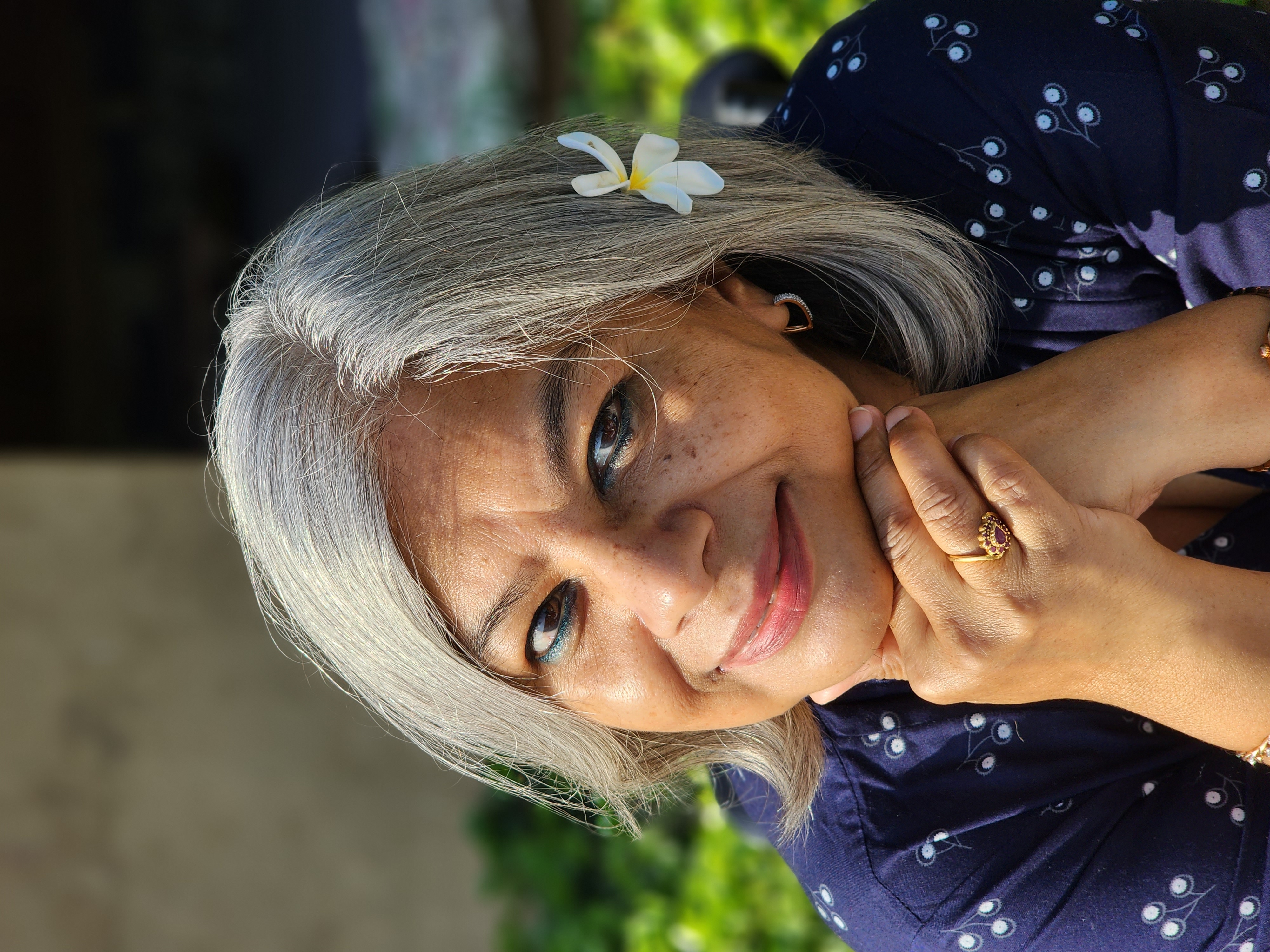 “Seeing my name on the cover of a book has been a childhood dream. Though that dream came true about eleven years ago, writing entered my life much earlier. I was eight or nine when I first began, for reasons that kept changing. Sometimes I wrote plays that my friends staged as part of our games. Sometimes I wrote to release emotions that refused to stay bottled up. And sometimes, I wrote simply for the joy of watching words dance.”
Her journey is not merely about publication, it is about evolution.
From childhood plays staged among friends to award-winning long-form narratives, from essays and features to fiction, nonfiction, and poetry, writing has been both her companion and her crucible. Travel shaped her sensibilities. Cultures refined her voice. Experience gave her stories soil to grow in.
Yet, as she insightfully notes, writing is not merely about expression. It carries power, responsibility, and risk. Research must be rigorous. Imagination must be ethical. Opinion must be mindful. Every word carries weight.
And yet, despite the discipline and demands, the magic remains.
As she beautifully puts it:
“Writing gives me many lives. I can act in any way I want. I can travel to places I have never seen. I can live experiences that make me feel more alive.”
That is the essence of why we write. Not for one life but for many. Not merely to exist—but to feel alive.
For some writers, this bond between life and language deepens with time.
~~~~~~
Writing as Identity and Emotional Anchoring
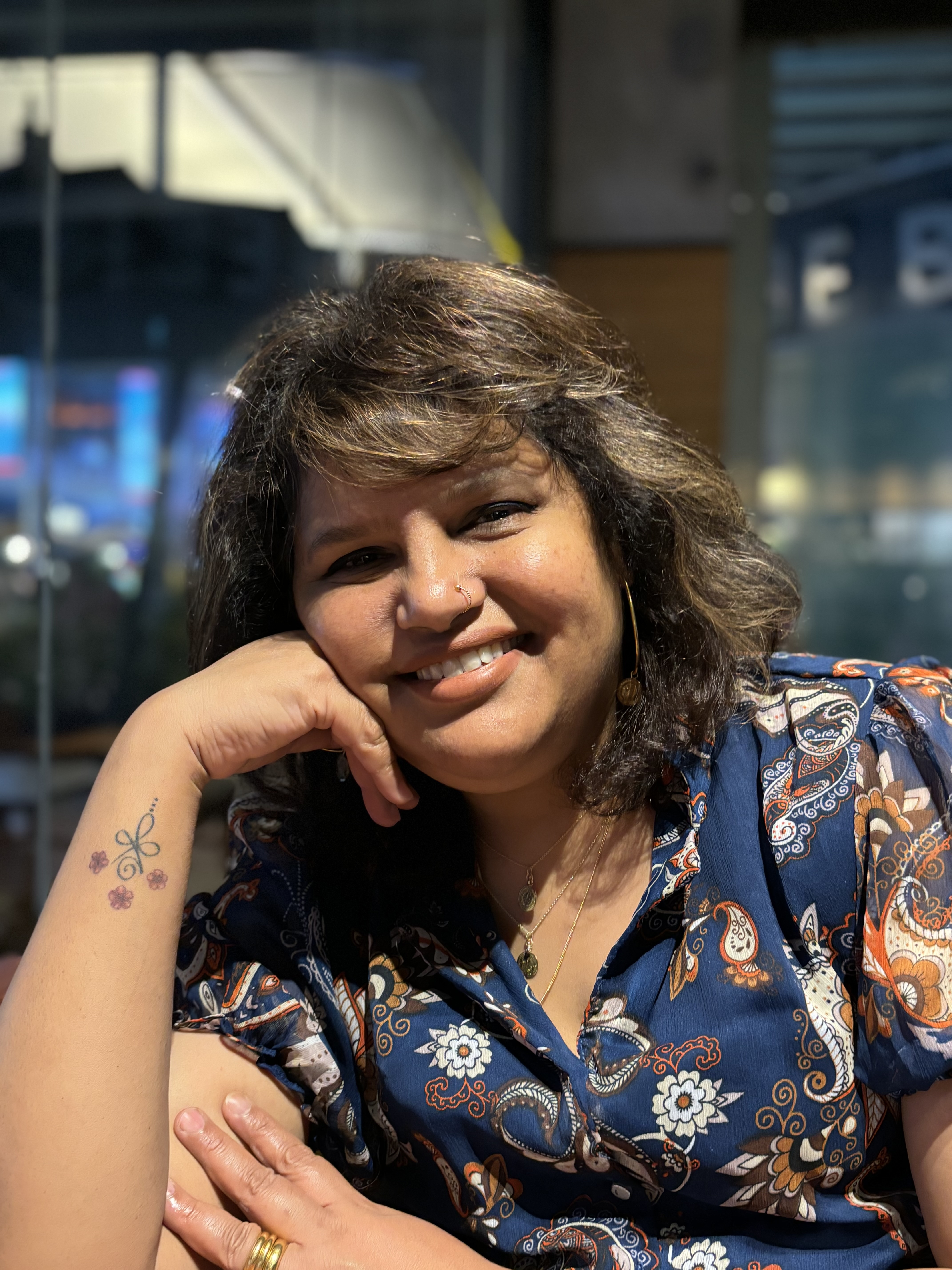 For Anupama Jain, bestselling author and educator, writing happened without any pre design or plan. But now, it gives succour to her soul during good and bad times. It has become her identity. She says, “As someone who studied maths and computer science, my brain is hardwired to notice patterns. I believe we don’t exist in isolation. Deep down, we as humans are driven by the same goals and desires and shed tears for similar heartbreaks.
When I observe events unspooling, I instinctively visualise connections close to home, and words begin bubbling in my head. Until those expressions or thoughts crystallise into cogent sentences and are locked into my laptop, I remain extremely restless. When I share this with like-minded readers and find resonance, it is a joy like none other.
I must confess that I began writing tiny satirical notes during a particularly difficult time to find succour. The likes I received gave me the courage and energy to carry on.
I write because it gives me an identity that is my very own. Writing centres me; helping me make sense of the chaos within and around.”
~~~~~~
Writing as Survival and Legacy
As master mariner and prolific author Beetashok Chatterjee writes:
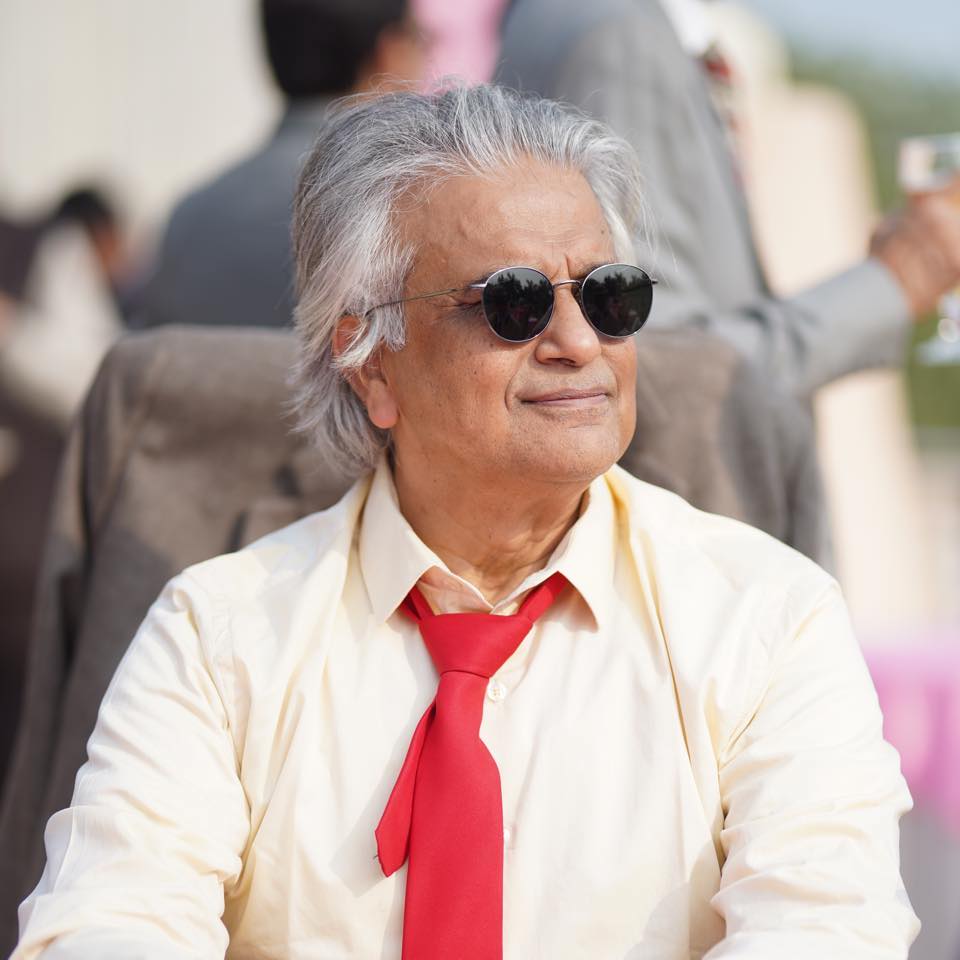 “It’s true—I think I live because I write. At my age, there isn’t that much to look forward to. Just the writing keeps me going… what more I can come up with that will invite appreciation, praise and respect—things every writer seeks.”
There is something profoundly honest in that confession.
Writing, here, is not ambition. It is a continuation. It is what keeps the spirit alert, searching, curious.
He further reflects:
“To me, writing is not merely an activity, but a way of staying alive to the world. Writing is a quiet defiance against erasure. It fixes what would otherwise fade—memory, feeling, self. It is the legacy one leaves behind in the hope that one is not forgotten.”
And perhaps that is the deepest truth of all. We write so that something of us remains.
If writing keeps one alive, it also shapes one into becoming more aware, more responsible, more deliberate.
~~~~~~
Writing as Transformation and Responsibility
Award-winning, critically acclaimed author Mona Verma reflects on this transformation:
 “Writing, for me, emerged as both refuge and revelation—an instinctive escape from the terrifying tyranny of mathematics into the freedom of creativity with colours, music and finally, language.”
For her, storytelling began as an escape, but evolved into a responsibility. Reading changed her craft, teaching her that ordinary, flawed people made the most compelling characters.
“Writing soon revealed itself not as indulgence but as responsibility—one that demanded not just imagination but sincerity as well.”
From rejection to perseverance, from nascent creativity to disciplined authorship, her journey found affirmation when her first book, A Bridge to Nowhere, was released and encouraged by Ruskin Bond.
Across themes of faith, partition, mythology, humour, folklore, and the Himalayas, writing became not merely expression but engagement with culture and memory. Mentorship, literary communities, and persistence strengthened that path. Storytelling became her oxygen, even on her busy schedule.
And yet, after ten books and over two dozen anthologies, her truth remains grounded:
“Writing is not about external validation alone. It is about constant turning within, evolving with newer perspectives, and respecting the reader as much as the self.”
~~~~~~
Writing as Self-Discovery and Inner Exploration
Bestselling author extraordinaire Harshali Singh also reflects:
 “For a writer, a blank page is a mirror, reflecting the internal chaos that cannot be accessed through thought.”
For her, writing is not merely arranging words—it is immersion. A descent into the internal recesses of the mind. Poetry arrived first, raw and unfiltered, gushing like a young waterfall—imperfect yet powerful.
Stories followed.
Writing became the quiet high that comes when the world fades, and the narrative takes over. A way of metabolising abstract emotions, confusion, turbulence, and frustration into something tangible. The suggestion of Oscar Wilde has embedded itself deep into her soul, that characters represent the different sides of an author. One, who is the author, another is who they want to be, and the third is how others perceive them. This made her look at her characters in a very different light now.
She writes not to escape life, but to understand it.
Her characters are not props; they are facets of her own personality. They challenge her honesty. They demand rebellion. They insist on authenticity.
On difficult days, she turns to “To Do Lists”—breaking the overwhelming into manageable fragments. A paragraph. A subplot. A character trait. Small victories that create momentum. Writing becomes structure. Discipline becomes medicine.
She beautifully connects this journey to The Alchemist by Paulo Coelho, the belief that each of us is walking toward our own legend.
Her way of transforming struggle and the noise into narrative is through an intriguing imagery:
Like a river merging into the ocean, her finished story trembles before entering the world—fearful, vulnerable, unsure—while she stands at the shore, watching with pride.
If even one person is comforted, she considers it a success.
~~~~~~
Writing as Healing and Self-Reclamation
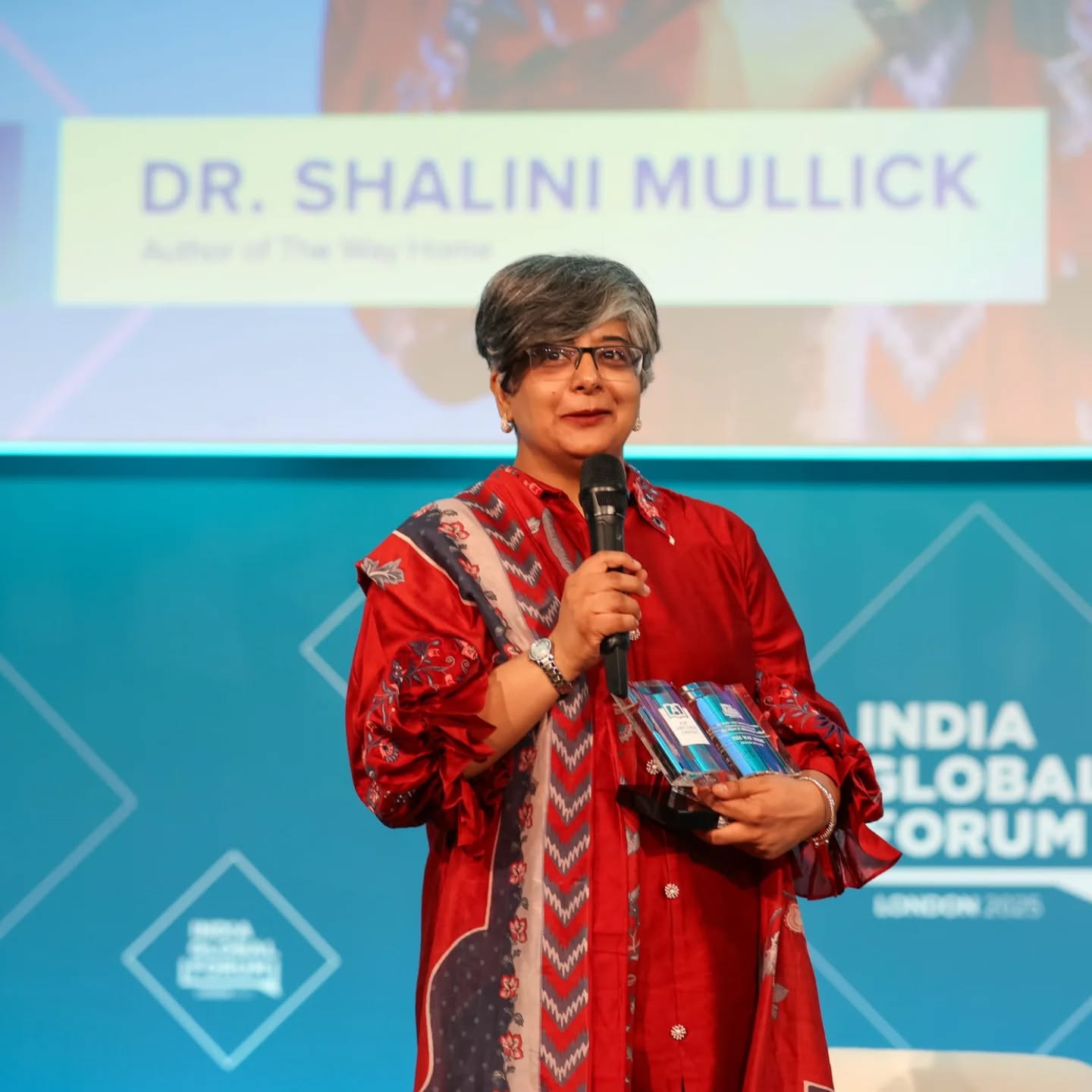 For doctor and the first recipient of the IGF Archer-Amish award, Dr Shallini Mullick, writing took her away from the noises that even her harmonious life couldn’t ignore. Writing and sharing short stories carried her away from the noises, towards the silence that soothed her heart. Through writing, she found a way to access the uncomfortable part of herself.
“I found the bits and pieces of myself in the women protagonists I created. Crafting endings where they reclaimed their power allowed me to forgive myself for the times when I had been unable to do so. Through writing, I connected with the person I once was. I discovered the ‘me’ that had gone missing and forgave her for doing so.”
Her words prove that writing is more than a hobby; it is a weapon that can alter our lives through words in ways we could never imagine. Every writer evolves through the act of writing, gradually discovering their own purpose and motivation, which makes each piece of writing different and unique. Perhaps that is the true beauty of writing—it allows us to find ourselves while leaving a small part of us behind in every word we write.
~~~~~~
Perhaps the real answer to why authors write lies somewhere between necessity and wonder.
Writing allows us to travel across time and memory, to inhabit lives beyond our own, and to make sense of experiences that might otherwise remain scattered and unspoken. It preserves fleeting emotions, questions accepted truths, and reminds us that every human life contains stories worth telling.
For the writers whose voices echo through these reflections, writing is not simply about producing books or reaching readers. It is about staying awake to life itself—observing it, questioning it, and giving shape to what might otherwise dissolve into silence.
And that may be the quiet miracle of writing. In placing words on a page, authors do more than tell stories—they leave fragments of their humanity behind. Long after the moment of writing has passed, those words continue to breathe, speak, and connect with someone, somewhere.
Perhaps that is why authors write.
Because through writing, life does not merely pass—it endures.

Comments