When Compassion Becomes a Lifestyle
Animal Empathy in Urban India (With a Side of Chaos, Fur, and Mild Domestic Panic)
In the quiet corners of India’s bustling cities, somewhere between the honk of a cab and the ping of a housing society WhatsApp group, a curious revolution is underway. It does not involve placards, protests, or policy papers. It involves steel bowls, leftover rotis, frantic Googling of ‘what do baby pigeons eat’, and at least one family member asking, “Is this really happening in our house?”
Welcome to the revolution of empathy.
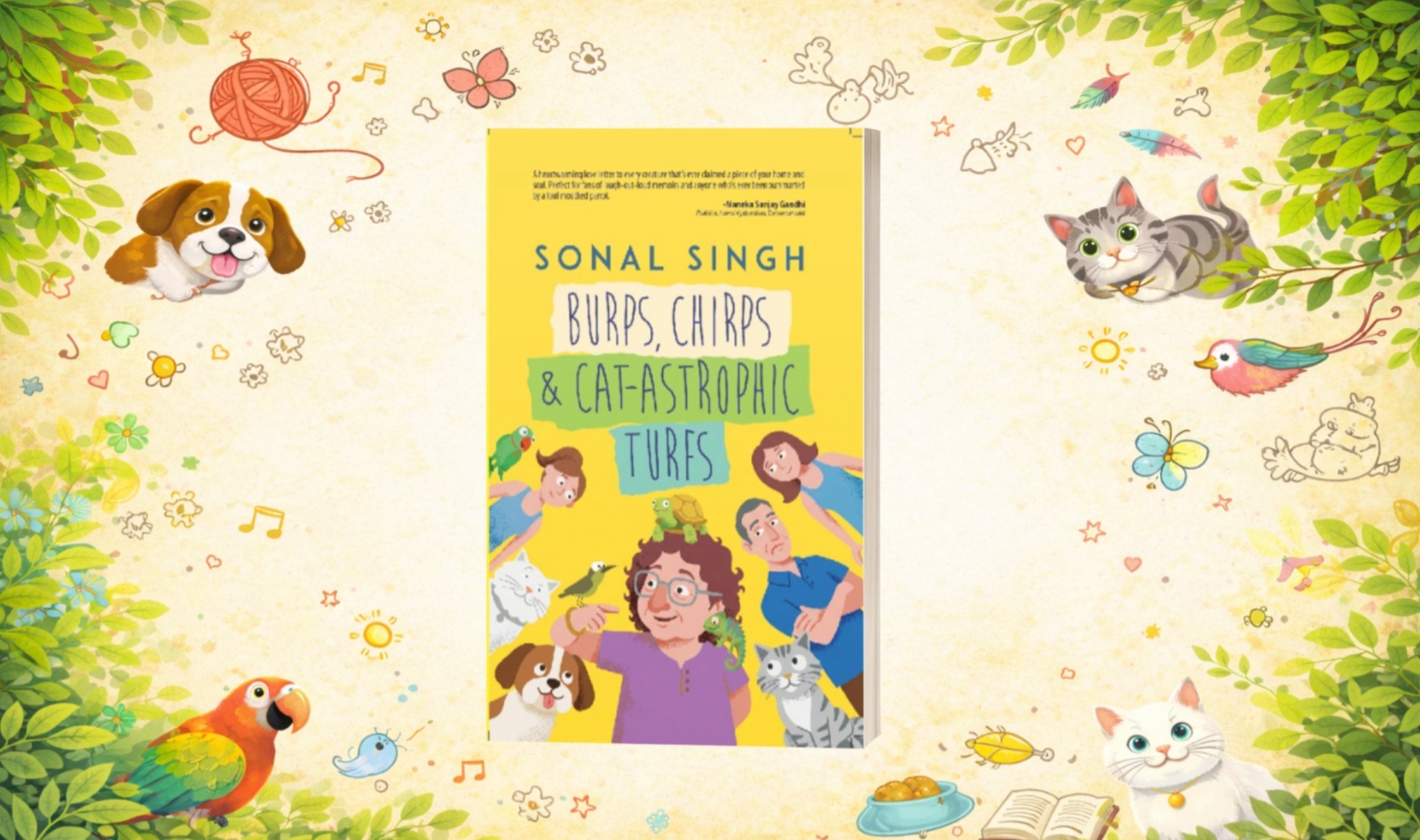
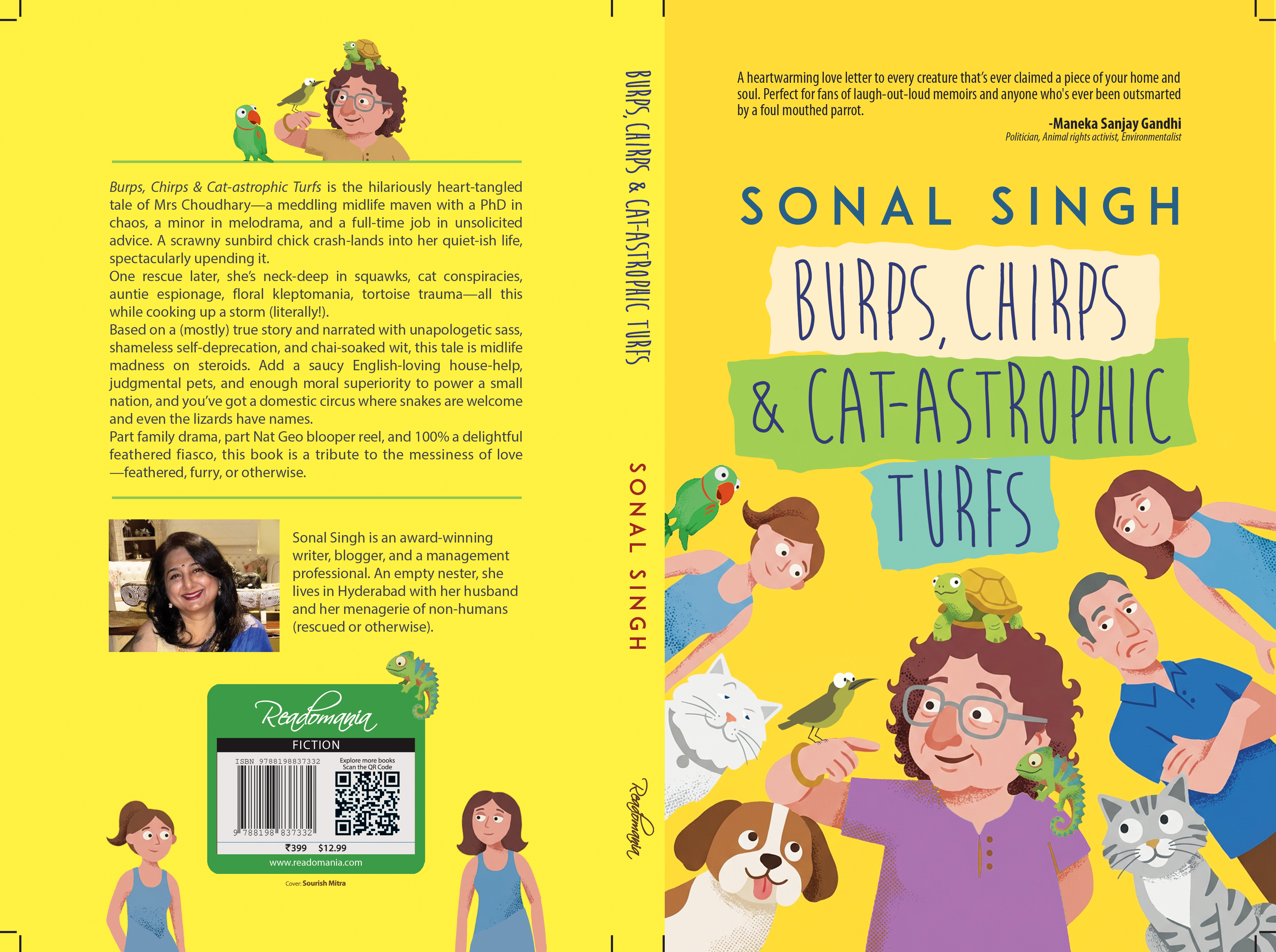
And nowhere is this more delightfully, chaotically visible than in Burps, Chirps and Cat-Astrophic Turfs by Sonal Singh (Readomania, 2026), where the Choudhary household quietly abandons all known definitions of ‘normal living’ and evolves into something best described as a… low-budget wildlife Airbnb with emotional overbooking.
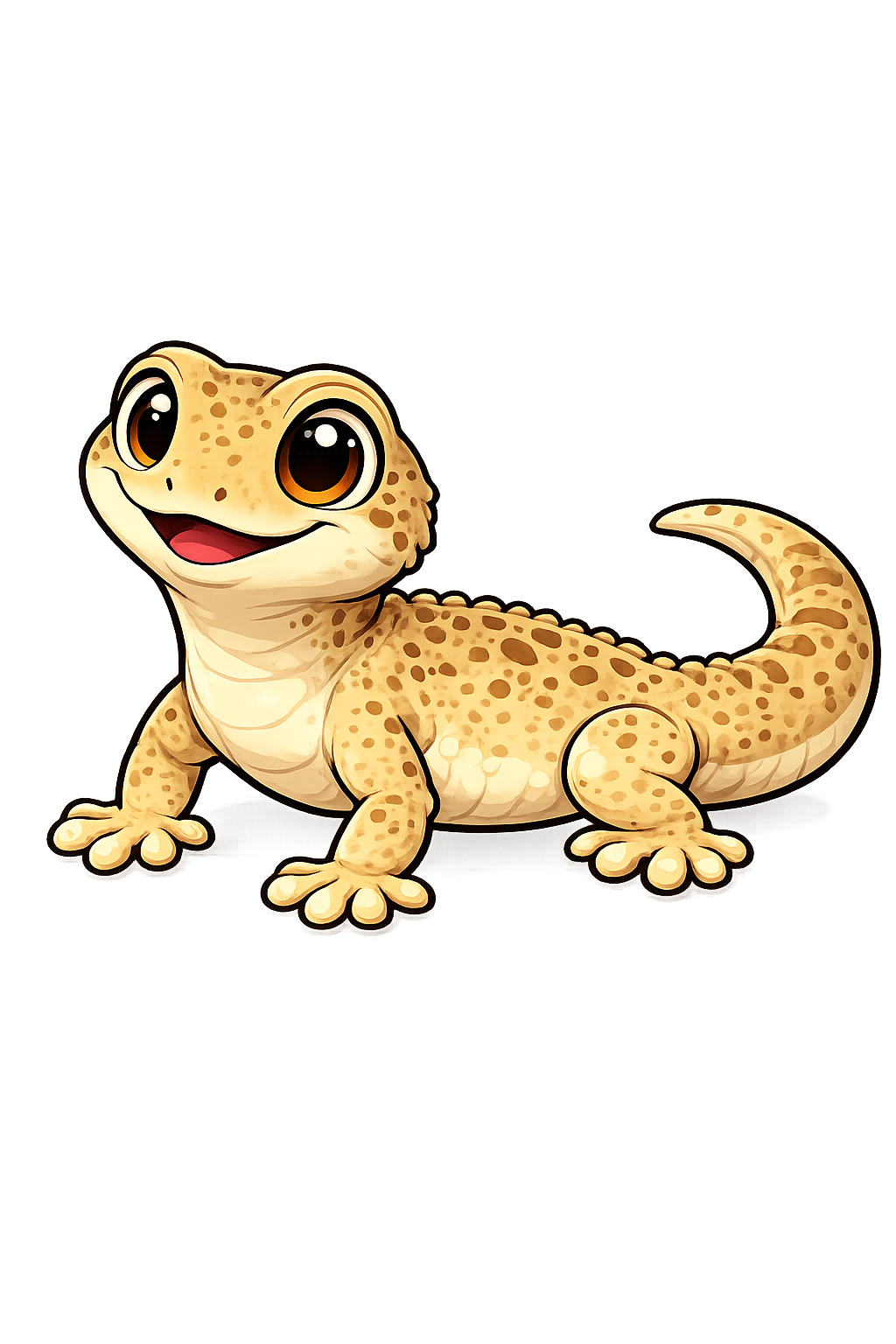
At first glance, the Choudharys may seem eccentric. Their home hosts cats, dogs, birds, a one-eyed lizard who has seen things, an elderly tortoise with more patience than the entire family combined, and a rotating guest list of rescued creatures who clearly did not RSVP. But beneath the fur, feathers, and faint smell of disinfectant lies something deeper: a kind of compassion so instinctive that it refuses to stay within reasonable limits.
Because in this household, ‘just one more rescue’ is less a decision and more a lifestyle.
The Urban Disconnect… and the Sudden Overcorrection
Urban India has long prided itself on efficiency. We have apps for food, apps for cabs, apps for meditation (because the other apps stress us out). Nature, meanwhile, has been politely shown the exit. Trees have made way for towers, soil has been replaced by tiles, and wildlife is something we encounter primarily on screens—or occasionally on our car bonnet at 2 a.m.
And yet, somewhere along this journey of progress, a strange thing has happened. People have started… noticing again.
In Sonal Singh’s narrative, a brutal heatwave becomes the unlikely villain-turned-catalyst. As temperatures soar past 50°C, the city begins to feel less like a habitat and more like an oven with traffic signals. Birds drop mid-flight, strays search desperately for water, and suddenly, ignoring the problem requires Olympic-level emotional detachment.
The Choudharys, unsurprisingly, do not possess this detachment.
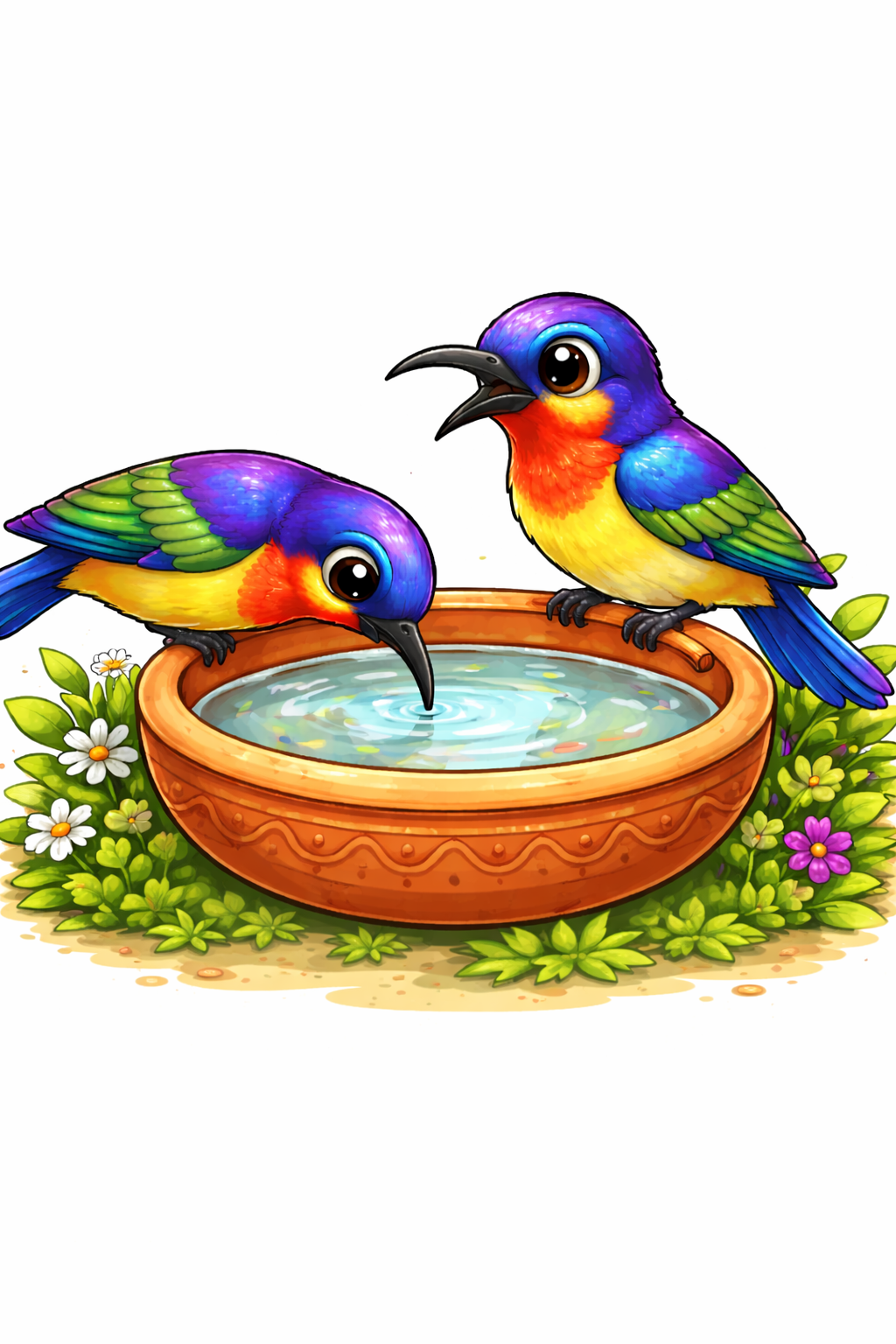
Out come the water bowls. Then the food. Then the rescues. Then more rescues. Then the realization that the balcony is no longer a balcony—it is a full-service hydration and nutrition centre for any creature capable of locating it.
Their compassion is not theoretical. It is hands-on, last-minute, occasionally ill-informed, and frequently inconvenient. It is also deeply, unapologetically human.
The ‘Do-Gooder’s Curse’ (Also Known as: ‘We Can’t Just Leave It There’)
 Every family has that one person.
The one who cannot walk past a limping dog.
The one who hears a faint chirp and immediately assumes emergency.
The one who says, “We’ll just keep it for one night,” and somehow that night extends into a long-term tenancy agreement.
In the Choudhary household, that person is Mrs Choudhary.
She is not just compassionate—she is professionally incapable of minding her own business when an animal is in distress. Goats? Welcome. Squirrels? Obviously. Crows? Why not. A sewer rat? Well… let’s discuss, but probably yes.
Her home becomes a sanctuary. Also a negotiation table. Also, occasionally, a war zone.
Mr Choudhary, her husband, serves as the voice of reason, logistics, and rapidly declining sanity. His concerns are valid:
- Where will it sleep?
- What will it eat?
- Is it… looking at me?
And yet, despite his protests, he yields. Not because he has lost the argument (though that happens too), but because somewhere beneath his practical exterior lies a reluctant co-conspirator in compassion.
This dynamic raises an uncomfortable but important question:
Where does empathy end and ‘we now have a goat in the living room’ begin?
The book, wisely, does not answer this. Because the answer, much like the number of animals in the house, is constantly changing.
Middle-Class Activism: Powered by Balconies and Determination
Forget large-scale movements for a moment. Real change, the book suggests, often begins in far less glamorous settings—like a third-floor balcony with a slightly cracked plastic bowl.
The Choudharys are not running an NGO. They are running on instinct, leftover dal, and a Wi-Fi connection that supports frantic late-night searches like ‘can pigeons eat rice or will I ruin its life?’
Their tools are simple:
- A balcony that has seen things
- A growing collection of bowls
- A WhatsApp group that oscillates between ‘Good Morning’ messages and emergency rescue alerts
And yet, these small acts ripple outward.
The balcony becomes a bird café. The housing society garden becomes a philosophical battlefield (‘feeding strays encourages them’ vs ‘not feeding strays encourages guilt’). The WhatsApp group transforms into an unlikely crisis-response unit.
This is middle-class activism at its finest: slightly chaotic, deeply committed, and powered by equal parts compassion and mild confusion.
The Moral Hierarchy of Animals (Or, Why Puppies Win Every Time)
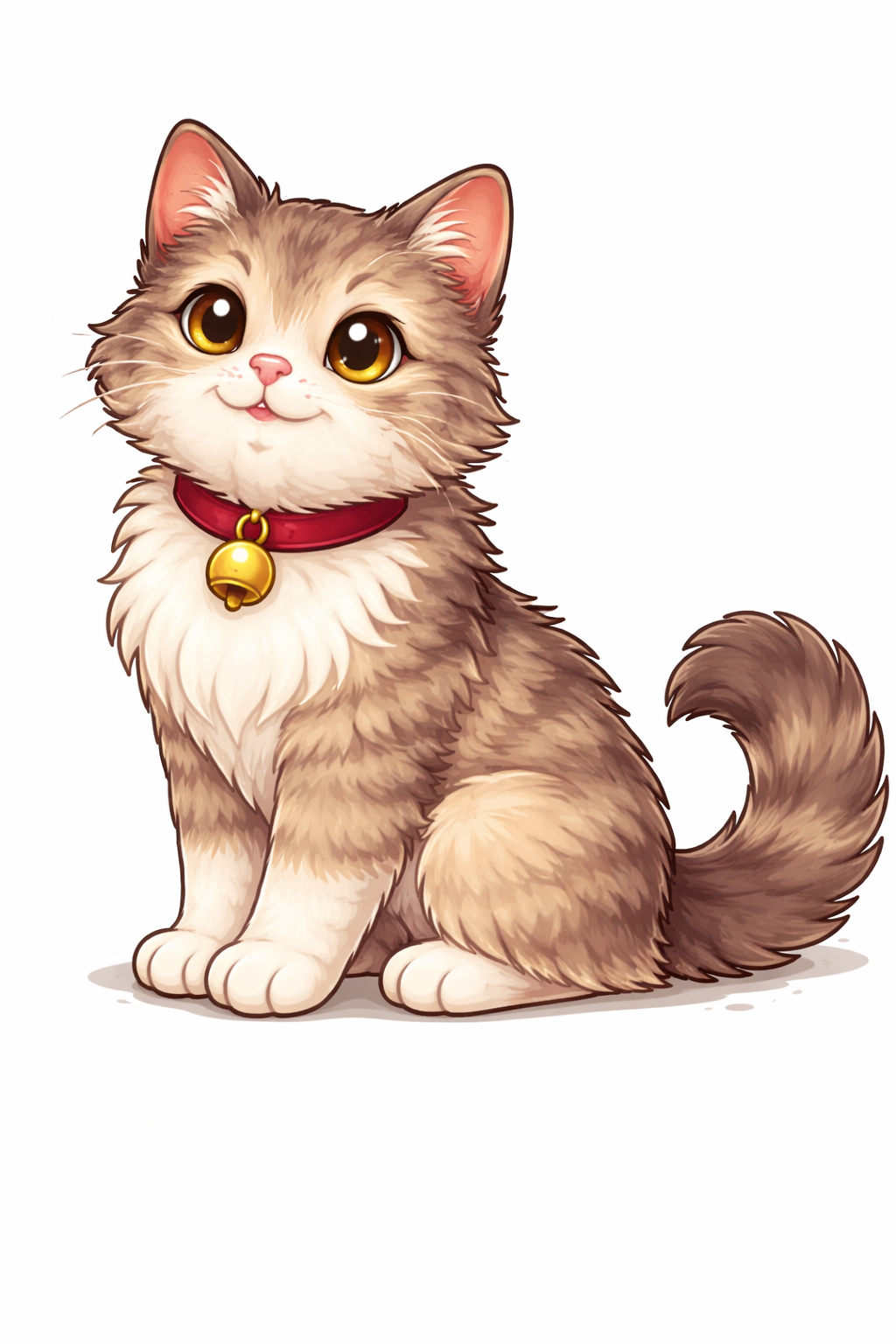 Let’s be honest: not all animals are created equal in the court of human emotion.
A kitten? Immediate adoption, Instagram account pending.
A puppy? Blanket, milk, possibly a name within 3 minutes.
A donkey? Respect, but from a distance.
A rat? Let’s not rush into anything.
The book leans into this hierarchy with humour, gently exposing our selective empathy. Why do we rush to save some creatures while hesitating over others? Is it their cuteness? Their perceived usefulness? Their ability to not startle us at inconvenient moments?
By including a wide cast—from sparrows to snakes—the narrative nudges readers to reconsider these biases. It does not demand that everyone suddenly embrace sewer rats with open arms (let’s be realistic), but it does ask us to reflect on why our compassion comes with conditions.
Home: Now Serving as an Ethical Arena (and Occasional Zoo)
 In most households, decisions revolve around groceries, bills, and what to watch on TV.
In the Choudhary household, the questions are slightly more… layered:
- Do we have space for this animal?
- Can we afford its treatment?
- Is it… chewing the sofa?
Each rescue turns the home into a site of negotiation. Space is redefined. Priorities shift. Boundaries blur.
The house is no longer just a home—it is an evolving ecosystem, complete with its own politics, alliances, and occasional turf wars (cat-astrophic, as the title wisely warns).
And in navigating this chaos, the family confronts a larger reality: ethical living is rarely neat. It is messy, inconvenient, and occasionally accompanied by unexpected noises at 3 a.m.
Humour: The Only Thing Keeping Everyone Sane
Without humour, this story would collapse under its own weight, much like a cardboard box housing one too many kittens.
Fortunately, humour is everywhere.
It is in Mrs Choudhary’s unstoppable enthusiasm.
It is in Mr Choudhary’s resigned sarcasm.
It is in the parrot, who seems to have impeccable comic timing and no respect for dramatic tension.
 The laughter is not just entertaining—it is essential. It softens conflict, diffuses tension, and allows the narrative to tackle serious themes without becoming heavy-handed.
Because let’s face it: it is much easier to think about environmental responsibility when you are also laughing at a lizard who has accidentally become part of the family.
A Reflection of Changing Values (and Expanding Households)
At its heart, Burps, Chirps and Cat-Astrophic Turfs captures a shift in urban values. Compassion is no longer confined to idealistic conversations or occasional charity. It is becoming embedded in daily life—in balconies, in routines, in the quiet decision to care even when it is inconvenient.
The Choudharys are not activists in the traditional sense. They do not organize rallies or draft policies. But their actions—persistent, imperfect, and deeply personal—challenge a culture of indifference.
They remind us that change does not always arrive with fanfare. Sometimes, it arrives with a chirp, a bark, or a mildly alarming scratching sound from under the sofa.
The Power of Everyday Kindness (and Occasional Madness)
In a world obsessed with speed and efficiency, this story offers a gentle, slightly chaotic counterpoint.
It tells us that empathy is not always practical. That kindness is not always convenient. That doing the right thing may sometimes involve rearranging your living room to accommodate a creature you did not plan for.
 And yet, it also shows that these small, imperfect acts matter.
A bowl of water on a balcony.
A rescued chick in trembling hands.
A reluctant ‘fine, we’ll keep it for tonight’ that turns into something more.
Perhaps the goal is not to become the Choudharys (your furniture may object), but to borrow a little of their spirit.
To notice. To care. To act—preferably before your balcony becomes fully booked.
Because in the end, compassion may begin as a choice.
But as this story so hilariously proves, it can very quickly become a lifestyle.
Read more about Mrs Choudhary’s empathetic yet hilarious shenanigans in Sonal Singh’s Burps, Chirps and Cat-Astrophic Turfs. Get the book here

Comments