When the Battlefield is Within
Why the Gita Still Speaks to Our Restless Age
There are books we inherit, and then there are books that inherit us. The Bhagavad Gita belongs to the latter category. For centuries, it has outlived empires, ideologies and intellectual fashions, returning again and again to a simple human predicament: What does one do when one is paralysed by doubt?
The setting is ancient—a battlefield, a reluctant warrior, a charioteer who is more than he appears. Yet, the emotional landscape is startlingly contemporary. Arjuna’s trembling hesitation before action feels familiar in an age of decision fatigue, burnout and perpetual distraction. The Gita’s endurance lies not in ritual recitation alone, but in its psychological precision. It speaks to the executive stalled by moral conflict, the student crippled by comparison, the parent navigating anxiety, the citizen overwhelmed by chaos. Its battlefield is interior.
Why does the Gita remain relevant? Because it does not promise escape; it offers alignment. It does not ask us to renounce the world, but to act in it without being devoured by it. Karma is reframed as disciplined engagement, Jnana as clarity of perception, Bhakti as surrender to something larger than the ego’s noise. In an era defined by hyper-connectivity and shrinking attention spans, its call to steadiness feels almost radical.
But ancient texts often falter in translation; not linguistically, but culturally. Many modern readers approach the Gita with reverence tinged with intimidation. The language can seem forbidding; the commentarial traditions, vast. The risk is that the text becomes pedestal-bound—admired, quoted, but not inhabited.
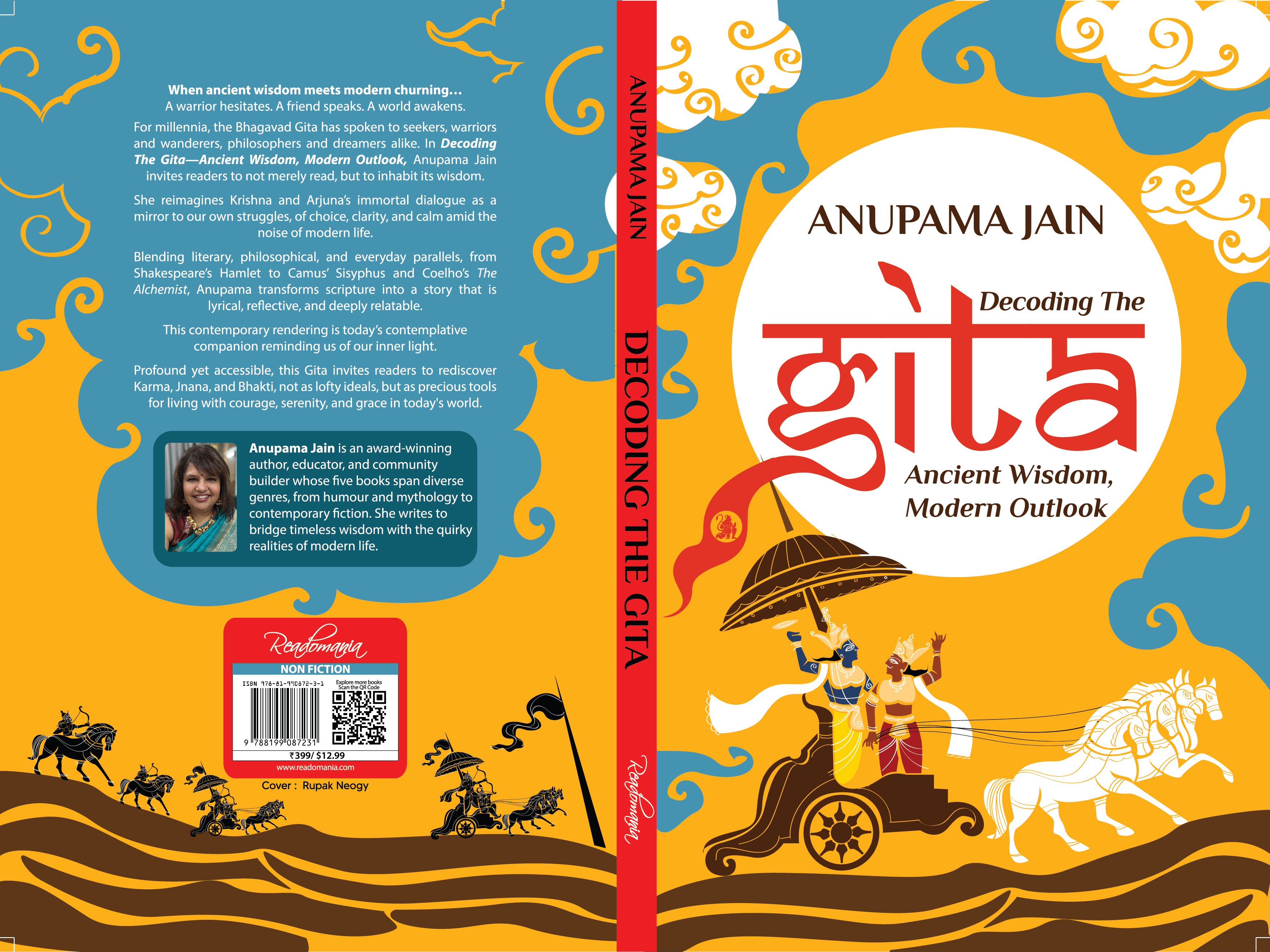
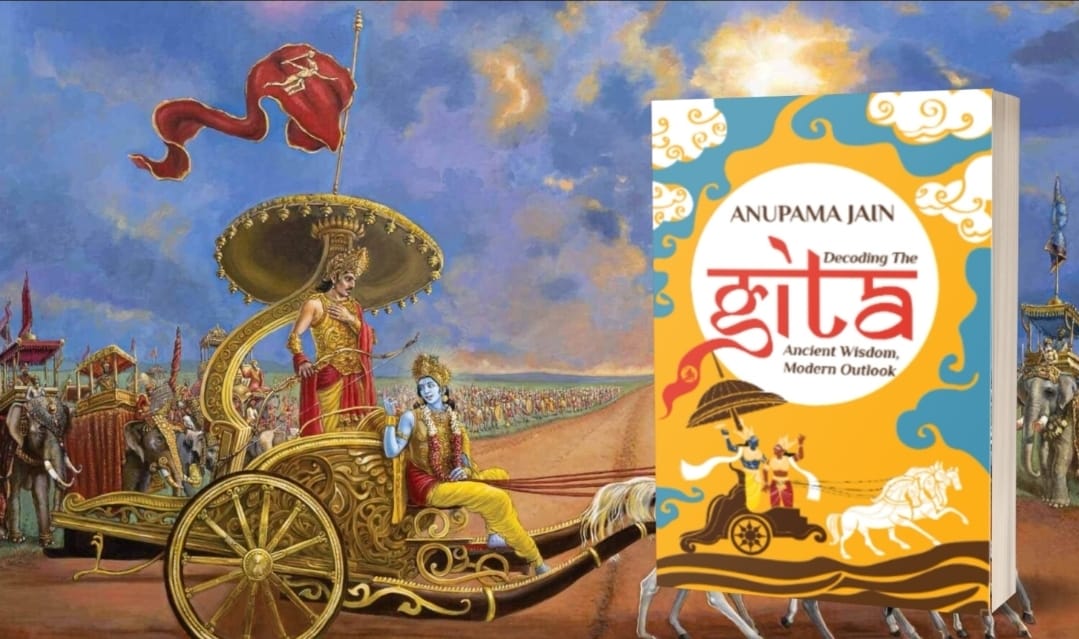
This is where contemporary interpretations matter. Decoding the Gita by Anupama Jain (Readomania 2026) attempts something particularly timely: it places Krishna and Arjuna’s dialogue in conversation with global literature and lived experience. After each chapter, the ancient shlokas are allowed to echo through unexpected corridors—through Hamlet’s paralysis, the existential burden of The Myth of Sisyphus, the mystical ache of Dark Night of the Soul, and the expansive humanism of Walt Whitman and Rudyard Kipling. Even the allegorical journey of The Alchemist finds resonance here.
This intertextual approach is not decorative; it is strategic. By situating the Gita within a broader human canon, the book quietly argues that existential bewilderment is not civilisation-specific. Hamlet’s indecision, Sisyphus’ repetition, Whitman’s cosmic embrace—each becomes a prism refracting Krishna’s counsel in new light. The scripture is not diluted; it is dialogued with.
Equally significant is the structural choice to move from contemplation to application. Each philosophical exposition distils into implementable reflections—small, disciplined practices designed for daily life. The Gita’s teachings thus migrate from abstraction to habit. Detachment becomes mindful action at work. Equanimity becomes restraint in argument. Devotion becomes attention to the task at hand. The emphasis is less on theological allegiance and more on psychological recalibration.
This practical orientation may be the book’s quiet departure from many traditional commentaries. It does not aspire to out-argue scholars or out-quote sages. Instead, it occupies a middle ground—retaining philosophical depth while remaining accessible to readers across generations. The tone resists both oversimplification and esoteric excess. It is neither sermon nor scholarship alone, but mentorship in print.
In a time when online addiction approaches epidemic proportions and outrage cycles reset by the hour, the Gita’s counsel of inner anchoring feels less like nostalgia and more like necessity. We are, in many ways, a civilisation of informed yet unsettled Arjunas—armed with data, starved of direction. The need is not for louder advice, but for steadier vision.
The enduring power of the Gita has always been its refusal to dictate outcomes. Krishna does not coerce; he clarifies. Action remains Arjuna’s responsibility. That moral autonomy is perhaps its most modern insight. No algorithm can substitute for discernment; no trend can absolve choice.
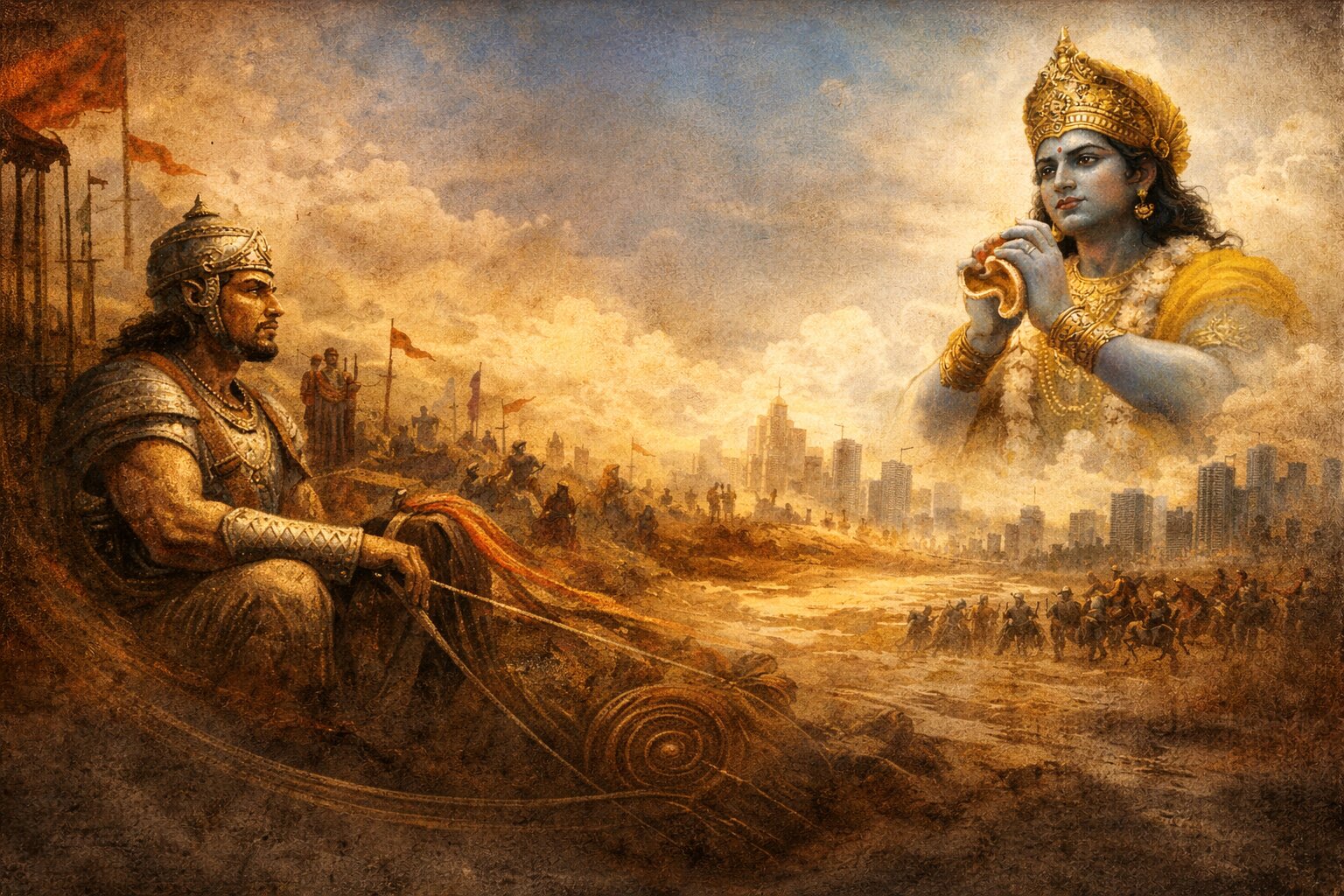
Decoding the Gita enters this vast interpretive landscape with humility and structure. By weaving scripture with Shakespeare, mysticism with modernity, philosophy with practice, it invites readers not merely to admire the Gita, but to return to it—periodically, privately, personally. The aim is not to market ancient wisdom, but to metabolise it.
The Gita endures because it recognises a truth we resist: the battlefield is unavoidable. What can change is the quality of our participation in it. When ancient wisdom meets modern churning, the dialogue continues—not in Kurukshetra alone, but in conference rooms, classrooms, living rooms and restless minds.
Perhaps that is why each generation writes its own Gita—not to replace the original, but to rediscover it.
Grab your copy here

Comments