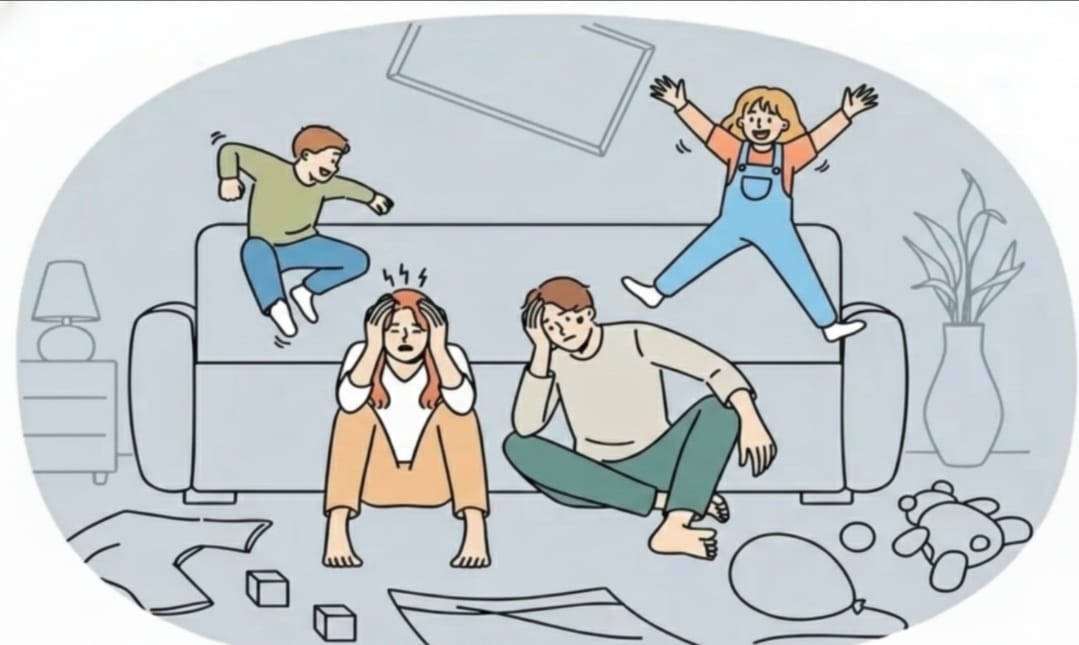
Parenting in 2026: Now Streaming Live (With Snacks and Mild Panic)
You don’t become a parent.
You are thrown into parenthood, like a contestant on a reality show you don’t remember signing up for.
One minute you’re debating coffee blends and long-term investments. The next, you’re in heated negotiations about why socks are not optional in public spaces. Welcome to modern parenting: the only job where you’re hired before you’re trained, promoted instantly, and reviewed daily by a human who still thinks elbows are detachable.
The Performance Era of Parenthood
Once upon a time, parenting was a private chaos. Now it’s a public performance.
There are growth charts, developmental milestones, curated vulnerability posts, and WhatsApp wisdom forwarded by someone’s bua who has ‘raised four children, all engineers’. Advice arrives via podcasts, reels, parenting coaches, sleep consultants, and strangers who insist their toddler sleeps twelve uninterrupted hours because of ‘energy alignment’.
We know everything.
We feel like we know nothing.
Every decision feels loaded:
Organic or regular?
Montessori or mainstream?
Gentle parenting or ‘because I said so’?
Screen time or scream time?
Parenting has become a live telecast. Calm faces. Intentional tone. Emotionally literate children. Balanced meals shaped like cartoon characters.
Meanwhile, in reality? Someone is crying. And often, it’s the adult.
The Existential Crisis Nobody Mentions
Here’s the part that rarely makes it to Instagram captions: parenting is repetitive. It’s boring. It’s tender. It’s terrifying. It’s hilarious in deeply inappropriate moments.
And it rearranges your identity.
New parents aren’t just learning how to burp a baby. They are being ‘onboarded’ into a lifetime of questioning:
- Who am I now?
- Am I doing this right?
- Why didn’t anyone warn me properly?
Spoiler: this crisis is not a bug in the system.
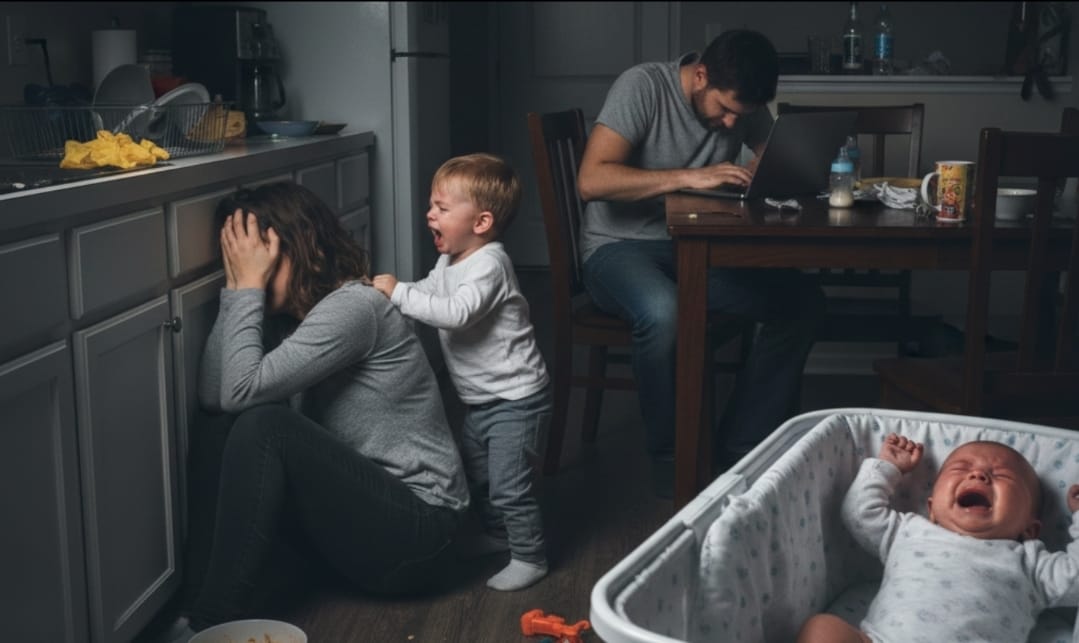
By the second child, perfection usually leaves the building. You’re no longer curating an experience; you’re managing logistics as well. Diapers are changed with déjà vu. Sleep schedules are negotiated like fragile peace treaties. Things that once caused spirals now cause laughter. Or mild numbness. Both count as growth.
The Myth of the Ideal Parent
Somewhere along the way, we began auditing ourselves like a hostile panchayat committee.
Did I use the right tone?
Did I validate feelings enough?
Was that too much screen time?
Should I have packed quinoa munchies instead of biscuits?
Here’s the truth: no one enjoys a perfectly regulated life. Children don’t need flawless adults. They need humans who show up, even if those humans are reheating chai for the third time and wondering when laundry became a recurring horror franchise.
The idea that we must be either martyrs or motivational speakers is exhausting. Most parents are neither. They are simply tired professionals working overtime in an unpredictable workplace.
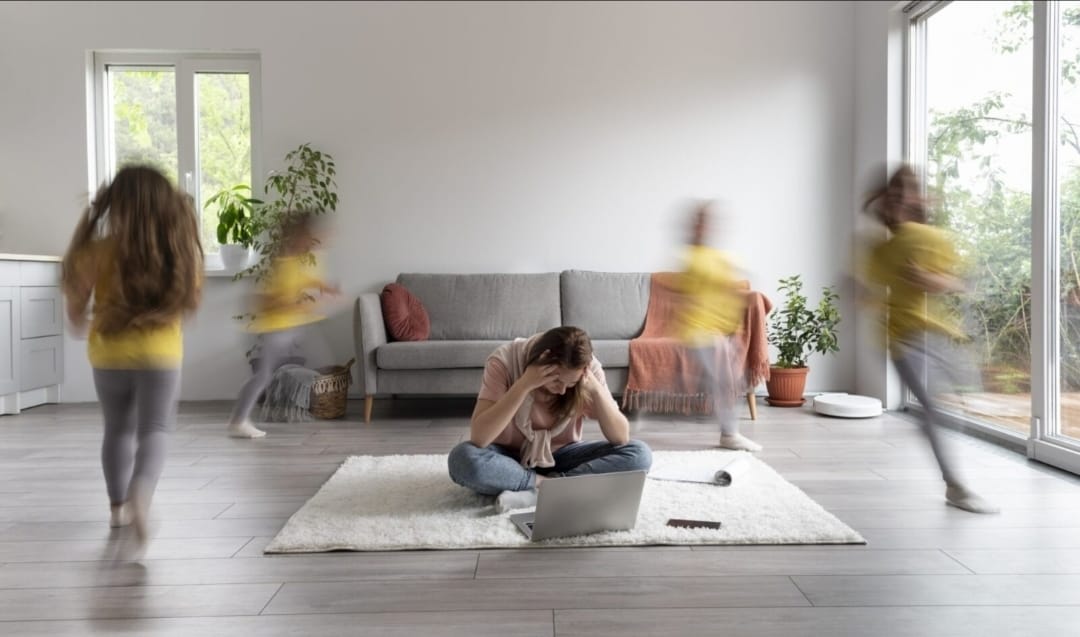
Why Humour Is Not Frivolous—It’s Survival
If modern parenting had a safety manual, humour would be printed in bold.
Humour is the pressure cooker’s safety valve. Without it, everything explodes.
When you laugh at the absurdity of arguing about the philosophical importance of snacks or the geopolitics of bedtime, you are not trivialising the chaos. You are surviving it.
Forgot the fancy lunch and sent biscuits?
Adaptability lesson.
Let cartoons babysit while you stared at a wall for ten silent minutes?
Mental health strategy.
Picked a dramatic fight during a family holiday just to reclaim two weeks of solitude and eat instant noodles in peace?
Let’s call that creative problem-solving.
Laughter doesn’t fix parenting. It makes it breathable.
The Invisible After 8 P.M. Club
There is a quiet club of parents who feel invisible after 8 p.m., when the house finally stills and exhaustion hits like a delayed monsoon. This is when doubts creep in. When the performance drops. When the glass of wine (or cup of tea) feels like a medal.
This is also when honesty matters most.
Parenting is not a transformation into sainthood. It is an ongoing negotiation between love and limitation. Between ideals and sanity. Between wanting to ‘do it all’ and wanting to lie down on the floor dramatically.
A Few Radical Suggestions
If modern parenting feels like a circus, here are some subversive ideas:
- Lower the bar. Your child needs connection, not choreography.
- Protect your sanity more fiercely than your ideals.
- Ask for help. This is not a solo endurance sport.
- Stop comparing. Parenting is not the Olympics.
- Eat the food while it’s warm.
- Schedule one day a week where you improvise and refuse to audit yourself.
Anyone claiming perfect systems probably has a course to sell.
The Ongoing Job Description
You will change as your child changes. You will have spectacular hits and equally spectacular misses. You will doubt yourself and still show up.
That is not incompetence. That is growth.
Parenting in our time is loud, over-informed, emotionally hyperaware—and deeply human. It is part memoir, part stand-up routine, part survival manual scribbled in the margins of grocery lists.
If we are going to mess it up anyway—and we will—we might as well snack through it. Laugh loudly. Drop the performance. Keep the tenderness.
Because no one masters parenting.
We simply live it.
Aditi Dasgupta’s Snack-shack and the Confessions of a Tired Parent is about, by her own admission, parenting honestly and not about parenting better. She says, “I didn’t want to write as an expert—God forbid and this is how humour became the natural entry point. It is the only honest language I have trusted at home. When you are laughing at something, you are not romanticising it, but you are also not collapsing under it. Snack-shack and the Confessions of a Tired Parent is not my attempt to fix parenting; this book is real, loud and oddly meaningful.”

So, dear readers, modern parenting isn’t about getting it perfect; it’s about staying sane, showing up, and laughing before the next meltdown begins.
Happy Parenting!
Get Aditi Dasgupta's Snack-Shack and the Confessions of a Tired Parent here

Comments