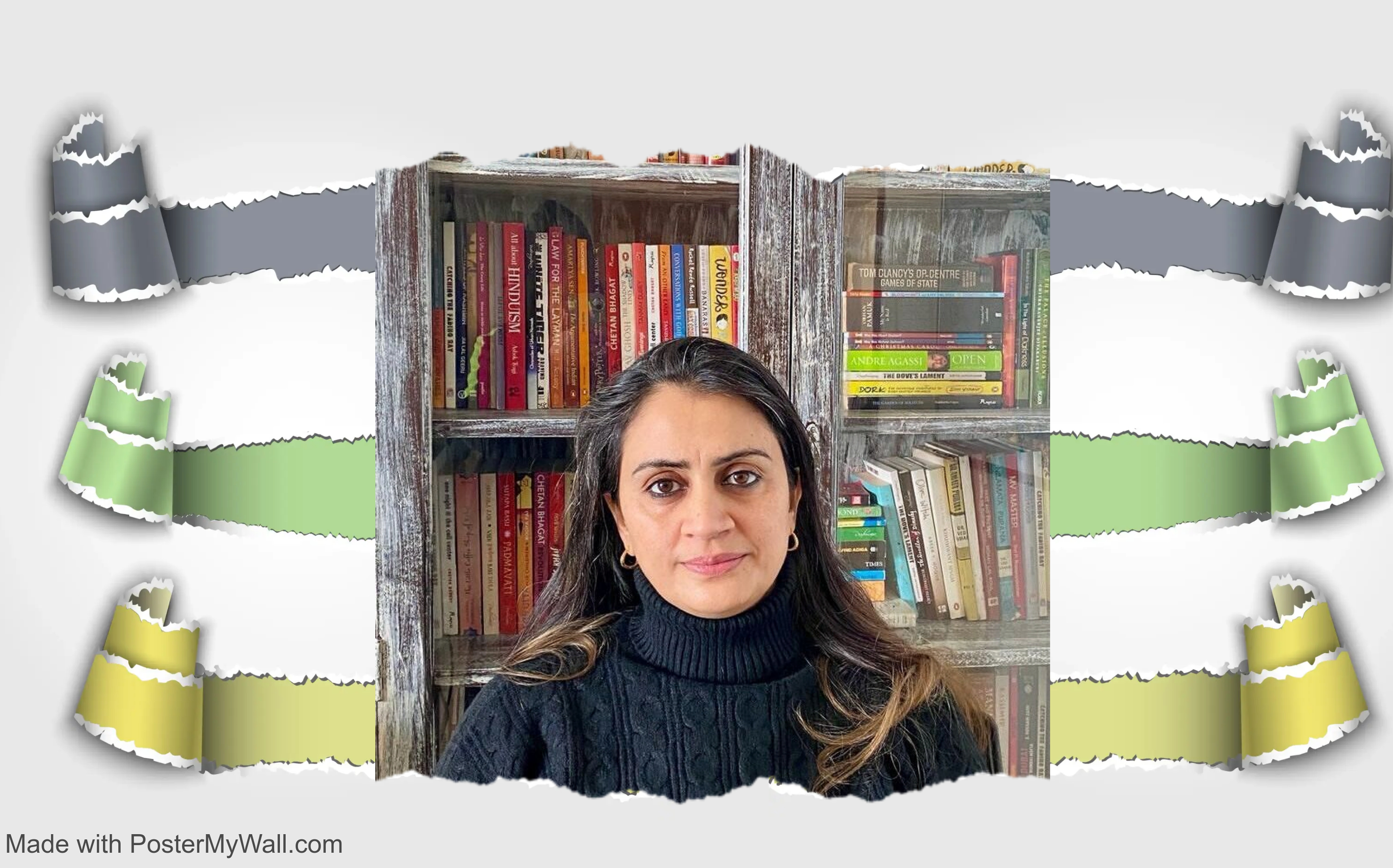
Certain writings are not meant for others – they are directed at the self. Because these expressions aren’t coming from the author’s imagination, memory or experience. They aren’t meant to be ‘the sitting manuscript’ at the editor’s desk – instead, they are for a pause and reflect.
I am no winner of any awards– never have been, in the long and short of the lists. I have no thick wads to brag about, nor hopes of turning my books into OTT platform content, or of being invited as a speaker at the elite literary fest: such existential things for us authors.
Then why am I writing?
I am a creature of habit – and of circumstances. At as young as six years old, I was exposed to books in the cold attic of my Srinagar house. There were books all around – books as heavy as me and as light as a feather. Colourful and monochromatic picture books. Some lay bare, ripped off their titles, and some were naked altogether. The tomes, the voluminous ones, were the unapologetic bosses of the attic syndicate. Their shadow of fear lingered in the dark crevices – home to cobwebbed books, who over the years had bent and curled into the shape of the corners that housed them. As a young girl, I thought these books were people – talking to each other through the words typed on their bodies. They became my easy companions: non-demanding, available at any time of the day, and, most importantly, approved by parents.
After devouring most of the books at the attic, I plunged into the classics, mysteries, suspense and folktales – courtesy of the books ferried from New Delhi by my father.
Back in the 1980’s, Srinagar wasn’t among the hot destinations for same-day deliveries. We often got stale magazines and newspapers. Despite that, my father made me read, absorb, and reflect on the editorials and opinion pieces in the The Times of India and Competition Success Review.
Lazing on the diwan, with a book pressed face-down against my heart, became a Saturday ritual. I secretly admired – my father’s ability to transcend into the world of books without a care in the world. He gobbled up books left, right, and center – always carrying a pen and a small notepad to mark his comments and jot down discovered vocabulary.
Moving around in the neighbourhood and meeting friends in the common compound wasn’t encouraged. It wasn’t just my family; but it was a pattern with most Pandit families in the valley. Some may argue that such a childhood was stifled or caged – I would say, what you make of it is what you get from it. If life gave me literature, we found a library.
A few months before the exodus happened, my brother and I created a revenue-generating library – and it worked surprisingly well. Our friends from the neighborhood and school borrowed Enid Blyton, Arthur Doyle, RL Stevenson, Alexander Dumas, Charles Dicken, Arthur Christie, Mark Twain, Jane Austen, Lewis Carol, Russian folktales, Scandinavian folktales, and others from us.
Then the unexplainable happened. Undercover departures began – in groups, in masses, in couples from our homeland. A dark, looming shadow consumed the peace-loving community and threw us out in the unfamiliar terrains of the world. The world turned blind, dumb, and disabled– making no statement about the uprooting of four and a half lakh Kashmiri Pandits.
The imageries of this trauma seeped into my adolescent consciousness: the weight of the gloomy eyes of the family members, the feelings of being an alien in my own country, the absence of willows and blue skies, the muck and the mess of the rented labyrinths. Hiraeth – that untranslatable longing for a lost home – was slowly and steadily running like a tingling sensation under my skin for decades on.
Post-1990, life happened, as it always does– groceries purchased, school fees paid. But those books in the attic never appeared again. I carry the weight of deceiving them – of letting them burn in the fury of the mobsters who gutted down the house. My family was in the business of books, and we had thousands in the house. In the same breath, I granted freedom to those books that were never returned by the subscribers of our little library. At least they are still enlightening the paths of those who hold them in the valley.
Except for writing school and college articles, helping with my siblings’ English assignments, composing rhyming poetry, and preparing Service Quality training modules at Citibank and CitiFinancial in Chennai, I had no other real interaction with written English.
2012. Mother of two. Bundle of papers – annotated, with notes scribbled during long phone calls to grand uncles and aunts. Oil stains, milk spills, and the remnants of a sit-at-home mother had left their marks on the unsaid stories from Kashmir. Back then, stories that sought validation in destructions and pessimism about Kashmir sold. Jovial and lighthearted stories from Kashmir, however, were a hard sell. After a disillusioning experience with a literary agent, the stories gathered dust for many more years.
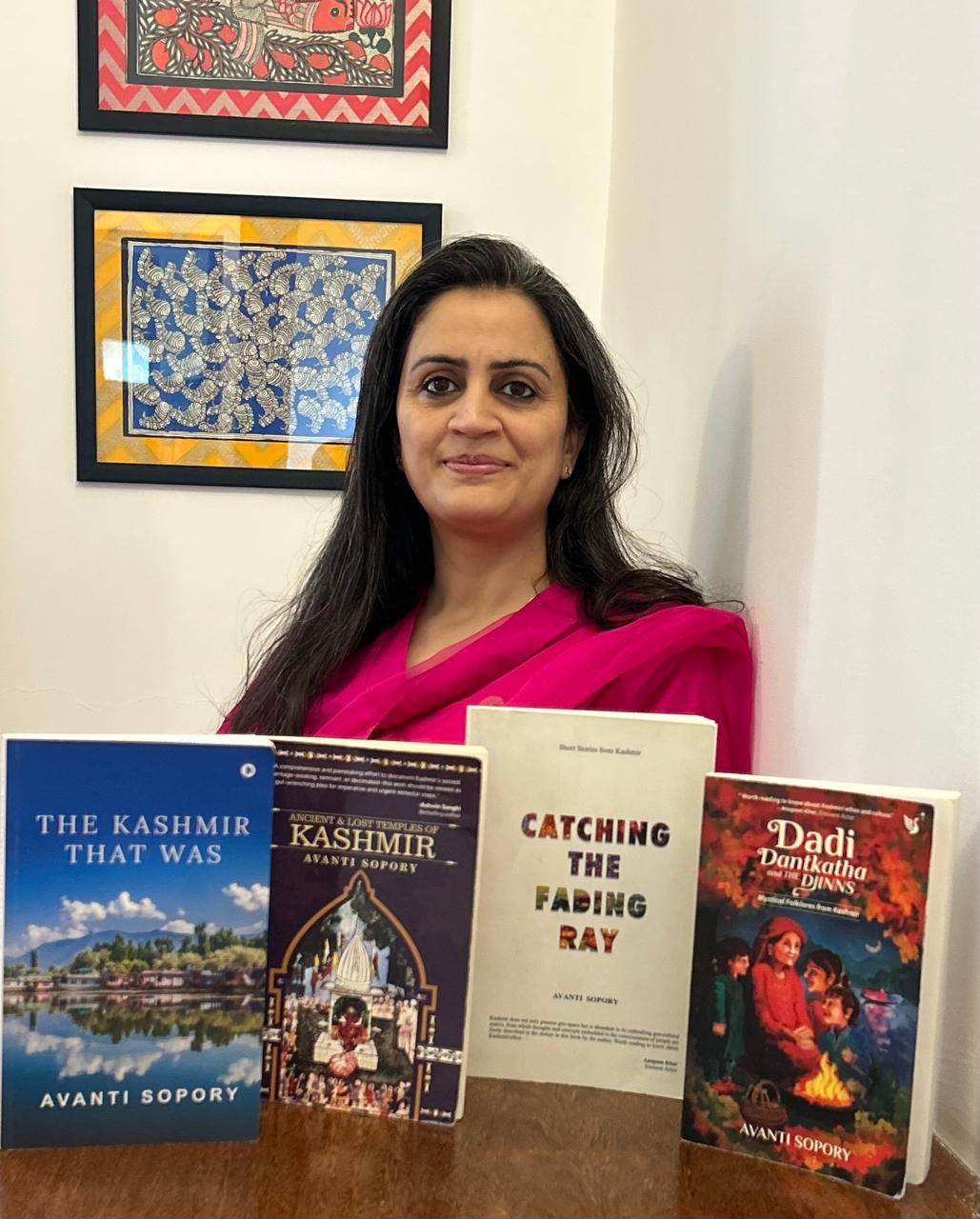
Utpal Publications – a New Delhi-based publishing house earns its distinction by publishing and promoting books exclusively on Kashmir– finally opened its doors. In 2016, they accepted my manuscript and agreed to bring to life a story rooted in the folktales of Kashmir. A concept seeded in 2007 finally came alive in 2016 as Catching The Fading Ray.
In 2015, I submitted my short story to Readomania Publications, based out of New Delhi. As luck would have it, the story was selected, and I soon became part of India’s first composite novel – Crosssed and Knotted. This led to a string of anthologies with them. As a nascent author, Readomania created the perfect environment for me to hone my skills and understand the nuances of writing a book.
Then Covid happened. Not just publications, but everything loomed in darkness and uncertainty. My manuscript on the untold and unexplored side of Kashmir could not see the light of the day. For more than two years, the script was lost to a crashed hard drive. The script resurrected in mid-2022, when Dipankar Mukherjee gave the title ‘The Kashmir That Was’ – though the book was eventually published by Notion press.
Does this mean there were no failures? I have a folder in my mailbox that still honours the rejection emails from publishers across the country – citing reasons like: we don’t do folktales, we don’t do short tales, contact us after three years and other bizarre explanations. They remain bitter yet sweet memories.
Success? I am not so sure about that – but satisfaction is my sentiment here. Creating stories and writing them is deeply personal to me. I am not a closet writer, but from the time an idea is germinated to the moment it takes the physical form of a book, I keep it very close to my heart. Of course, later I want the stories to reach far and wide, but while shaping them I care for their privacy as tenderly as I would for babies.
My muse is the devil’s playground – a patch of land that has cast its spell on me. I am trapped, and am not willing to be released. A piece of me is still in my native land. My soul is enraged, but I am strangely happy to be a captive.
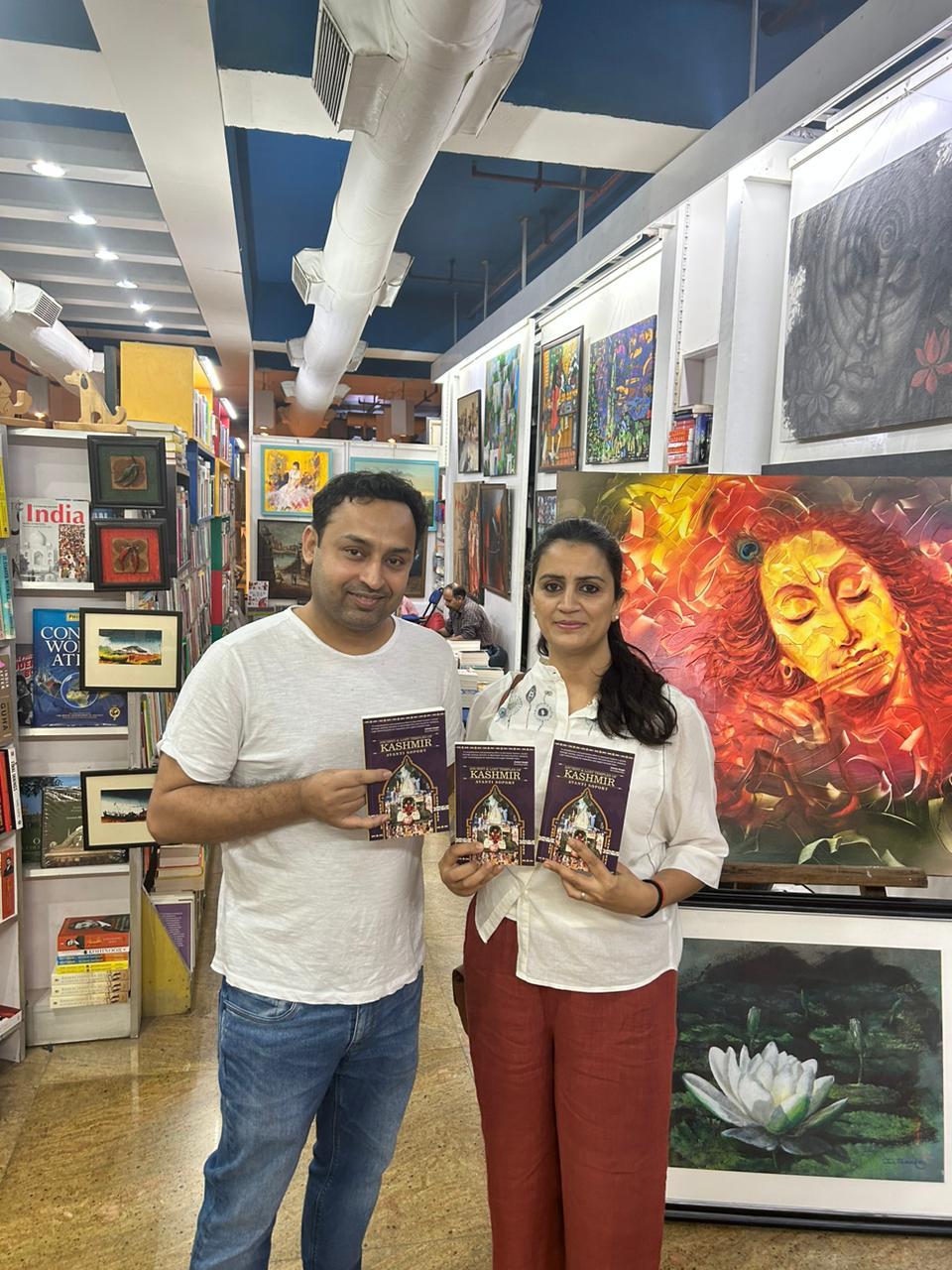
In 2023, a call from Dipankar to do a book on the ancient and lost temples of Kashmir strengthened my ties with that distant muse. I was both excited and nervous. Consolidating information and researching temples was a daunting task, but Ancient and Lost Temples of Kashmir was worth it all.
Dadi, Dantkatha and the Djinns was released in June 2025, as the second edition of Catching The Fading Ray. Readomania has published the book under its imprint, Reado Junior.
Currently I am working on three different writing projects across genres. Being in the thick of three subjects at once is a delightful feeling for me. It feels like I am home. I am not lost. I feel complete and anchored.
My professional experiences have been a heady mix – from Citi to mentoring students at Universities, from teaching early learners to enabling the lives of senior citizens, to training young professionals. There are slivers of these interactions in my writings. Chaos and multilayered life dynamics nudge me to write. Separation and desire to document the past push me to write. What has been lived – and pained through – becomes the main character in my stories. If sorrow and tragedy had an expression, they would take the form of books.
And this, I realize, answers my opening question – why do I write?
Comments