Writing to me came from the timely revelation that no number of prayers could solve Trigonometry and Algebra came a close second within a terrifying intimate distance. Fulcrum and Focal Lengths were treachery personified; they could alter without a forewarning. And then, arrived a report card that armed me with workable grasp in Language skills and nothing else. Hence, I realised soon enough that Arts were the only pipe dream that might take me somewhere that is, if it at all would.
Another reason that fuelled my writing skills was that I was a cosmic accident that arrived in the era of non-digital romance. Today no number of flowers can equal two blue ticks. Where today an emoticon takes care of our spirits, in our times, our amorous writing skills were duly tested.
Adolescence arrived and parents vehemently discouraged poetry for they felt it was a spillover of some infatuation and we were hammered with the gyan that emotions are only for the stupid. Little did they realise that I was hugely, impossibly, irreparably stupid that way. It’s in today’s time that fifty thousand shades of grey outweigh a single colour of sentimentality. In mine, it was a sorbet-hued cloud and stayed just that.
And then I found T.V. very educational with only one movie a week and the rest crammed with Krishi Darshan and Adbhut Kahaniyan—every time someone switched it on, I ran for my Enid Blyton books.
Whenever I scribbled a poem or wrote a story, I felt that it’s so cool that you could pick up a pen and create something that didn’t exist in this universe five minutes ago or something no one has heard before. But it wasn’t long before I realised that this was no funny business.
Until now, I had firmly believed Antony de Mello who said, “You have to understand that the shortest distance between truth and human being is a story.”
And funnily, I wrote a 350-page book to cover that ‘short’ distance.
My nascent attempts delivered the ruthless lesson that even though writing is a foil to what lies inside and the struggles we all wage, it is a huge responsibility that we are hefting as authors. It’s true that it has shades of truth and illusion in equal parts but as a writer one has to be sincere, imaginative, and precise.
So, reading got the first billing here and was the best motivation to write well. All through my writing process, while crafting my protagonists, I gave them an inner life and believed in them. I never worried about their likeability because the people I observed were everyday people and normal people are known to be deeply flawed.This helped me draw my readers into the hero’s world. I wrote about unassuming ordinary souls and disregarded personas and not people you would take notice of. Yet, once they entered my thinking space, they refused to leave.They were relatable characters. This helped me bunk the perfection trap. After all, they say normal is just a cycle on the washing machine. So,I stayed real, clear, precise, and not-so-normal.
Till I was writing, I believed that writing a book was an effortless flow of ideas and emotions. And it was! The trouble began when it came to finding a publisher, and that turned out to be an uphill task. I began by scouting for publishers and was advised to hire a literary agent, who could help navigate the process, but that attempt ended in vain. I genuinely felt I was offering the best thing to this planet since the invention of fire and the wheel, but the rejection letters poured in from all directions. Yes, there was a lot I had to learn about networking and targeting and what it is that publishers actually look for.
The process of publishing begins with ideating and writing—but it certainly doesn’t end there!
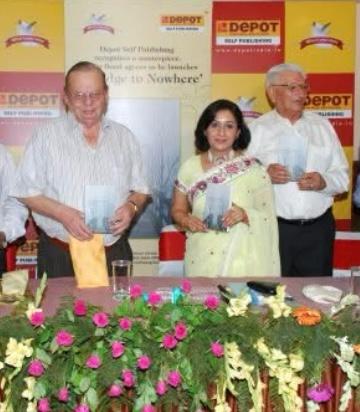
Finally, I found Depot books, a little-known publisher in Mumbai, who agreed to publish my first book, A Bridge to Nowhere. Released by Sir Ruskin Bond on the 25th of June, 2009 it was a moment like no other.That feeling of euphoria still stands unmatched.This book has 4 stories about the haunting odyssey of the lives of four people, George, Vasudha, Rosanna, and Manya, who dared to dream in the face of hopelessness, guilt, loss, anger, and rejection.I drew from my experience and the emotional upheavals that people faced.
I discovered that all of us go through emotionally terrifying times but the human soul amazes us with its enormous strength. We surprise ourselves with the grit—we thought never existed. Despite their incomplete lives and nightmares with an eerie resemblance to their lives, George, Vasudha, Rosanna, and Manya come upon a bridge that never seems to end.
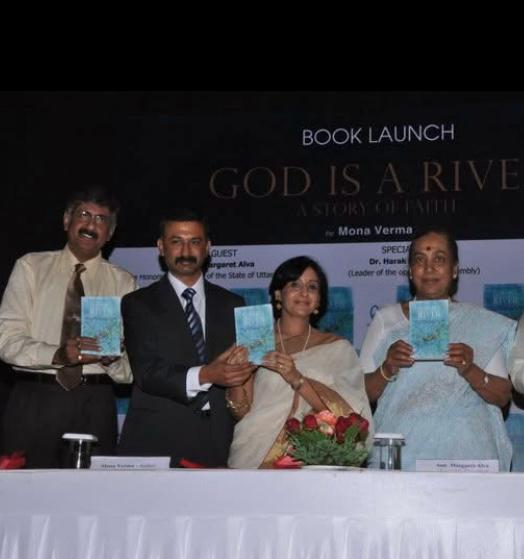
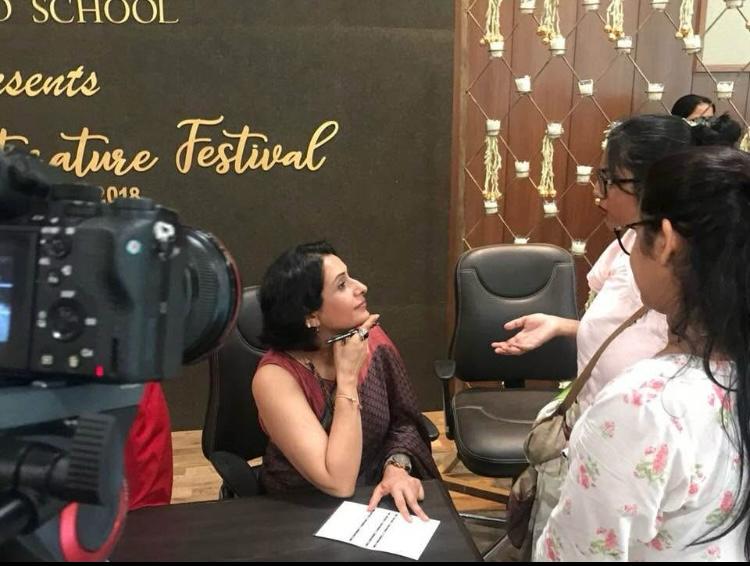
With heart-warming encouragement from Ruskin Sir and his comment, ‘Your best is yet to come’, I went on to my second literary endeavour,‘God is a River—a story of faith, in 2011. This book was launched by H.E. Margaret Alva, Governor of the state of Uttarakhand at Rajbhawan, Dehradun amidst a discerning audience.
What backed my belief in this book was the idea that literature will always hold a cultural high point, and that history inevitably adds to its depth. The story was woven around the doctrine of Sufism, as well as the divide created by religion.In 1947, when the country was sensitive to the slightest religious provocation, these elements strongly shaped people’s mindsets- and how!
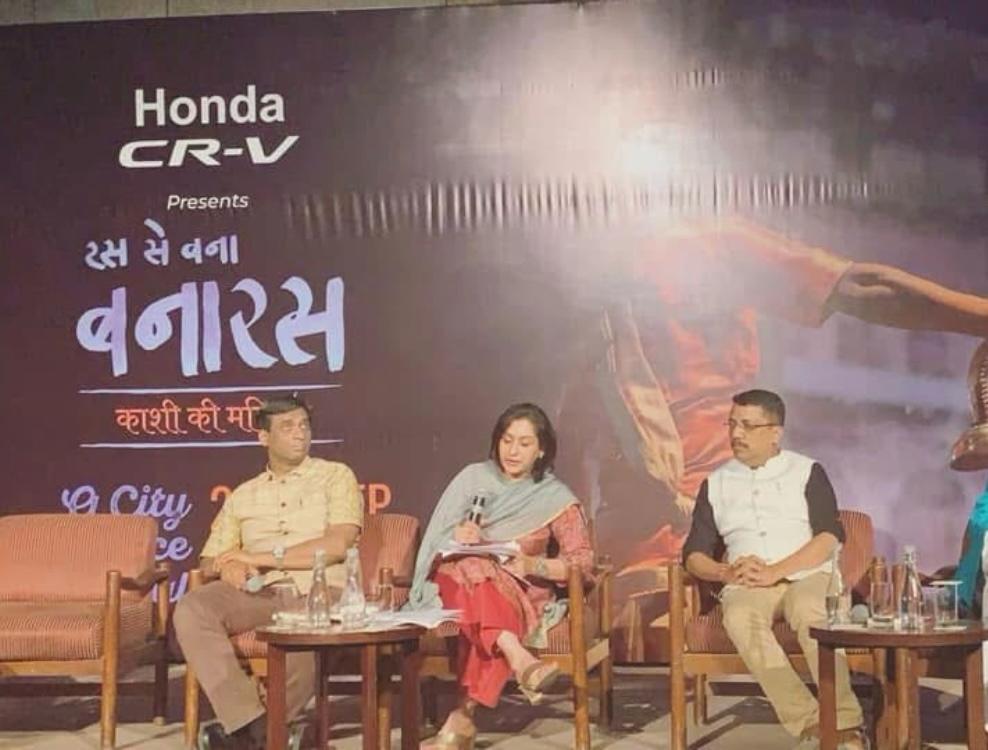
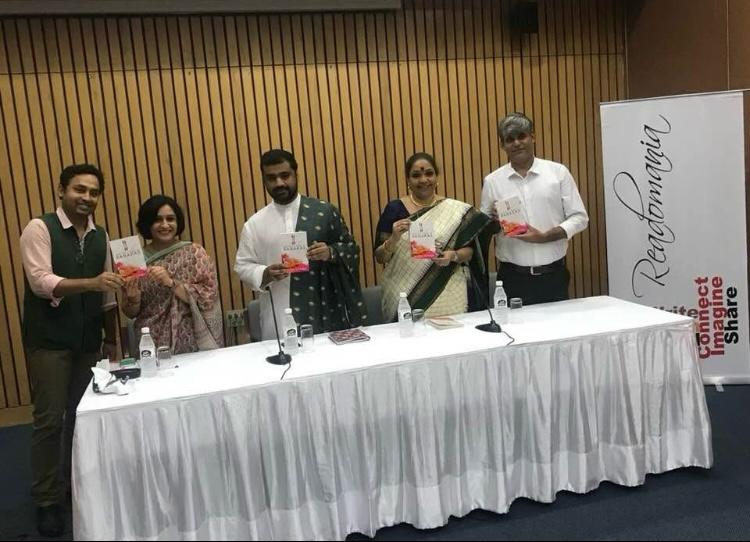 In the year 2015, I wrote Lost & Found in Banaras and my joy knew no bounds when Readomania accepted the manuscript. The most ancient city in the world still shrouded in mysteries, myths, and legends had me hooked. Where death is feared in other parts of the world, it is Banaras’s currency and welcomed like a lucrative business.
When I visited Banaras, the child widows were a plaintive sight, facing a plethora of adversities they face in this obsolete culture. That is where the characters, Brinda and Debi, took form in my creative space.
Shaved heads, pallid garb—so as not to invoke carnal desire in a man. It rattled me as I wondered when men take up responsibility for their physical sensibilities.
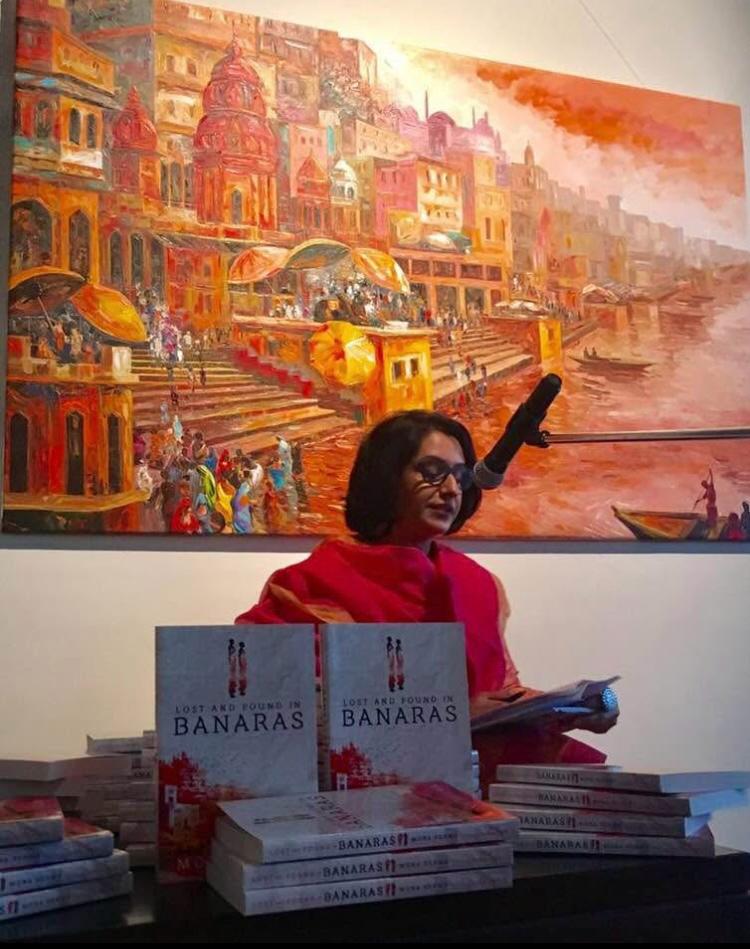 Another question that plagued me was, ‘Does Kashi still render nirvana to the empathy starved and what significance does the law of karma hold for the contemporary jaded world to which we belong?’
Would we want to be born again? And what is salvation to us? What sense does it make to the common man of today? Do we still want it?
Launched by Vikram Sampath, historian, and author, the book still holds a special bond with my readers and went on to become the subject of the theses for numerous research scholars.
After having written on evocative topics like the partition and Banaras, I wanted to attempt writing for children. Thus The Clown of Whitefields & Other Stories came around.
The Clown of White Fields launched by Tom Alter, actor and storyteller is a collection of seven stories set in various parts of the world, and a common thread of mysticism unites them. They are stories about children and people from small places who have a secret. The enchanted world they live in, they are possessed by magic and the illusory world of dreams. Be it Anatoly’s special powers or Siom’s hatred for his stepmother, Oddvar’s shame of poverty, Azec’s magical circus, or Ravana’s soul wanderings; they all brave the oddities as time affords them clarity and strength. The book attempts to bring back the lost era of storytelling, with illusory and mystical undertones that a child’s innocence craves. Needless to say, I had a blast writing these stories that brought out the inner child in me as all that had affected me in my growing years determined my writing behaviour. After all, we all begin and end our days with a wish for magic and that is what powered these stories.
At the same time, having made friends with numerous fellow writers, I decided to partner with celebrated senior writer Abha Iyengar and we decided to publish an anthology —The Other. The topic was ‘The Other’ and we received hundreds of entries where writers, veterans, and novices contributed with stories on the socially ostracised, gender issues, and outcasts. These stories surprised us with their enchanting mix of observation and experience. The writers claimed that storytelling helped them process a whole lot of emotions because most considered the topic as cathartic. My story, ‘The Verboten’ was also included in the book.
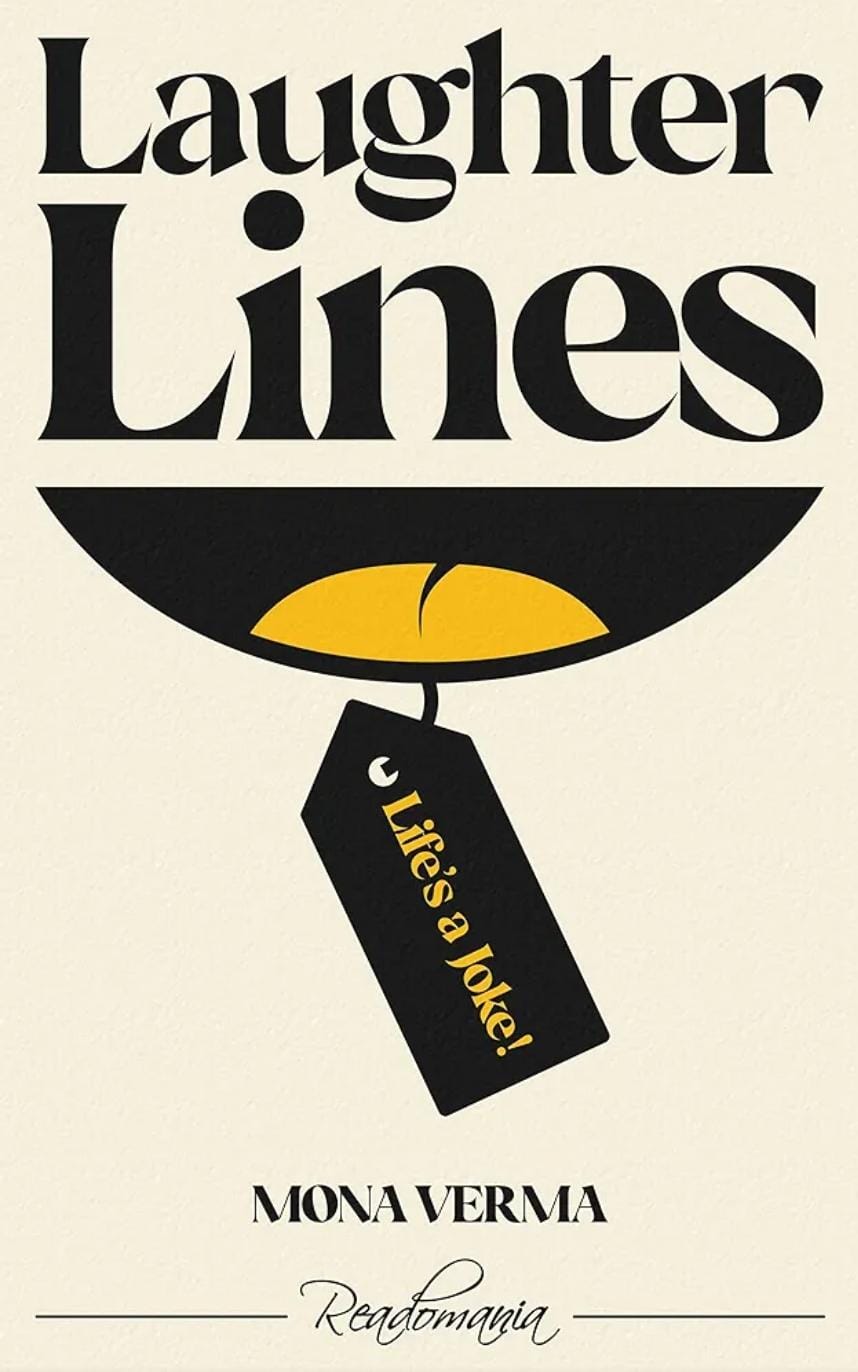
In 2020,when Covid struck and physical publishing was unthinkable, I didn’t deem it proper to take a sojourn. When life wasn’t offering us any reason to smile, I tried my hand at humour and wrote The Laughter Lines, solely aimed at invoking hilarity through wit and satire. The book contains 3 stories:
‘Life Changer’, where Ramprasad leads a life orbiting the planets and their cosmic circus!
‘Starry Eyes’ had Shobha, a middle-aged glamazon from yesteryears who misses her life of Lights, Camera, and Action.And is still fixated on her glitzy Mumbai memories.
‘Double-take’: By the time Sonam realises that Love is blind and short-sighted too, she has already jumped continents.And a comic situation turns out to be a ‘perfect recipe’ for failure for the new bride !
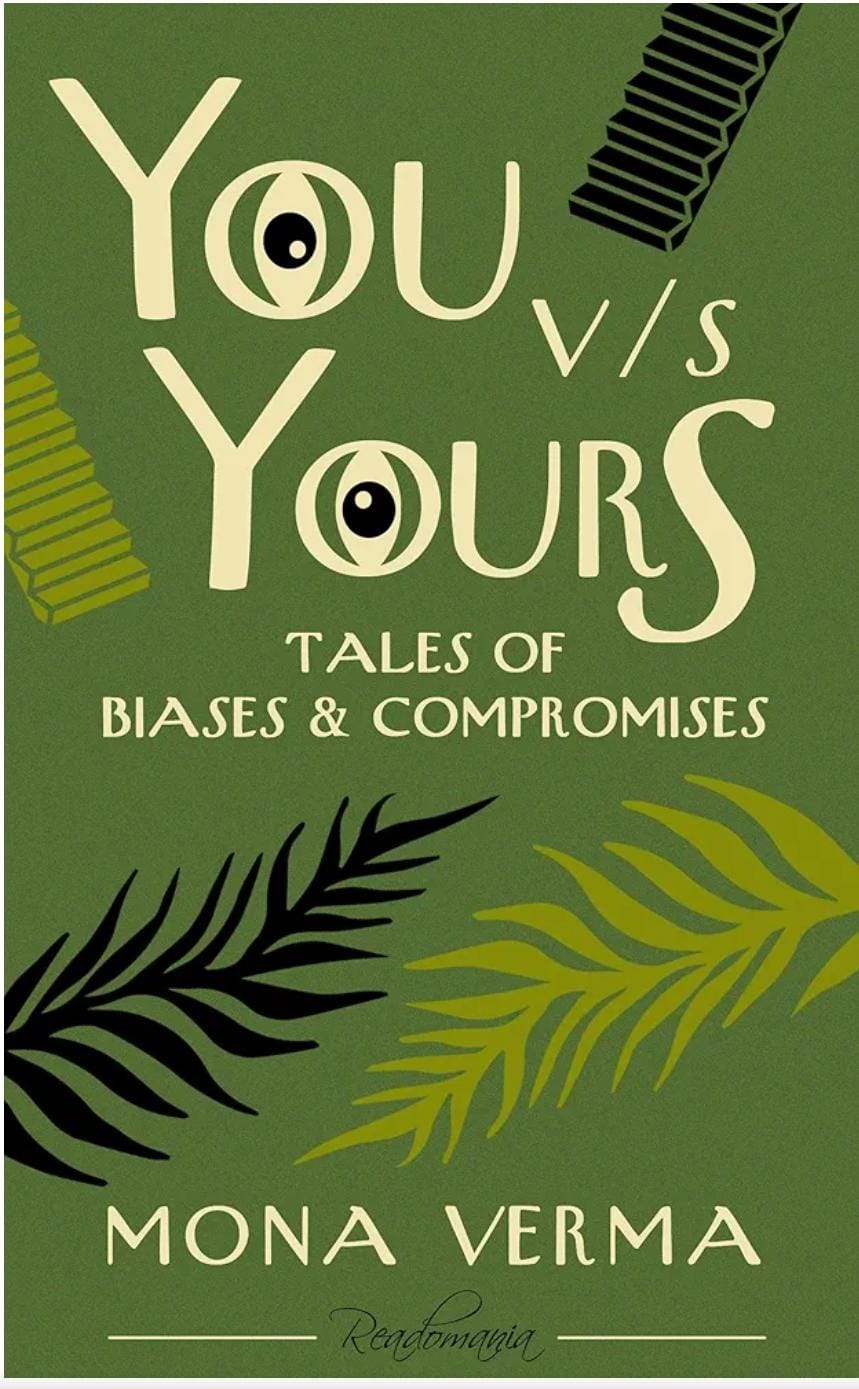
Close on the heels of The Laughter Lines came another ebook, You V/s Yours with 3 stories :
‘I Need Colour’ had Mansi, a middle-class working woman, torn between the exhausting demands at home and work.
‘Just at the Finishing Line’ was based on the soured relationship between Angela and Samantha, trusted friends until a misunderstanding tore them apart.
‘The Invisibles’: Bala, a grouchy retiree, blamed the world for sullying his dreams. Was he just a space filler in the lives of his children and had no vanity to decide his role?
These were stories based on tightly held biases and the complexity of human nature and every story ended with an a-ha moment.
The cover of both these books was designed by my son, Utsav.
Stories have been told for as long as humans have had language and the unforgettable lockdown had me experimenting in a genre that I had never attempted. With my daughter, Sanjna we started studying the 18 Mahapuranas to discover stories that still had a connection with the contemporary readers.
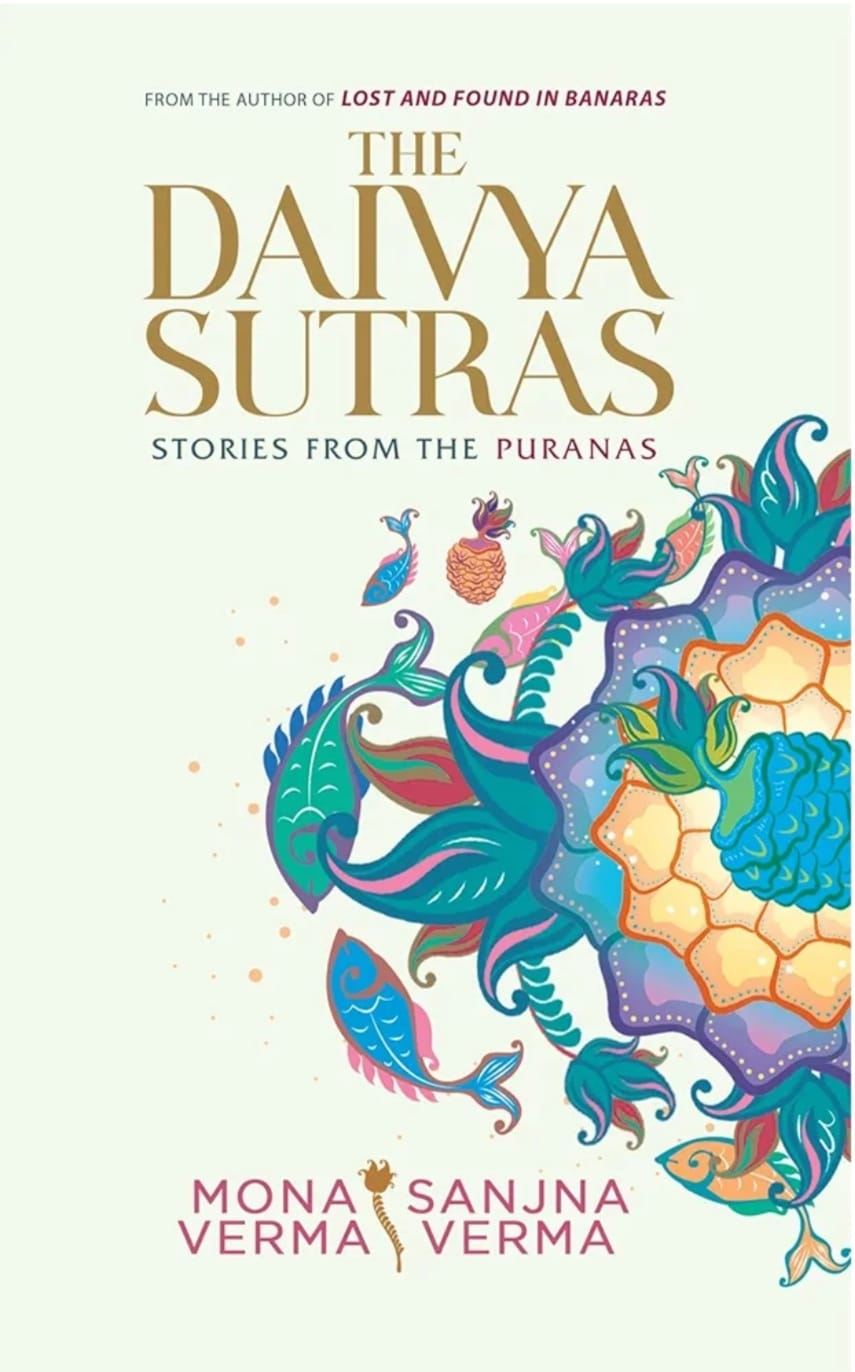
When it comes to mythology, storytelling is perhaps the most powerful way that human beings understand their cultural bearings. Puranas have fascinating tales of the Trinity, valour of the warriors, the ethereal beauty of the goddesses, the love and longing of the nymphs, and the penance of the sages. We were careful that the stories in The Daivya Sutras shouldn’t be didactic in their approach, rather they should portray Gods and Demi-gods as relatable characters with human emotions and insecurities.
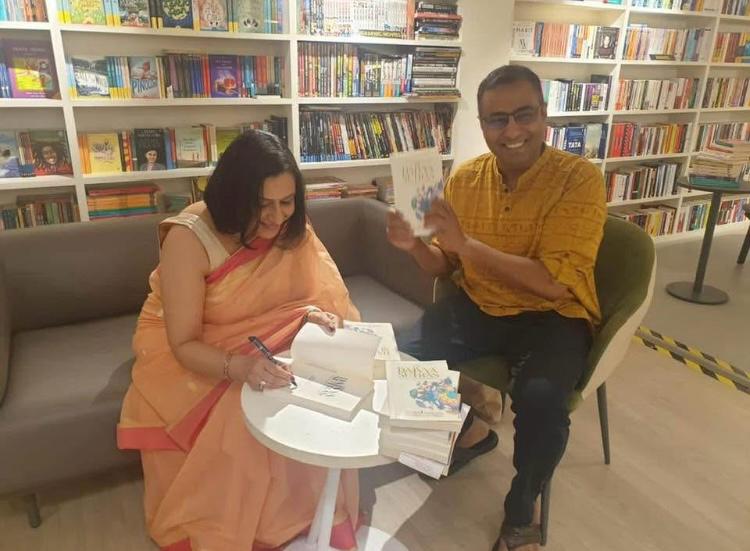 The book contains 24 stories from the 18 Mahapuranas that have been judiciously compiled to appeal to every generation while revealing to them the unknown and unexplored facets of our epics and thus busting long-held assumptions. The strength of Ashok Sundari and Damayanti, the belligerence of Huda and Narada, the vices of Chandradeva and Surya, the dilemmas of Sanjna and Vali, the past lives of Shikhandi and Naageshwara, and the conceit of Narrottam and Sharmishtha-they all make for interesting and relatable stories for readers.
The book also contains four sketches of Fish, Flower, Snake, and Bird made by me as I battled two COVID attacks. The immersive approach helped me tide through month-long quarantine. They also lend the book a unique contemporary flavour. The relevance and significance of these elements in Indian Mythology are also stated therein.
With an enchanting story for everyone, the The Daivya Sutras went on for its 4th print run.
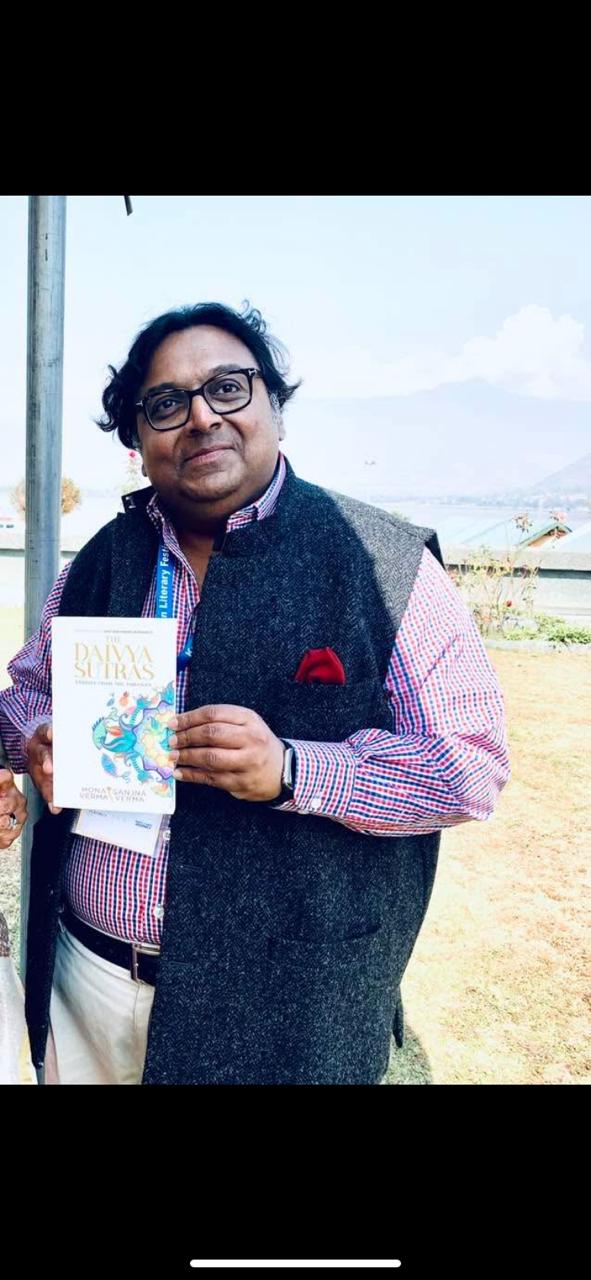
But this world of surreal imagination and magic was not going to leave me quickly. Using mystery, magic, and intrigue as the winning scheme, I started collecting stories from the Himalayan belt. From Jammu & Kashmir to Arunachal Pradesh, there was no dearth of stories that have sustained human existence.
Stories change, storytellers change and this was evident in the narrations that I heard. As William Styron put it, ‘A good book should leave you slightly exhausted at the end. You live several lives while reading it.’
I felt that perhaps while writing too one evoves evolves shade by shade.
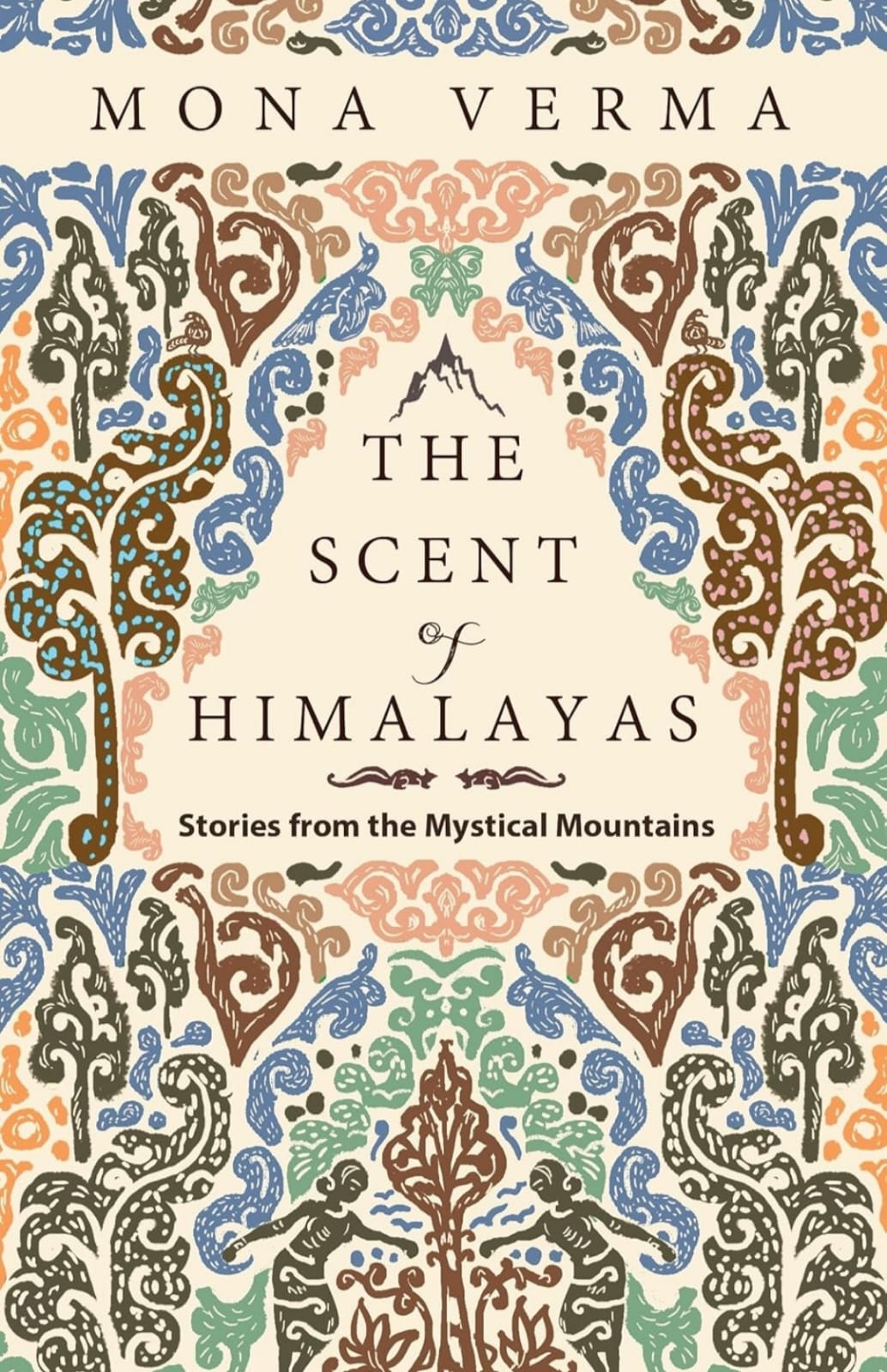
Having grown in the foothills, the imposing Himalayas held an indelible charm for me. As nerve-shaken urban plain-dwellers, we looked at the mountains to soak their calm, quiet, and pristine energy. When life demanded more from its hill folk, the working class landed in the plains but not alone! They carried with them; their folk tales and timeless legends and we felt a mystical connection with the wilderness. As the day ended, the retellings became a yearning, a necessity.
Soon we realised how effortlessly those enchanting stories lent credibility to the prevalence of cultures and faiths that dwell in the hills. I have tried to recreate that magic in my book, The Scent of Himalayas—Stories from the Mystical Mountains wherein I have written from almost every state in India that the ranges span. And despite the myriad cultures, we are bound to find that one shared thread, that all the folk tales have in common—Faith.
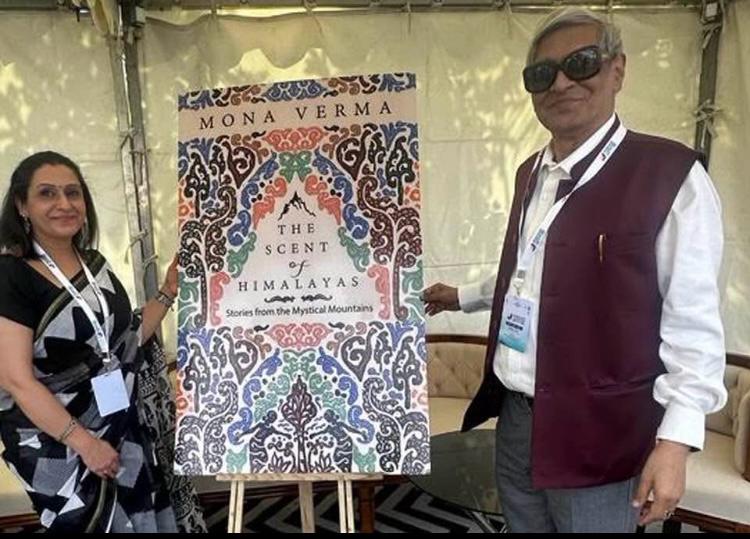
The cover of this book was unveiled at Dehradun Literature Festival 2023 by Bibek Debroy,Chairman of the Economic Advisory Council to the Prime Minister of India.
I am currently working on my 10th book, tentatively titled Undivide—Mahua & Yashveer, to be published by Readomania. The plot is set at the turn of the 19th century, and the story draws from the undocumented narratives of displaced communities during the Partition of India in 1947.
Apart from the nine books I have written so far, I contributed to various anthologies and research works.
Readomania’s book on Historical Fiction, Readomania's book on Mythology, Readomania's book on Parenting, Readomania's book on Folk Tales, and Readomania's book on Poetry, Remnants of Loss.
Apart from these, I contributed to Date Line Dehradun, Ruminations by Punjab University, Dogtrine of Peace and Future Generali's book of poetry, Delhi Poetry Festival anthology, and almost a dozen others.
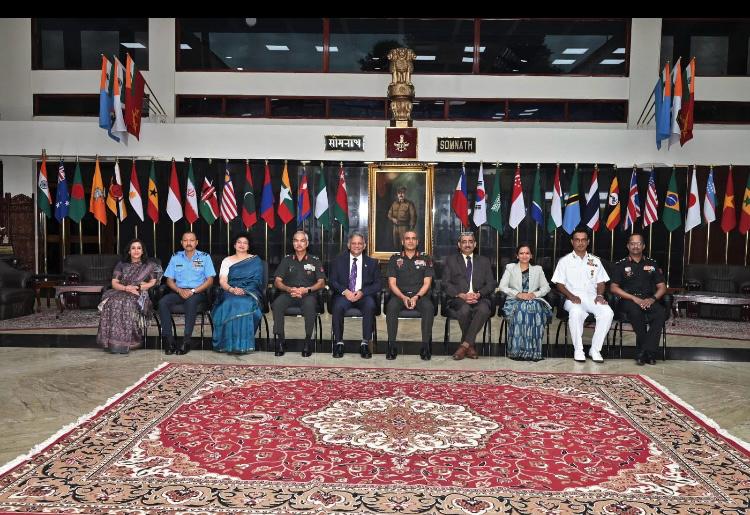
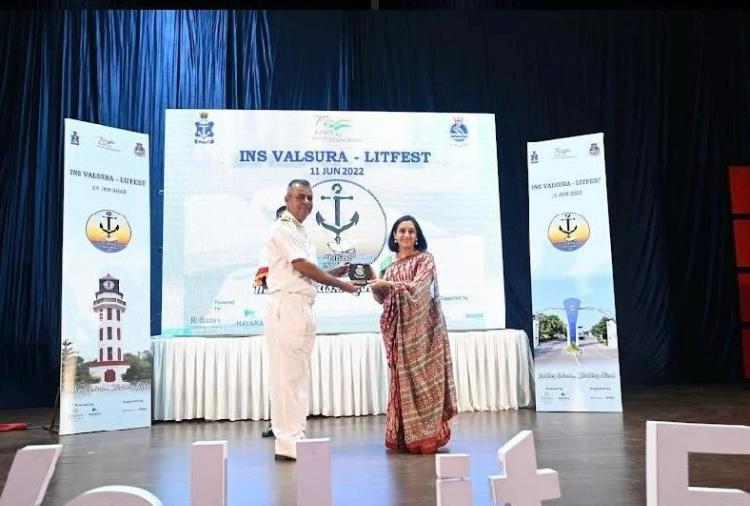
My writing journey opened unimaginable vistas for me. From attending literature festivals across the country to conducting trainings at the prestigious DSSC, Wellington to making new friends and people that I soaked from, I felt drawn to another purpose.
As I had struggled to find a publisher and tide over the imposter’s syndrome, I was privy to the hurdles that new voices in literature faced.
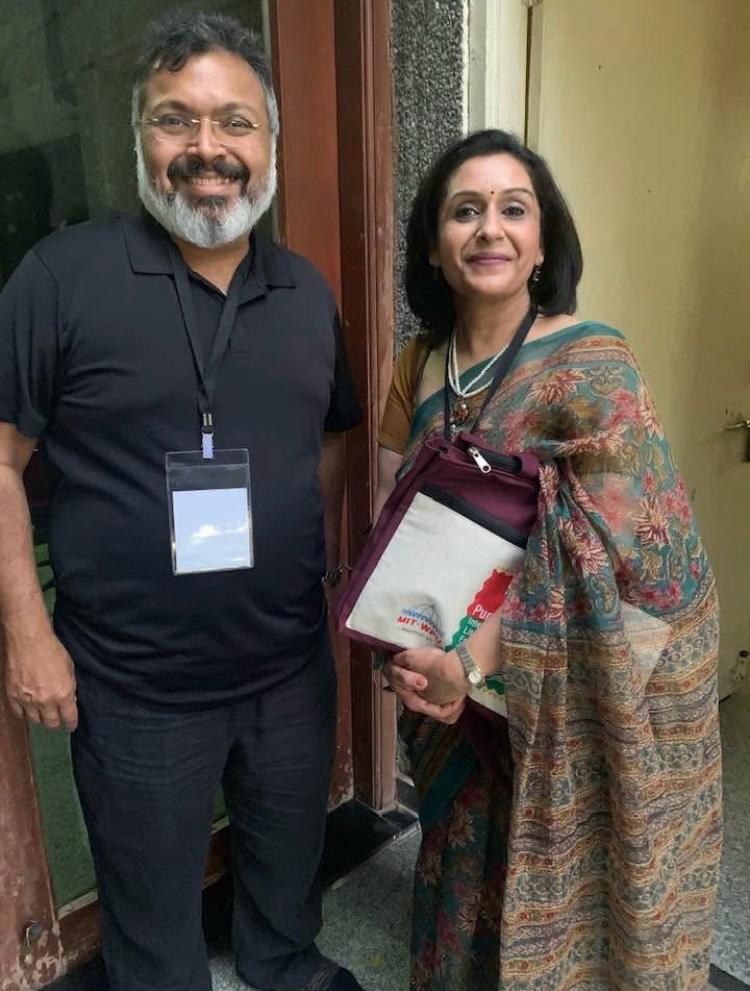
Having been chairperson of the outreach committee of the Kumaon Literature Festival, Chairperson Literature committee of FLO FICCI, and member advisory board of the Dehradun Literature Festival, I have garnered a fair idea about the significance of visibility in the literary circuit in the country.
So, with my friend, Harshali Singh we devised a literary colloquium that celebrated voices in literature, art, music, and journalism House of Harmony.
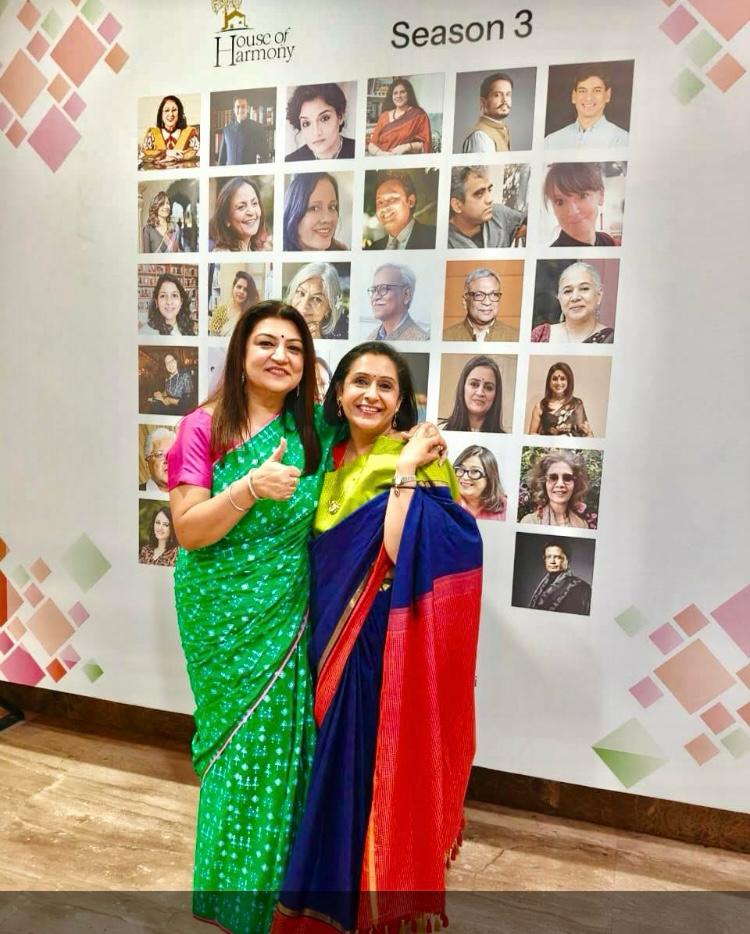
Season 1 was aptly titled, Spring at Kunzum as we chose Kunzum Book Store in GK 2 as the venue for our maiden celebration on April 16, 2023. The resounding success of the fest was all the encouragement we needed to return with season 2, Season of Love, on 26th February 2024 again at Kunzum Books.
Season 3 was celebrated at the prestigious Kiran Nadar Museum of Art, Saket, New Delhi on March 2nd, 2025.
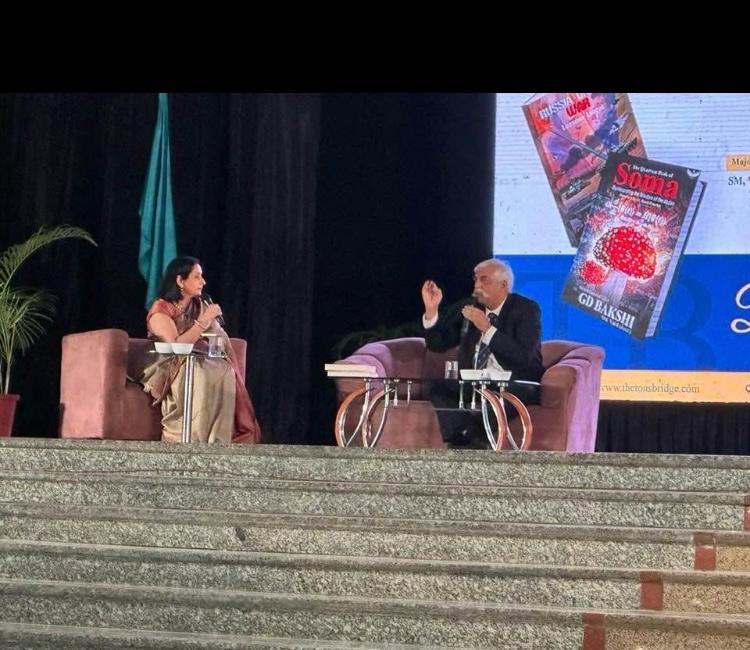
Many luminaries and celebrities have graced the House of Harmony in the past years- Kiran Nadar, Vinita Nangia, Gen G.D. Bakshi, Shiv Aroor, Vikram Sampath, Dr. Alka Pande, Vishnu & Reba Som, Lakshmi Tripathi, Anurag Chauhan, Josy Joseph, Shishir Sinha, Sandeep Unnithan, Sandhya Mridul, Dipankar Mukherjee, Shantanu Ray Chaudhuri, Dr. Ashwini Kumar, Swapna & Madhulika Liddle, and many more.
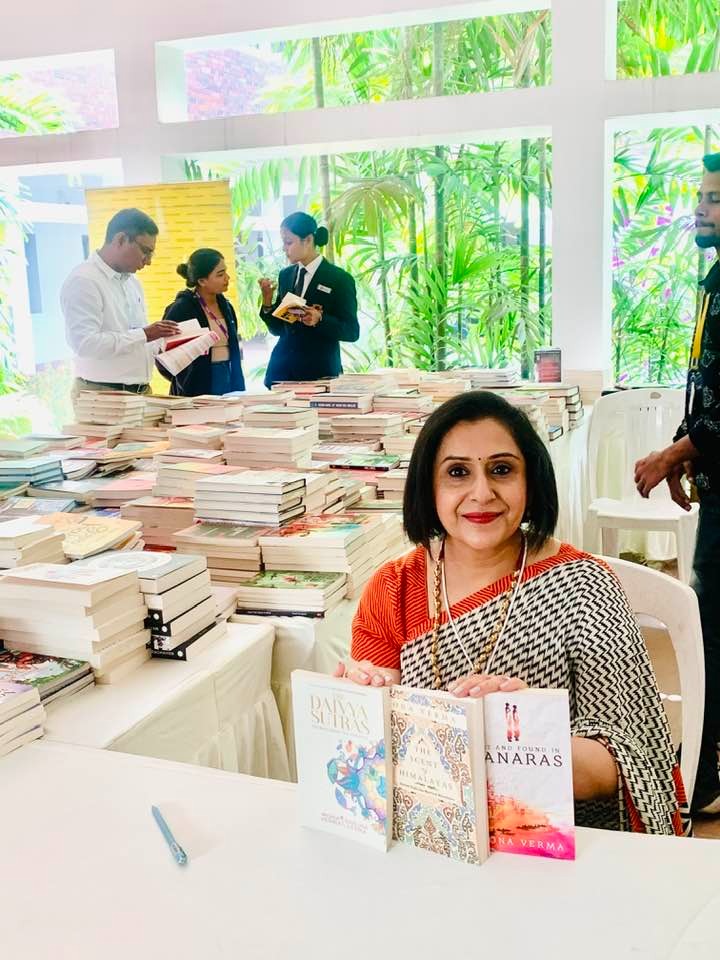
As I stand today, I shall be remiss in case I fail to mention the pivotal role of my publisher Dipankar Mukherjee who reposed faith in my writings and was generous with his suggestions and guidance at every given point. Adding to this, Indrani Ganguly, my editor is the one who added magic to my work with her meticulous guidance and support. They were the ones who drove me to read, write, edit, and ruthlessly slice out the pesky details. Most of my writing journey has been guided by Readomania for I have published five books and an equal number of anthologies with them.
My writing has led me down the starry road with numerous awards and acknowledgments:
MILT 2024 Dr. Asha Anand Memorial Award for Excellence in Literature
Pioneer — Kala Award 2025 for Best Short Stories Book – The Scent of Himalayas
Woman of Substance Award By All India Women’s Conference, 2009
Hindustan Times Woman of The Year Award, 2011 (Readers’ Choice)
Ganesh Shankar Vidyarthi Puruskaar, Award From National Union Of Journalists India, 2012
Uttarakhand Ratna, 2014
Award of Excellence, 2017
Nari Shakti Samman, 2019
Winner of Short Story Contest by She Scapes and Delhi Poetry Festival, 2020
Uttarakhand Excellence Awards, 2021
Award of Appreciation – FLO FICCI, UK, 2021
Iconic Authors, 2022
Global Progressive Women Award 2022
Iconic Author Award, Global Leadership Summit 2023
Munshi Premchand Literature Award 2024
Drawing from my journey all I want to say is: Follow your dream. Nothing is impossible. There are no shortcuts to success. Read a lot and observe.
And lastly, never lose your fear of going wrong. Most writers are drawn backwards by their fixed angles regarding their writing proficiency. And that is where, I went wrong at the onset. My writing was more author-centric than reader-centric. Now, when I write, I draw a flow chart on what is that I want to achieve with this book. Will my loyal fan base still adhere to my writing style and structure? Will I rise to the occasion, or should I take feedback? I still struggle with those challenges, and I am glad that I do, for they help me stay focused and meticulous.
My advice to new writers is: Don’t ever write with the shallow intent to see your name on the spine of a book. There is no tearing hurry to have a book out at 14 or perhaps every year. Write when you have that tearing urge to express and keep editing till you, as a reader of your work, can afford to smile while at it. Keep revising your work to make it engaging.I follow no strict schedule here. I make voice notes while travelling or scribbling behind pamphlets, but I never let an idea escape my think space, and it comes in handy when I sit down to write.
If you can’t respect and enjoy reading your work, believe me, nobody else will.
I sign off with the wish-
May you read beyond, may I write further.
MONA VERMA
Author & Haiku Poet, Co-Founder—Disha, Co-Founder—House of Harmony
Snapshots
Comments