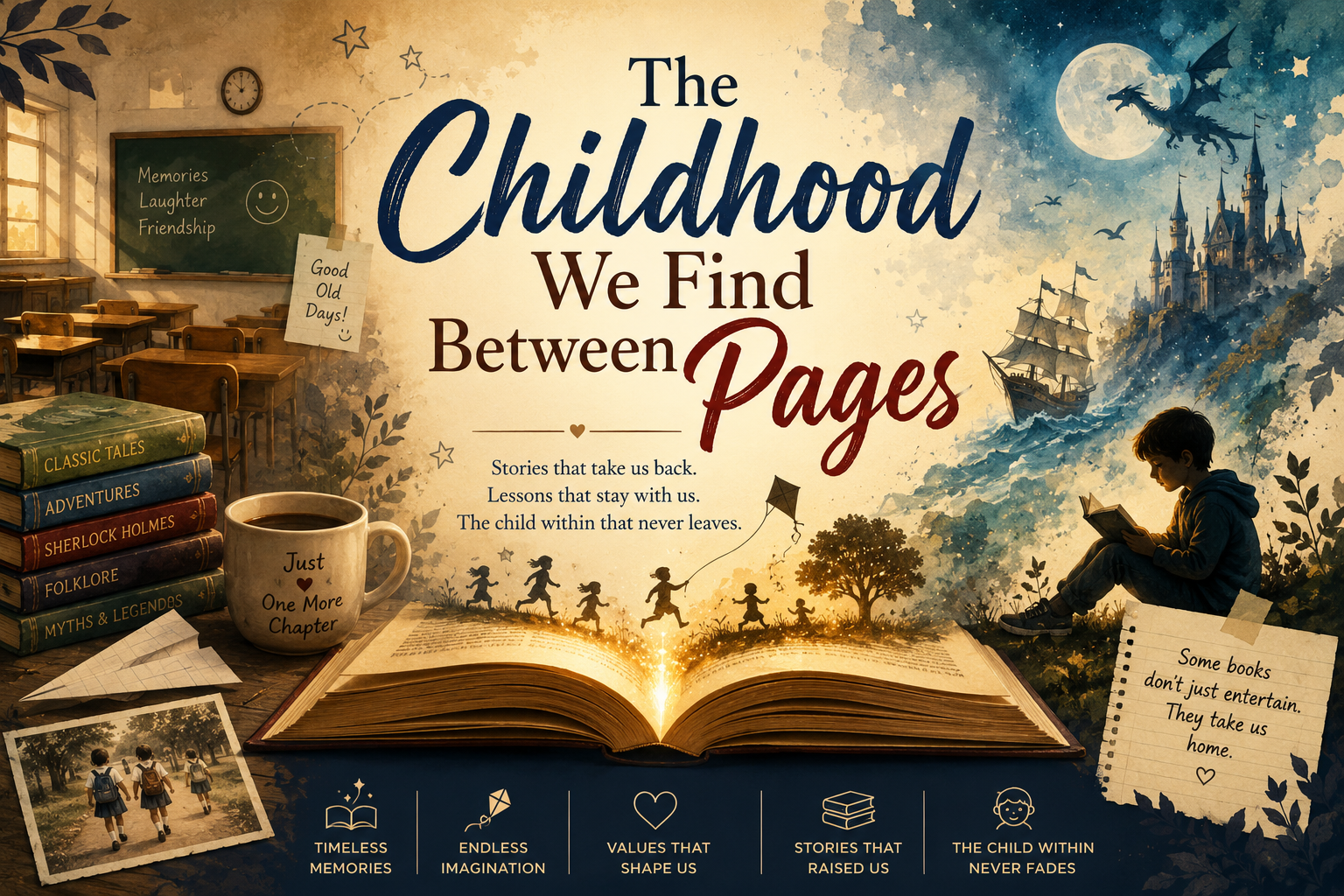
The Childhood We Find Between Pages
Chaotic classes, the grumpy maths teacher, completing homework at the last minute, fighting for a misplaced pencil, making paper planes, giggling in between the science teacher’s lectures—this phase of giggles, shouts, complaints and games made us what we are now. From the muddy ground to the neat lines in our notebooks, everything carries the memories we hold onto. Growing out of those phases without even waiting for our permission was the biggest injustice done to us.
From those ironed uniforms to the masks of adulthood, everything changed except the longing to be in those classes one more time, to mess up the exam one more time, to share those lunches one more time, to be that innocent kid one more time. We try to find solace in every detail that connects us with those old days.
And perhaps that is the magic of books. While time refuses to move backwards, stories often do. Between their pages lie classrooms we once sat in, friendships we once cherished, and dreams we once carried. A well-written story does not merely entertain—it gently takes us by the hand and leads us back to the childhood we thought we had left behind.
Books as Time Machines
Stories have the power to transport the reader to the world we once belonged to. Like a time machine, certain stories instantly put us back to those school assemblies. A sad smile forms on our lips while we reminisce about those days. Each word triggers vivid memories.
One such book that beautifully acts as a time machine is Almost Adulting by Probal J Bhattacharya. Through its stories of school debates, childhood dreams, troublesome students, strict expectations, innocent ambitions, and quiet struggles, the book gently takes readers back to the confusing yet beautiful phase of growing up. Whether it is a cricket-loving boy dreaming of becoming the next Sachin Tendulkar or a child questioning society’s expectations, each character carries emotions many of us once experienced but slowly buried beneath adulthood.
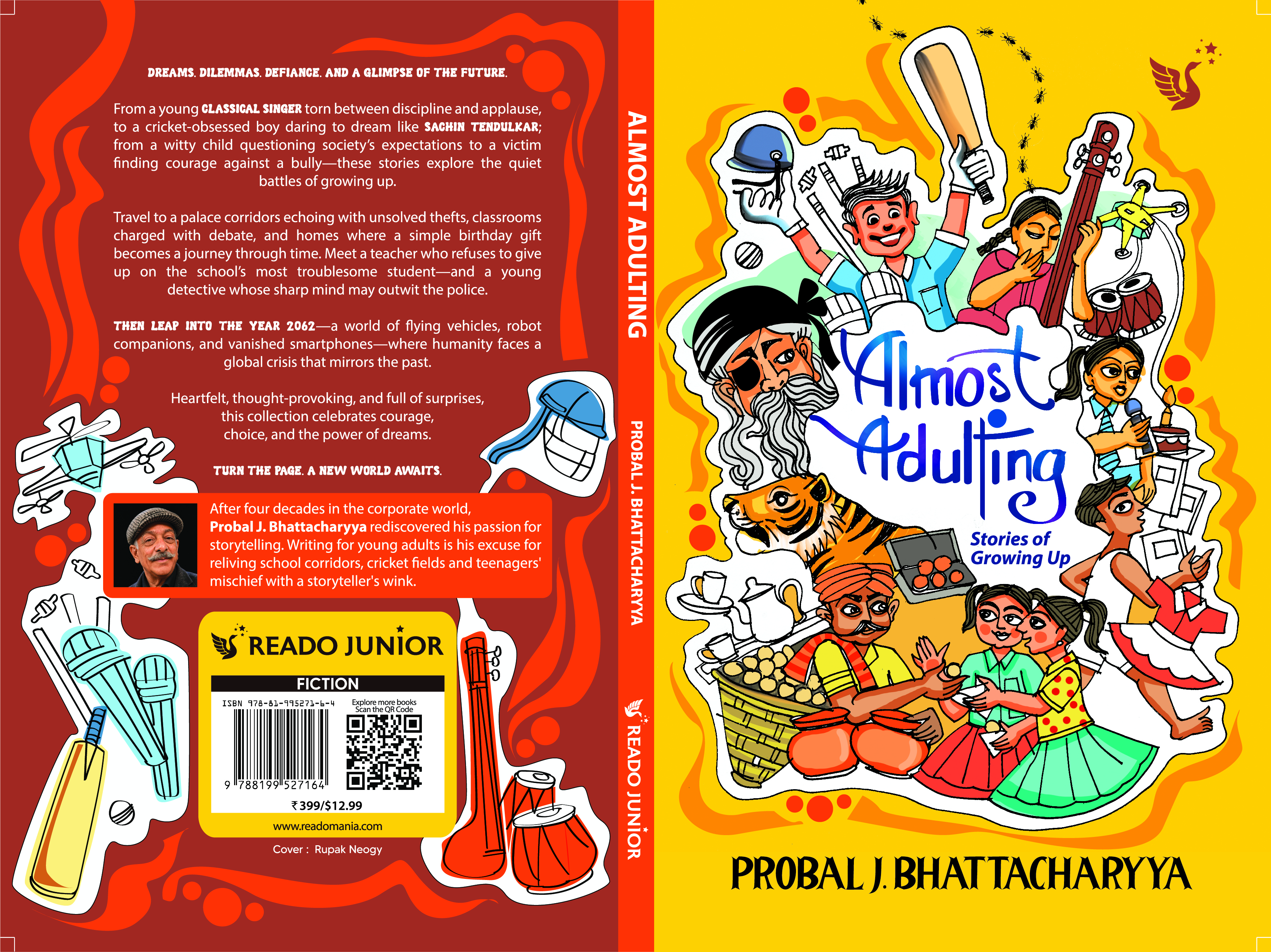
Seeing such books in a bookstore often makes us pause in the middle of a tiring day. We instinctively flip through a few pages, hoping to revisit the carefree years we left behind. The words do more than awaken memories—they revive the emotions attached to them, allowing us to relive moments we thought time had quietly taken away.
The Child In Us
Putting on a cap, recruiting a friend to play Watson, searching for mysteries in school corridors and occasionally getting scolded by a teacher for creating a mystery ourselves—that's what Sir Arthur Conan Doyle’s Sherlock Holmes did to us. Wondering whether there is a chocolate factory nearby and opening all small sweet wrappers to find any hidden pass while our parents looked puzzled was the effect of Charlie and the Chocolate Factory.
Such books did more than entertain us; they awakened curiosity, imagination, and dreams. They encouraged us to become detectives, explorers, inventors, and adventurers, if only for an afternoon. Their stories transformed ordinary school corridors into crime scenes and neighbourhood shops into gateways to extraordinary worlds.
Yet, somewhere along the way, we forgot the original essence of those books and what they did to us. Reading gradually became a means of escaping reality rather than a celebration of curiosity and wonder.
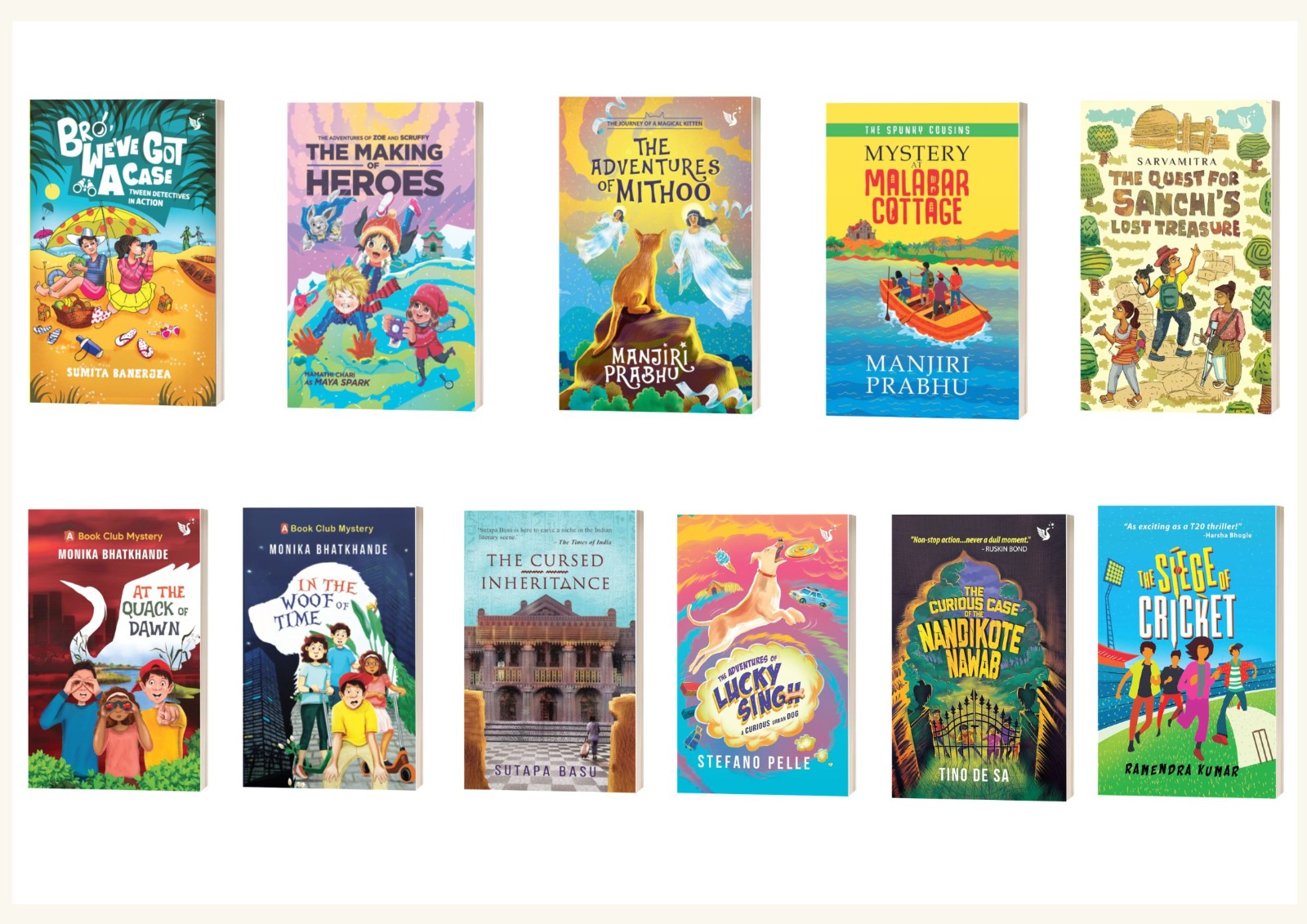
Books like Bro, We've Got A Case! by Sumita Banerjea remind us that the curious child within us never truly disappears. If Sherlock Holmes once turned school corridors into investigation sites, this book carries that same spirit for a new generation of readers. Anaya and Kiaan's adventures celebrate the very qualities that define childhood—curiosity, fearlessness, and the belief that every mystery deserves to be solved. The book reminds us of the days when we searched for clues where none existed, created adventures out of ordinary afternoons, and approached the world with endless questions.
The Adventures of Zoe and Scruffy series by Mamathi Chari, Manjiri Prabhu’s The Adventures of Mithoo and Mystery at Malabar College, The Quest for Sanchi’s Lost Treasure by Sarvamitra, Monika Bhatkhande’s At the Quack of Dawn and In the Woof Time, Sutapa Basu’s The Cursed Inheritance, The Adventures of Lucky Singh by Stefanno Pelle, The Curious Case of the Nandikote Nawab by Tino D’Sa, The Siege of Cricket by Ramendra Kumar—there are countless number of books that awakens the child in us who still longs to chase one more mystery, however impossible it may seem.
In the end, we hold on to the books, which help to rediscover the child we thought we had left behind.
Rediscovering the Colours of Childhood Imagination
Somewhere along the way, dreamers became realists without even realising it. As logic, responsibilities, and conventions took centre stage, we slowly forgot the dreamers we once were. We forgot the child who believed in superpowers and superheroes, in magical creatures hidden beyond ordinary sight, and in worlds where anything was possible. We imagined ourselves flying through the skies, wielding extraordinary powers, or lifting entire buildings like the Hulk. In those years, imagination knew no boundaries, and reality was never allowed to have the final word.
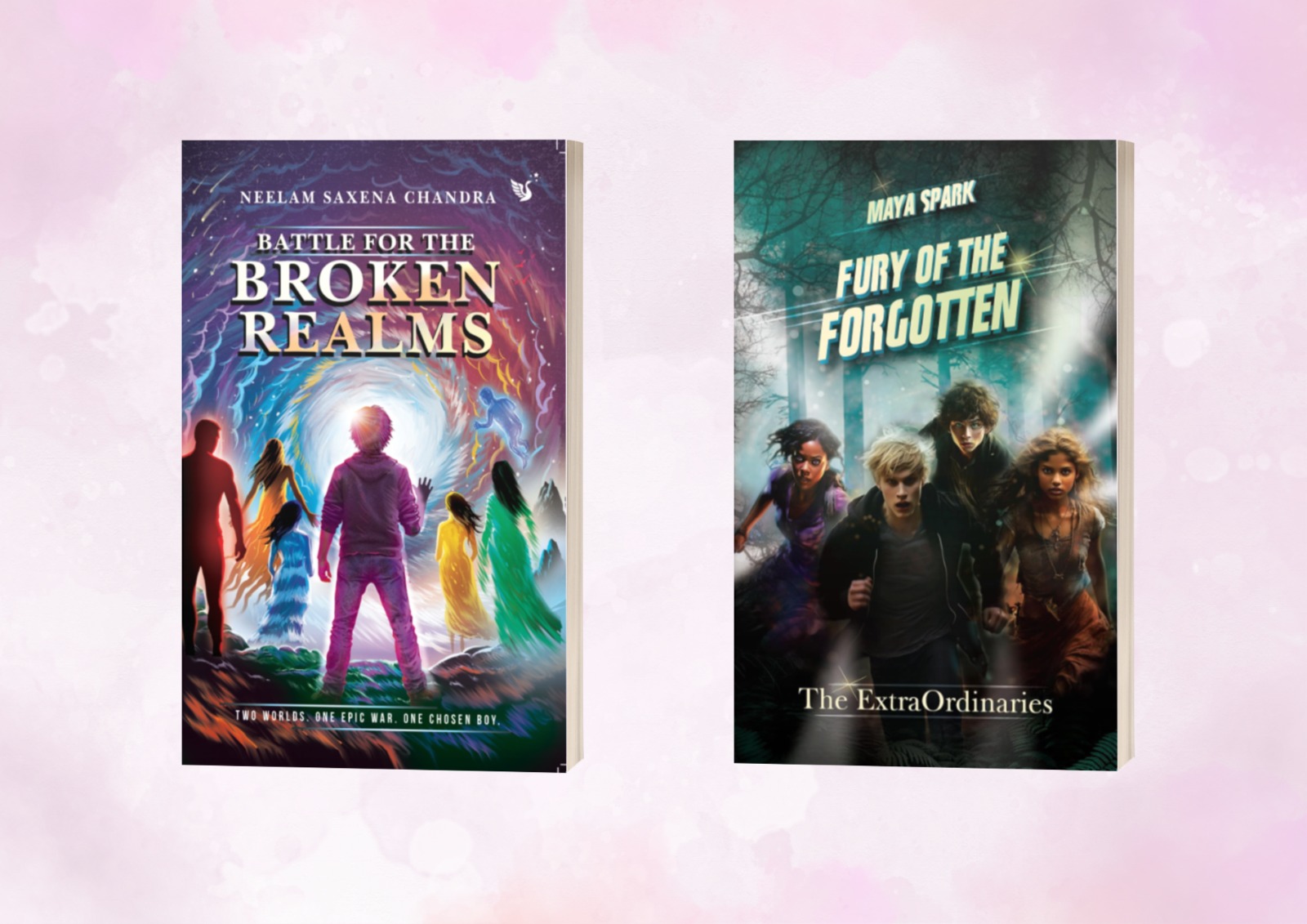
Battle for the Broken Realms by Neelam Saxena Chandra is such a book that reminds us of the limitless imagination we once possessed. It takes us back to a time when we believed that magical worlds could exist just beyond our sight and that ordinary children could become extraordinary heroes. For a few chapters, we are once again free to dream without limits.
Maya Spark’s (Mamathi Chari) Fury of the Forgotten is another exciting read that gives wings to our imagination.
These books possess the rare ability to bring the colours back, reminding us that imagination is not something we outgrow—it is something we leave waiting to be rediscovered.
The Mythological and Folktales That Raised Us
After playing on the ground, we rushed inside the house, took a bath and sat cross-legged, waiting patiently for our grandma to start reciting the classic stories or the famous folklore. These were among the most anticipated moments of our childhood. The way she acted out each tale captured our utmost attention. The way she read aloud from her old, worn-out books was something no audiobook can replace.

As time passed, we tried to memorise those stories and deeply wished to relive those moments. Years later, our eyes still search the pages of books like Dadi, Dantkatha and the Djinns by Avanti Sopory for the same warmth and wonder those stories once gave us.
Reading books like The World of Tagore by Debapriya Ghosh and Deepti Menon’s Unforgettable Classic Stories and Tales from Shakespeare, Mona Verma’s The Daivya Sutras, Anupama Jain’s Kings, Saviours & Scoundrels—Tales from Katha Sarita Sagara, Mamathi Chari’s Kural for Kids, Sutapa Basu’s Thakurmar Jhuli: Princesses, Monsters and Magical Creatures, Piyusha Vir’s Dashavatar feels like sitting beside a grandparent once again, listening to stories filled with wonder and wisdom.
The magic of these books works wonders on our exhausted souls, making it jump like that innocent kid whose days revolved around the stories his grandma narrated to him.
The Lessons That Made Us Who We Are
Childhood and teenage years don’t just give us memories to cherish; they teach us lessons that help us build moral values and humanity, which we carry to date. Through the shared umbrellas, the kind teacher who explained an equation so many times to make sure no one was left behind, the moral science book that taught us what discipline is, the cleaning staff who never forget to smile— through each of them, we created the values that made us better humans. In the long run, when we think those values are diminishing in society, the child in us looks for signs that reassure us that kindness and compassion have not been lost in this world. And books such as My Grandpa, My Bestie by Ramendra Kumar hold the hand of our inner child and remind us that the world is still a kind place.
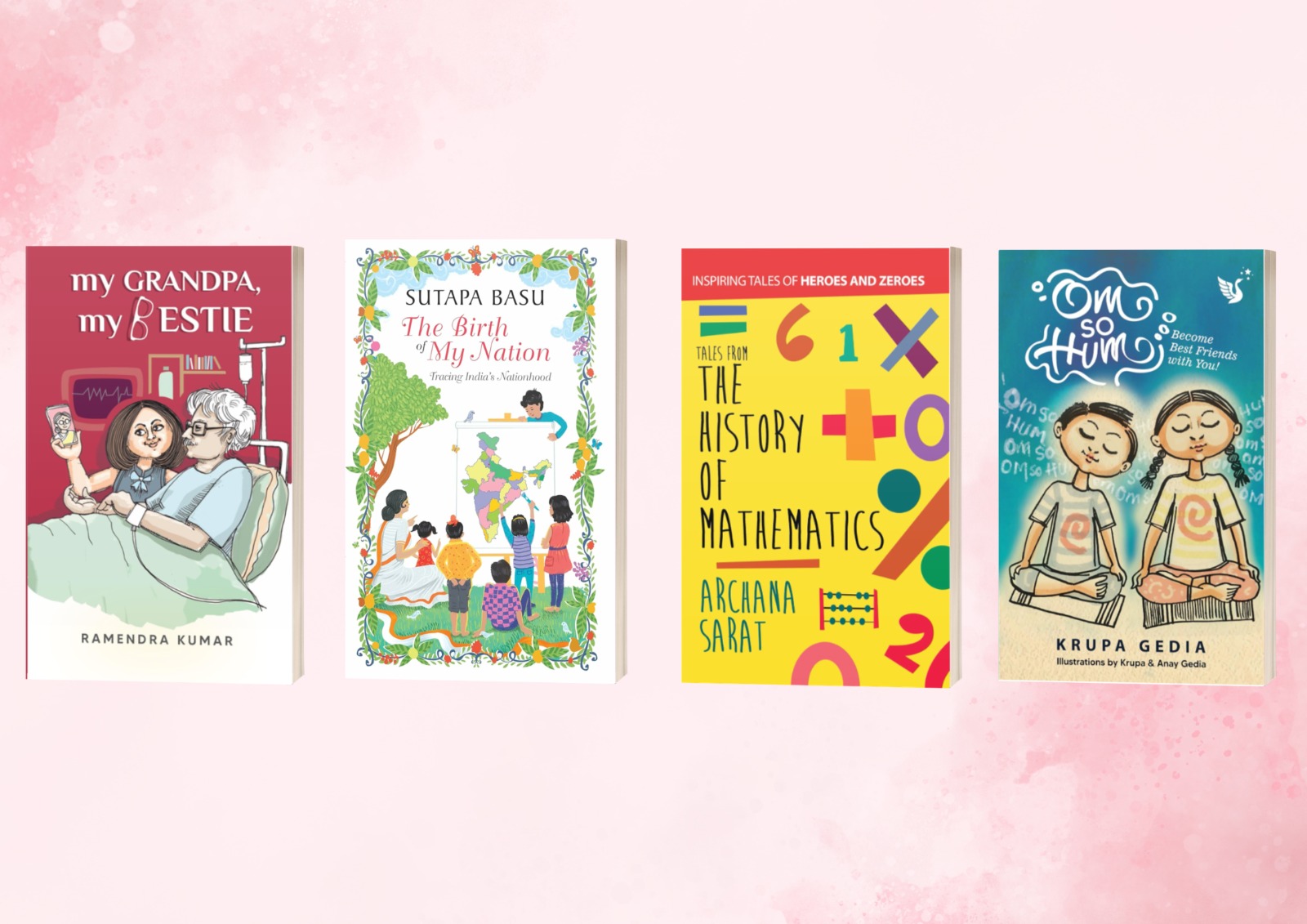
Not only values, but some books like The Birth of My Nation by Sutapa Basu, History of Mathematics by Archana Sarat and Om So Hum by Krupa Gedia awaken a sense of curiosity that adulthood often buries beneath routine. They encourage us to ask questions, seek answers, and rediscover the joy of learning for its own sake.
***
Years may pass, and childhood may fade, but the lessons those years gave us continue to shape the people we are today.
When parents buy books for their children, they are often buying a piece of their own childhood as well. As they read alongside their kids, familiar emotions resurface—memories of bedtime stories, school libraries, colourful picture books, and afternoons spent lost in imaginary worlds. While children discover these stories for the first time, parents quietly revisit the worlds they thought they had outgrown. Perhaps that is the true magic of books—they allow one generation to create memories while helping another relive them.
In a world that constantly urges us to grow up, books quietly remind us of the parts of ourselves worth holding on to. They preserve our wonder, our curiosity, our kindness, our passions and our imaginations long after childhood has faded into memory.

Comments