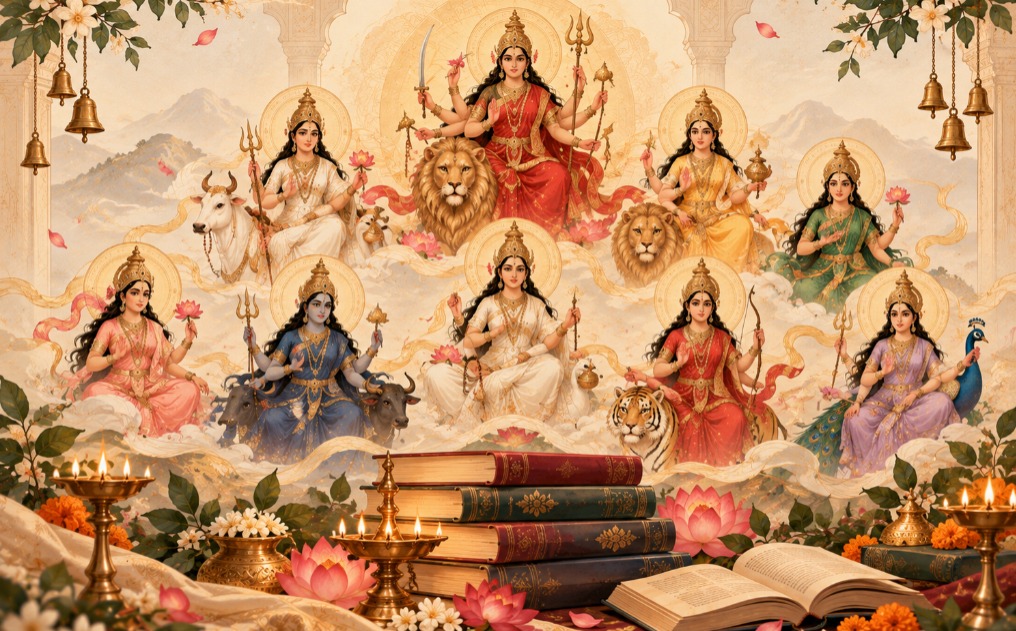
Nine Faces of Shakti: The Women of Readomania This Navratri
From the mother who protects to the woman who rebels, the nine forms of Durga find echoes in the women who inhabit our stories.
Every autumn, when the dhak begins to beat across Bengal and the nine nights of Navratri illuminate homes across India, we celebrate the many forms of the Goddess. She is Shailaputri, rooted in the strength of the mountains; Brahmacharini, steadfast in her resolve; Katyayani, the warrior who confronts evil; and Kalaratri, the fierce force that destroys darkness.
But must a woman wield a trident to embody Durga? Must she be fearless to be powerful? And must she sacrifice everything for others to be worthy of our admiration?
Look closely at the women around us, and the answer becomes clear. Shakti lives in the mother who protects her child, the daughter who questions an inherited truth, the woman who survives displacement, the professional who refuses to surrender her identity, and the individual who finds the courage to begin again.
Literature has always given us a way to explore these contradictions. At Readomania, our women inhabit different worlds—mountain landscapes shaped by memory, families burdened by secrets, mysteries that reach across centuries, and contemporary lives in which the pursuit of happiness can become its own struggle. They are not all heroines in the conventional sense. Some are vulnerable, some are formidable, and some are simply trying to find their way.
Yet each reminds us of a different face of the Goddess.
This Navratri and Durga Puja, let us meet nine manifestations of Shakti through the women whose stories stay with us long after we turn the final page.
1. Shailaputri — The Woman Rooted in Her Own Strength
Literary trope: The grounded heroine
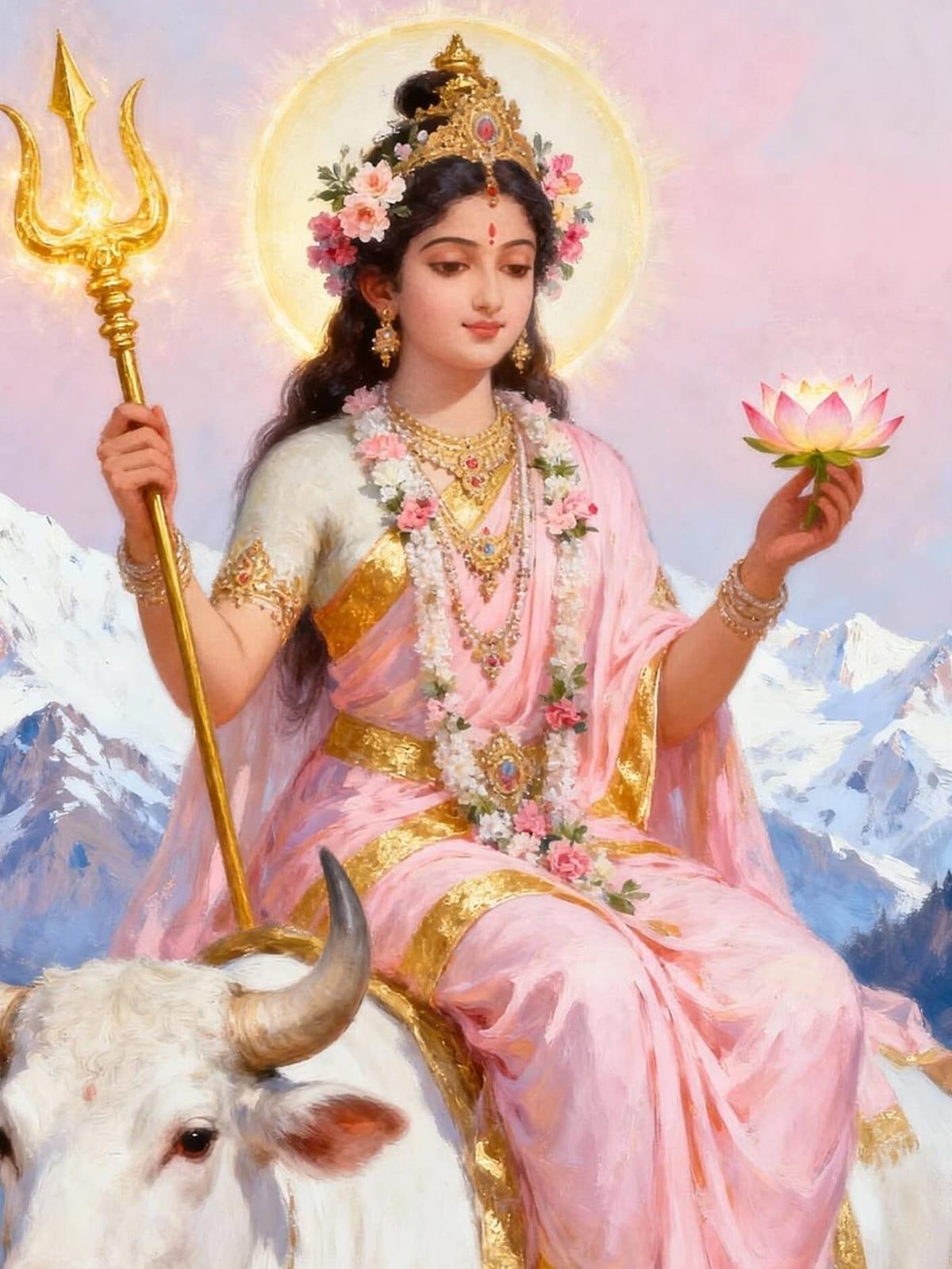 The mountains do not stand firm because they have never faced a storm. They stand because they have endured countless storms.
Shailaputri, the daughter of the mountains, represents stability, resilience and a deep connection with one's roots. These qualities find a moving expression in Debalina Haldar's Kalimpong, particularly through Pema, Dama and Yangzom.
Set against the upheaval of Tibetan displacement, the novel explores what it means to lose one's home, identity and certainty about the future. Pema's circumstances force her to contemplate a devastating choice concerning her unborn child. Dama, too, must navigate a world in which family bonds and personal security are threatened by forces beyond her control. And when Dama and Yangzom are reunited, their embrace becomes a reminder that belonging is not merely about geography. It is about the people who recognise us as their own.
Anju, the young trained deep-sea diver in Saanvi Shabeesh's Echoes of Muziris, embodies Shailaputri too. Her connection with Kerala's submerged history, its mysteries and its mythology makes her a compelling starting point for a journey into feminine strength.
These women embody a strength that is far removed from triumphal heroism. Their courage lies in enduring uncertainty without losing their capacity to love.
Shailaputri reminds us that roots are not simply the places we come from. They are also the memories, relationships and cultural inheritances we carry when circumstances force us to leave.
2. Brahmacharini — The Woman Who Persists
Literary trope: The seeker who refuses to give up
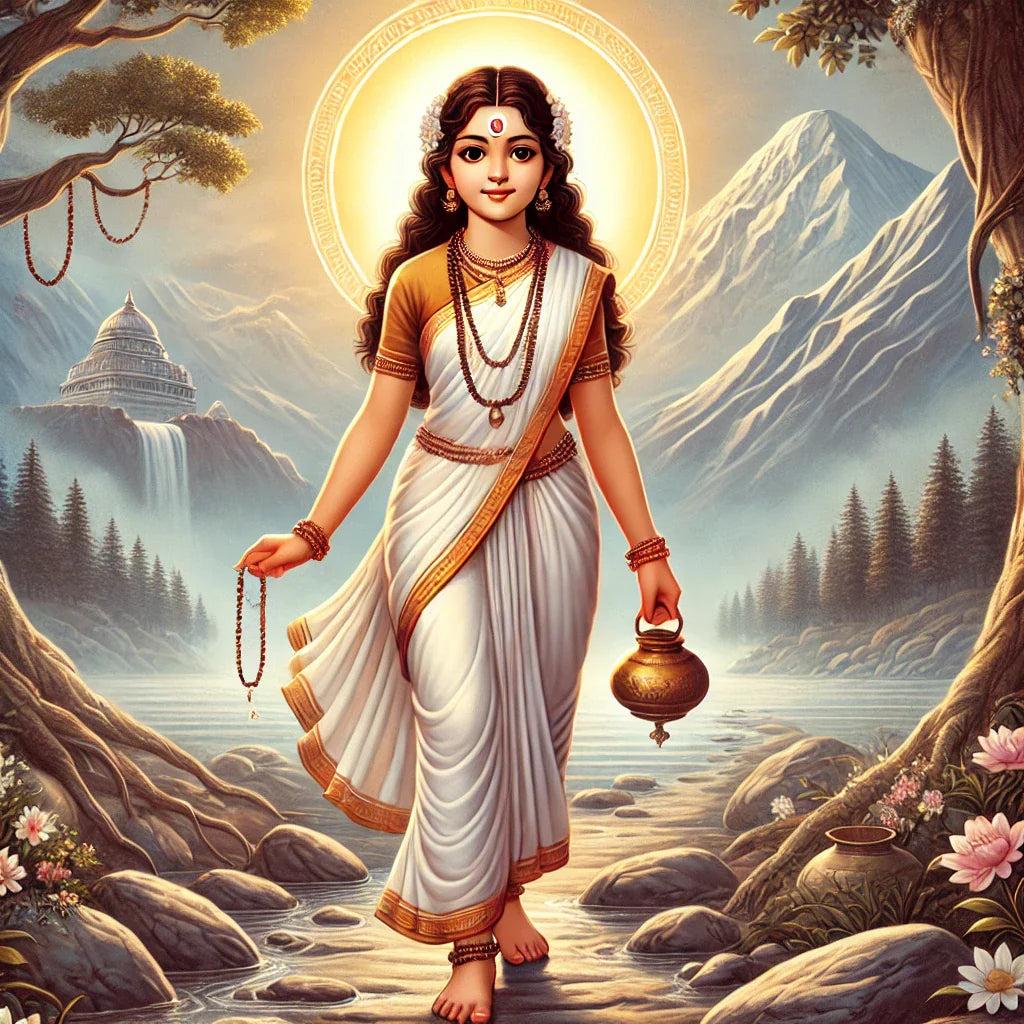 There is a particular kind of courage in continuing when the destination is uncertain. Brahmacharini embodies precisely this quality: determination, discipline and the willingness to persist through hardship.
In Atima Mankotia's All That She Left Behind, Sanya's search for answers about her grandmother, Saudamini Malviya, becomes more than an investigation into family history. It becomes a journey into the silences that shape generations. Saudamini is a formidable, self-made businesswoman, yet the legacy she leaves behind contains questions that cannot be answered by looking at wealth or success alone.
Sanya's persistence brings her closer to the woman her grandmother was, beyond the public image she presented to the world. And Saudamini herself represents another dimension of perseverance: the determination to build a life and establish an identity on one's own terms.
Brahmacharini connects these two women across generations. One has lived her life; the other must make sense of its consequences. Both remind us that strength is often a long, patient undertaking.
The Sharma sisters in Harshali Singh’s Haveli series, especially Bhavya and Charu, are symbols of this never give up attitude. They seek the truth against all odds, no matter how damaging it is.
Sometimes, the bravest thing a woman can do is keep asking questions until the silence begins to speak.
3. Chandraghanta—The Woman Who Finds Her Voice
Literary trope: The truth-teller and challenger
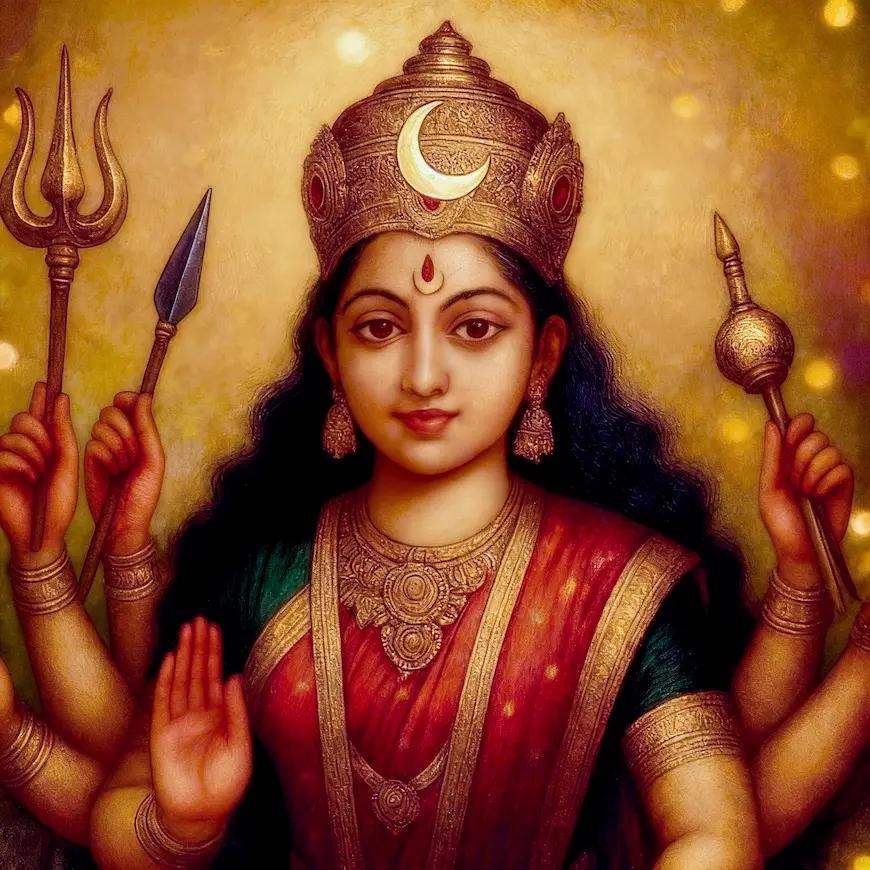 Chandraghanta is the warrior Goddess whose courage confronts danger. In literature, she represents the woman who challenges an accepted version of events, refuses to be intimidated and insists on looking beyond appearances.
Sutapa Basu's Lethal Secret at Lothal offers a natural setting for this archetype. In a mystery that draws upon the secrets of an ancient civilisation, Jay Menon's search for truth requires the courage to question what appears settled. The women who engage with such mysteries remind us that history is never merely a collection of facts. It is also a collection of questions, interpretations and silences.
Mrinalini Rao, the journalist investigating the legend of Queen Padmavati in Sutapa Basu’s Padmavati, offers a way to explore the woman who questions accepted narratives and dares to investigate uncomfortable truths. The journalist's search becomes a metaphor for refusing to let history speak in only one voice.
A similar spirit runs through Jaya Siva Murthy's The Curse of the Vedic Code, where ancient knowledge and hidden truths invite scrutiny. The woman who seeks answers in such a world does not simply accept what tradition or authority tells her. She investigates, interprets and draws her own conclusions.
Chandraghanta is the spirit of the question that refuses to go away.
Her literary counterparts need not always fight a visible enemy. They may be challenging a family secret, an accepted belief or an account of the past that has never been examined closely enough. Their courage lies in refusing to confuse familiarity with truth.
4. Kushmanda — The Woman Who Creates Worlds
Literary trope: The creator and keeper of memory
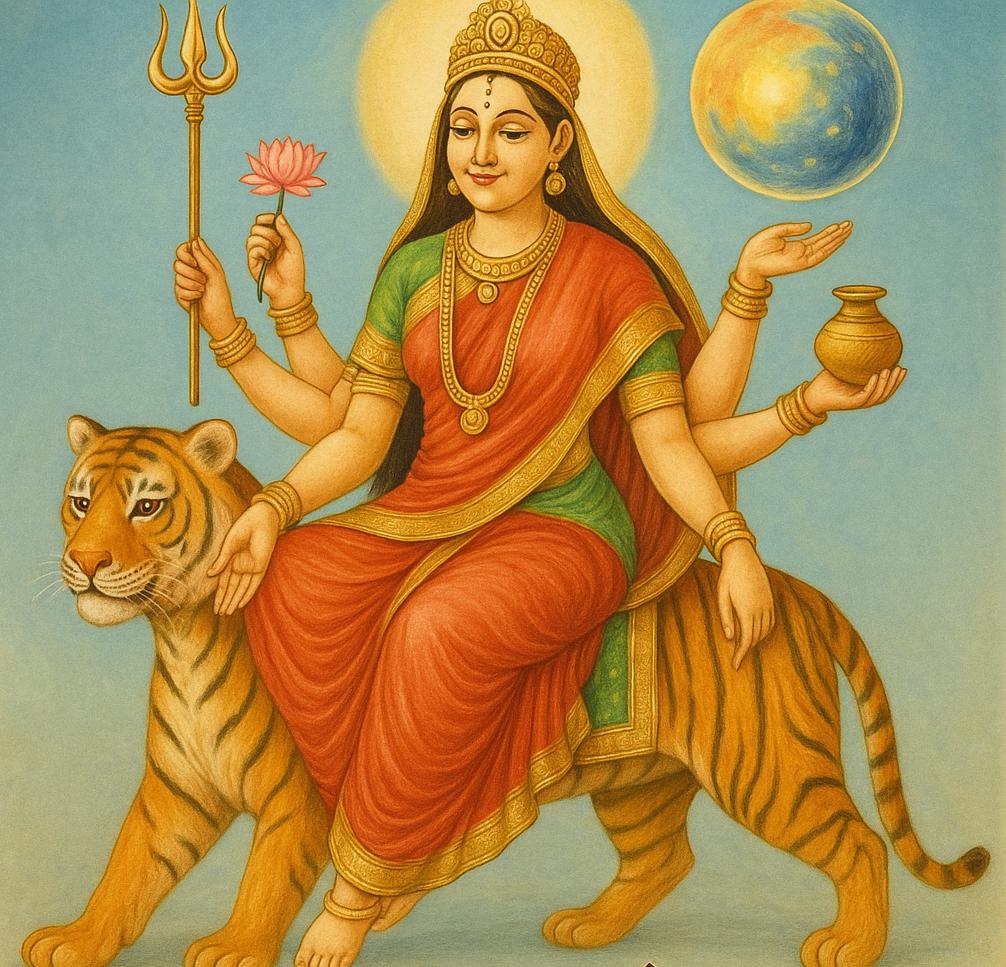 Kushmanda is associated with the creative energy from which the universe emerges. Her literary counterpart is the woman who imagines possibilities beyond the world she has been given.
In Amrita Anand Nayak's The Problem with Perfect Lives, Mahek Waikar offers a way to explore the tension between the lives we are expected to lead and the lives we actually want. The idea of perfection can be seductive: a successful career, a desirable relationship, a respectable family and the appearance of having everything under control. Yet the closer we look, the more complicated the picture becomes.
Mahek's world invites us to ask whether a woman can truly flourish while measuring herself against somebody else's idea of happiness. What happens when the life that looks perfect from the outside no longer feels sufficient from within?
Debalina Haldar's The Daughters of Shantiniketan opens another window into the lives of women negotiating inheritance, relationships and identity. The very idea of daughters carries the possibility of continuity as well as change. A legacy may shape a woman, but it need not determine who she becomes.
Kushmanda’s spirit also reflects in women who create and preserve worlds through stories, memories, food and inherited traditions. Nishi Pulugurtha's The Inheritance of Taste is a case in point, with its themes of migration, belonging and memory expressed through food.
Kushmanda reminds us that creation is not always about making something out of nothing. Sometimes, it means imagining a different future, questioning inherited expectations and having the courage to live beyond the boundaries others have drawn.
5. Skandamata — The Woman Who Holds a Family Together
Literary trope: The matriarch and protector
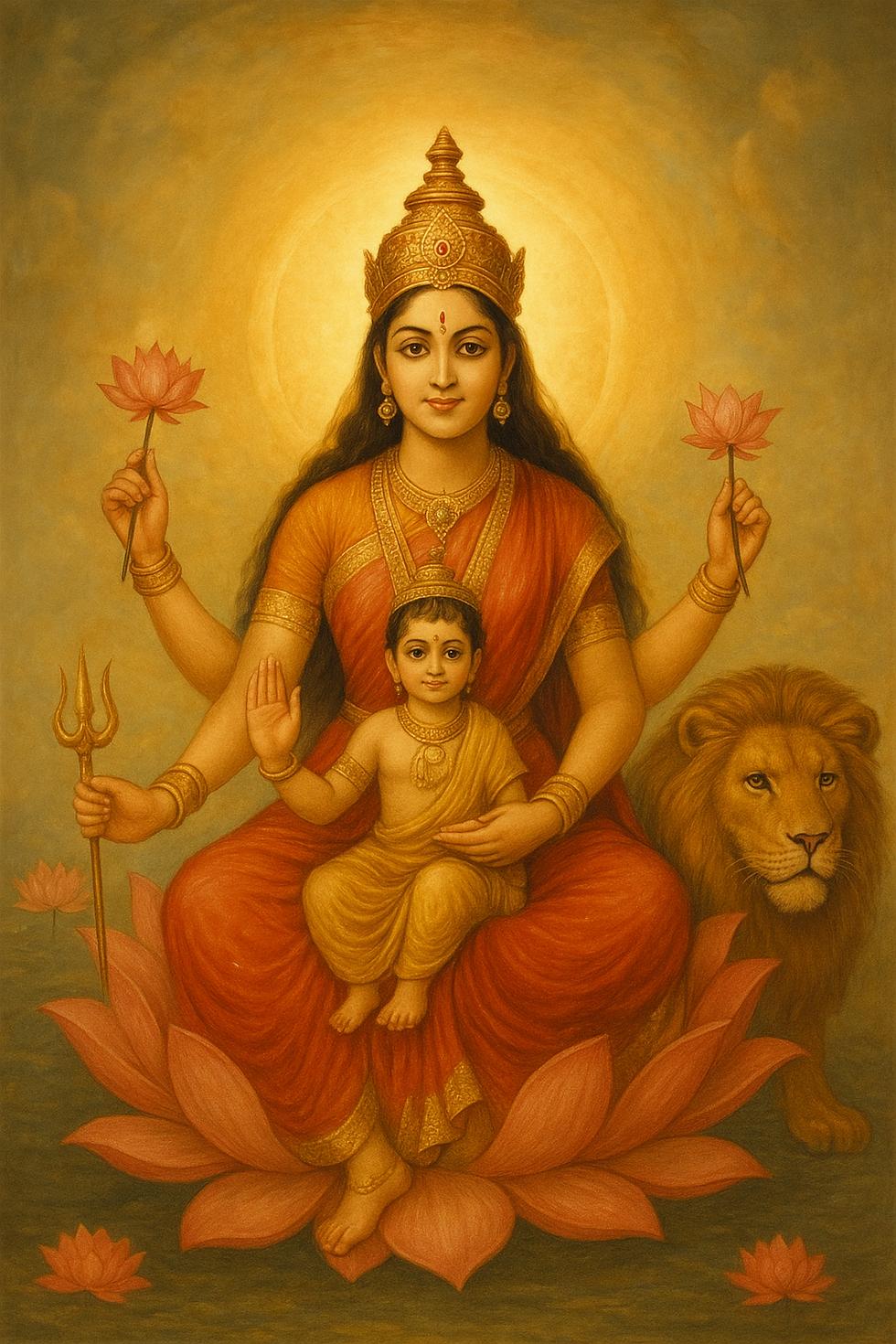 Of all the forms of Shakti, motherhood is perhaps the most readily celebrated—and the most frequently misunderstood. Skandamata represents the nurturing force that protects, sustains and makes growth possible. But maternal strength is not merely gentleness. It can be fierce, anxious, imperfect and profoundly courageous.
In Kalimpong, Pema's predicament brings the terrible weight of maternal responsibility into focus. Faced with uncertainty about her child's future, she considers giving the baby up for adoption because she fears that the life of a displaced family will expose the child to further insecurity. Her decision emerges from love, but it is also marked by grief and helplessness. There is no easy resolution to such a choice.
Dama and Yangzom, meanwhile, remind us that motherhood can be expressed through the instinct to shelter and comfort another person. Their relationship speaks to the sustaining power of women who stand beside one another when the world offers little reassurance.
Saudamini Malviya in Atima Mankotia’s All That She Left Behind is an especially evocative example. A formidable, self-made businesswoman, she leaves behind a legacy that extends far beyond wealth. Her guarded past shapes the lives of her daughter and granddaughter. She is an epitome of the complicated side of maternal protection: the love, sacrifices and secrets through which women attempt to shield those they cherish.
Sonal Singh's Burps, Chirps & Cat-Astrophic Chirps provides a lighter, more playful expression of this archetype through its mother figure. Mrs Choudhary’s everyday business of caring for her menagerie of pets and balancing her crazy household may involve chaos, worry and exasperation, but it also creates a world in which affection and responsibility go hand in hand.
And in Harshali Singh's Haveli series, the Sharma sisters offer another opportunity to explore the women who sustain family bonds through shared memories, differences and responsibilities.
Skandamata reminds us that nurturing is not a lesser form of strength. Yet motherhood should not require a woman to disappear into the needs of everyone else. The mother, too, deserves a life, an identity and the freedom to be more than what she does for others.
6. Katyayani — The Warrior Who Refuses to Be Defeated
Literary trope: The rebel and warrior queen
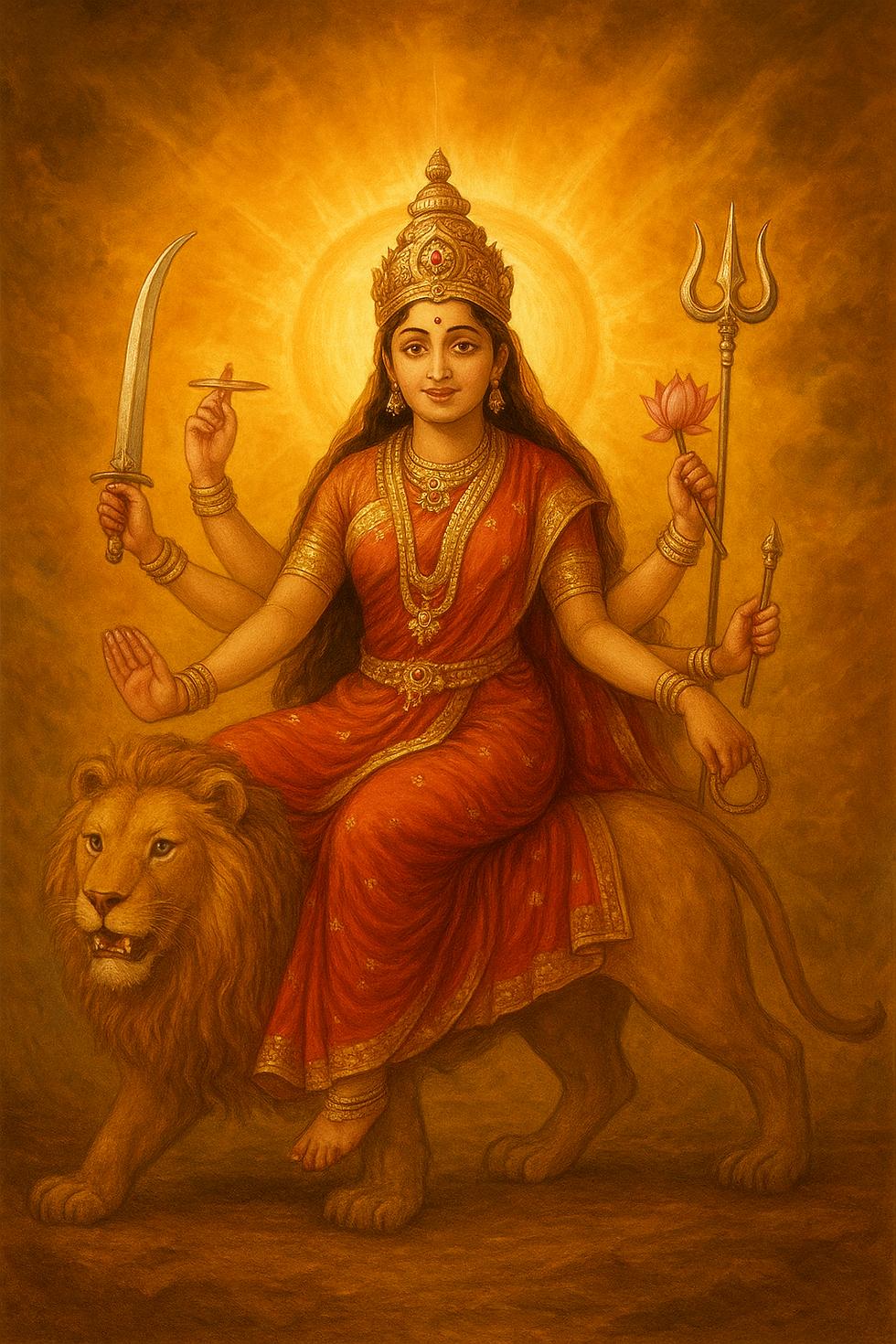 Katyayani is the warrior Goddess who confronts injustice. Her literary counterpart is the woman who refuses to accept the identity others have assigned to her.
Kausalya in Vibha Sangita Krishnakumar’s Kausalya: Queen of Hearts is a natural fit for this archetype. Here, Shakti is visible rather than concealed: a woman who exercises agency, confronts challenges and claims her place in a world that might not readily grant it to her.
In Nazia Kamali's The Woman Who Disappeared, Sheryl Andrews vanishes without a trace, unsettling the carefully constructed world around her. Raised in a Cairo orphanage and subsequently adopted into an influential family, Sheryl's life raises questions about identity, belonging and the stories we tell ourselves about who we are.
Her disappearance is not simply a mystery to be solved. It invites us to consider what may lie beneath a life that appears complete from the outside. What does it mean to belong? What happens when the identity a woman has acquired no longer accounts for the person she is?
The novel also follows Yasmeen, a UNICEF professional in India who has built emotional walls around a carefully controlled life. Her encounter with Fahad Bashar threatens to disturb that equilibrium and bring buried secrets into the open.
Sheryl and Yasmeen approach the question of identity from different directions, but both inhabit the uneasy territory between the lives people see and the truths they conceal.
Katyayani's courage is not necessarily expressed through confrontation. Sometimes, it begins with the refusal to remain imprisoned by an old identity. Sometimes, it means facing the truth that a carefully managed life can no longer contain.
7. Kalaratri — The Woman Who Confronts the Darkness
Literary trope: The avenger, survivor and disruptor
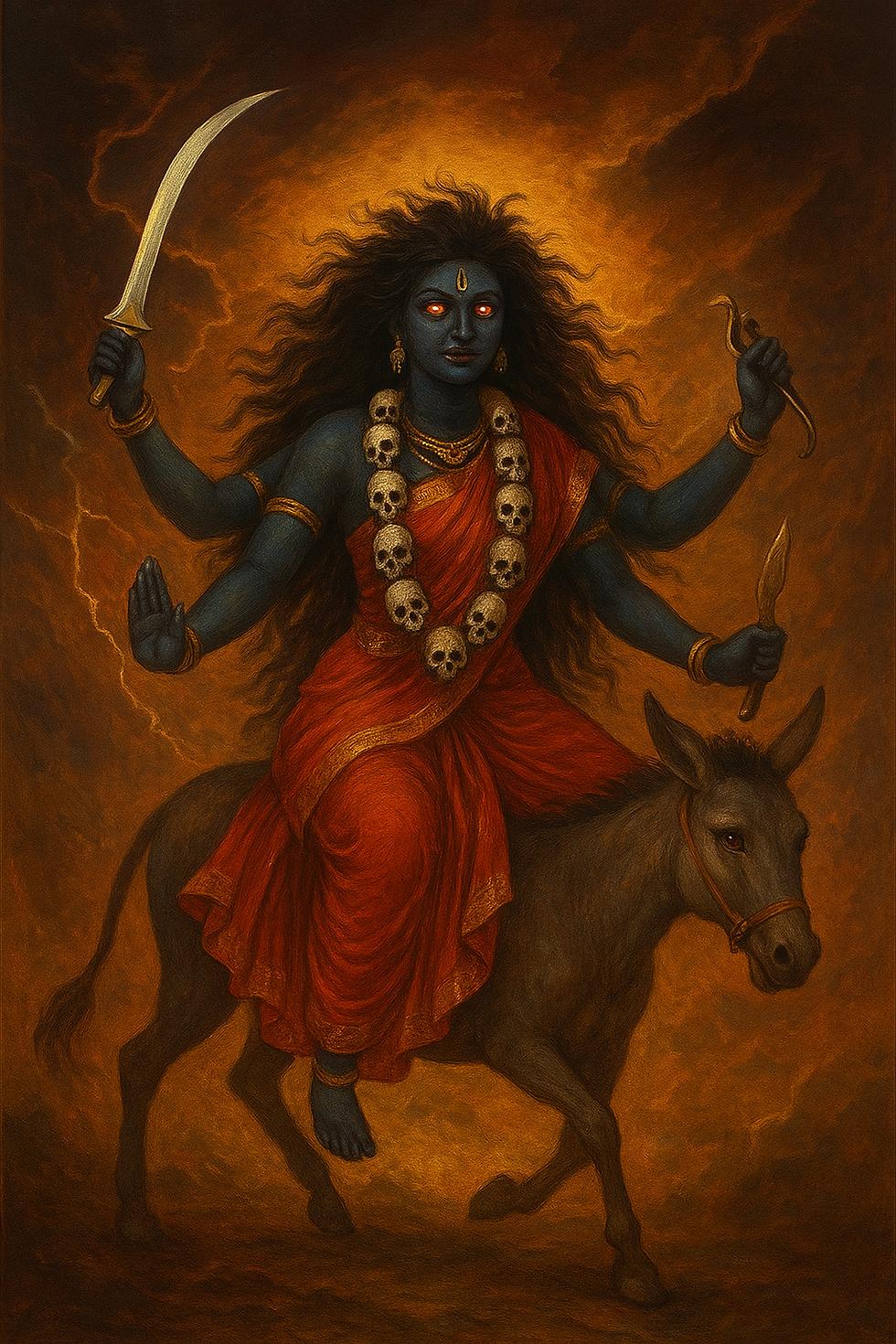 Kalaratri is fierce because some darkness cannot be overcome by gentleness alone. She confronts what threatens life and justice, even when the confrontation is uncomfortable.
Monica Singh's Pronounced Guilty takes us into the difficult territory of guilt, punishment and the possibility of a second chance. Through its engagement with ex-convicts, a lawyer and a psychologist, the novel invites readers to look beyond the labels society attaches to people.
For women caught in the machinery of judgement, the consequences can be especially complicated. They may be judged for their actions, their pasts and even their attempts to rebuild their lives. The question becomes whether a person can ever move beyond the worst thing associated with her name.
The women of Rupande Mehta’s Trihayani—including Draupadi and Vedavati—offer a mythological route into questions of injustice, suffering, agency and the consequences of women's mistreatment. Their stories help explore the woman who refuses to let pain or injustice have the final word.
Kalaratri offers a powerful lens through which to examine that question. She does not ask us to deny wrongdoing or pretend that darkness does not exist. Instead, she asks us to confront it honestly.
Ankita Srivastava's No Woman's Land is a story of grit, blood, sweat, courage, and perseverance. This extremely motivational memoir recounts Army veteran Lt Col Ankita Srivastava’s journey from a patriarchal background to being one of the first lady officers of the Indian Army. It shows the precarious spaces in which women may find themselves—between homes, identities, expectations or claims to belonging and emerge as fighters, women who save the nation.
The woman who confronts darkness is not necessarily the woman who has never been wounded. She may be the one who refuses to let her wounds become the final definition of her life.
8. Mahagauri — The Woman Who Reclaims Her Peace
Literary trope: The survivor who chooses healing
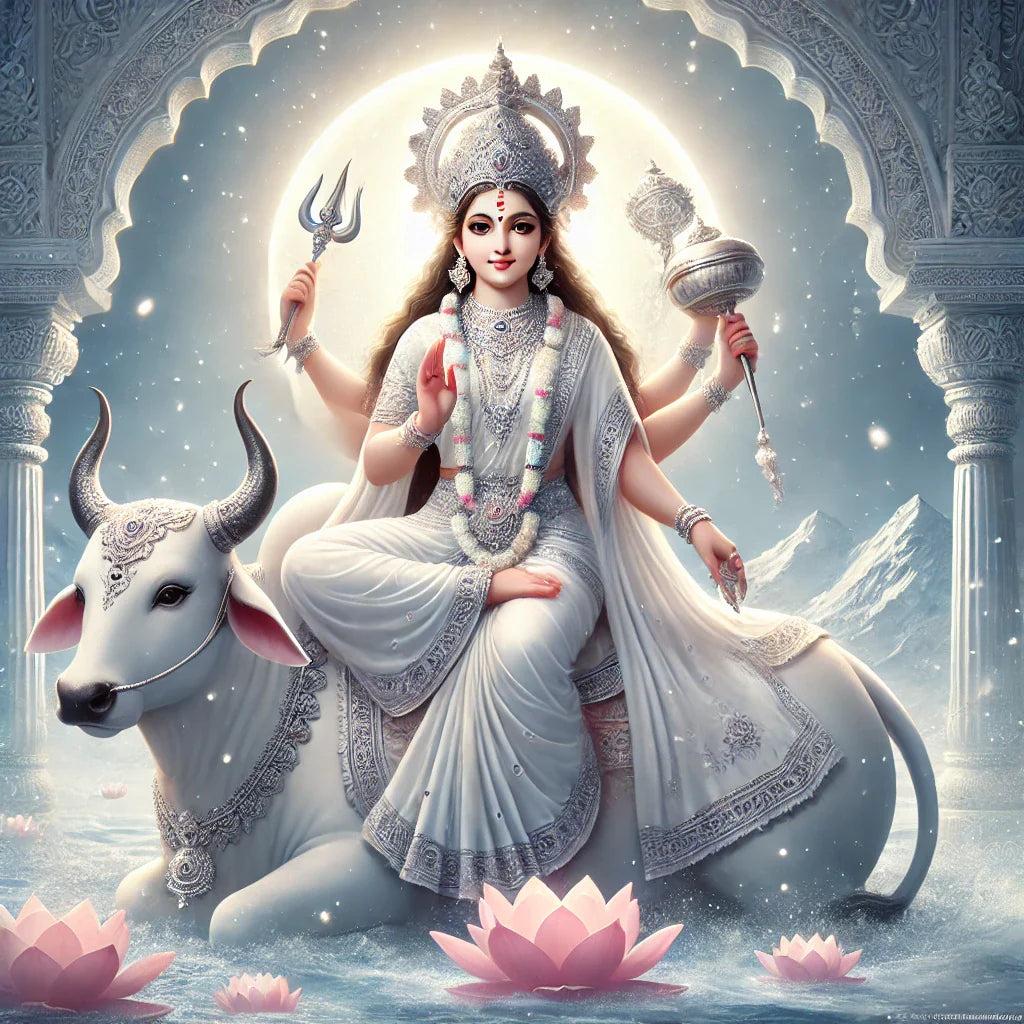 Mahagauri represents serenity, renewal and the possibility of peace after hardship. In literature, this form of Shakti belongs to the woman who must find a way to live with her past without allowing it to consume her future.
Shalini Mullick's The Way Home offers an evocative starting point. The idea of home carries a significance that extends far beyond a physical address. Home may be a memory, a relationship, a lost sense of self or the possibility of belonging somewhere without having to explain oneself.
In Kalimpong, the experiences of Pema, Dama and Yangzom make this longing particularly poignant. Displacement can take away the familiar landmarks through which people understand their lives. Yet the need for connection survives. A reunion, an embrace or the presence of someone who remembers us can restore something that geography alone cannot provide.
The women of The River That Remembers by Mona Verma offer another dimension of this archetype. Against the backdrop of Partition, the novel explores the ways historical upheaval enters intimate lives and leaves its mark on memory, family and belonging. For women who must rebuild their lives in the aftermath of displacement, healing is neither simple nor complete. It is an act of endurance.
Mahagauri reminds us that peace does not mean forgetting. It means finding the strength to carry memory without surrendering the possibility of a future.
9. Siddhidatri — The Woman Who Claims Her Own Power
Literary trope: The woman who becomes the author of her destiny
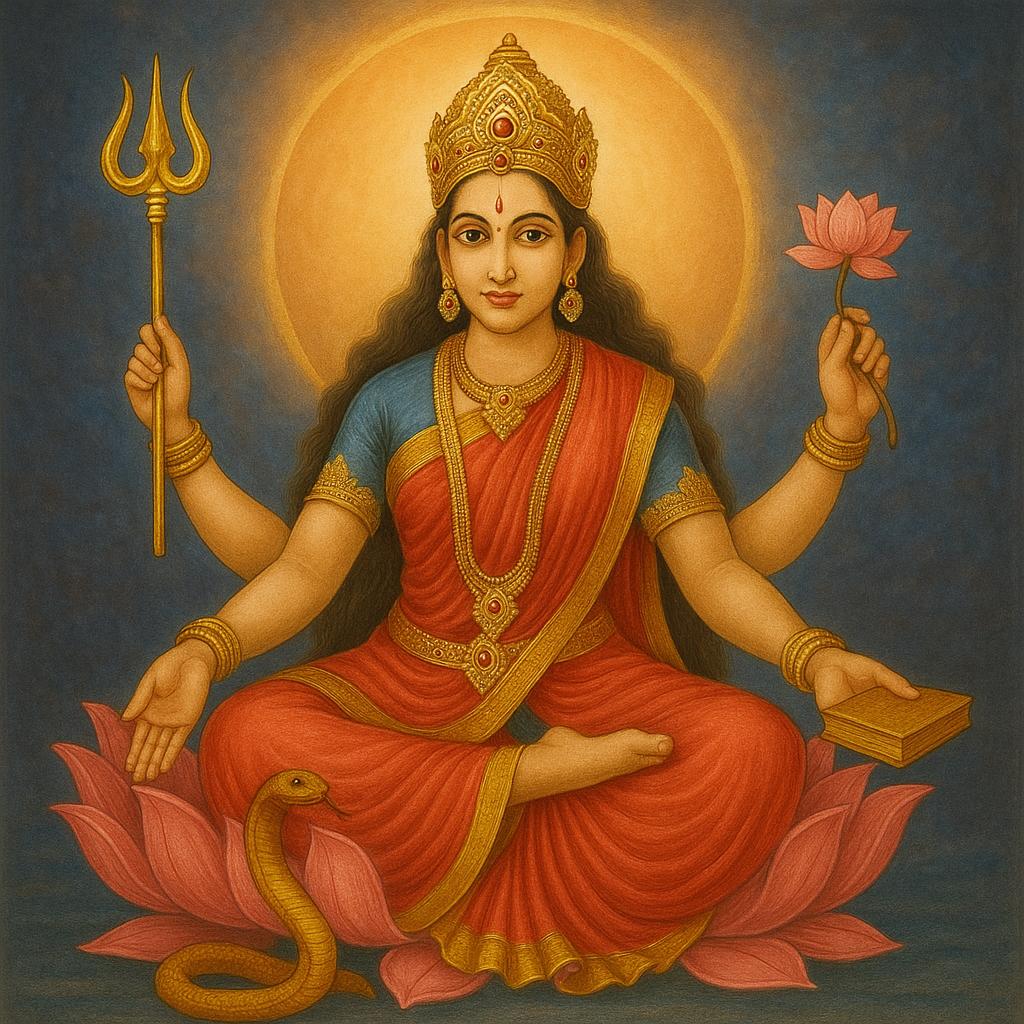 Siddhidatri represents wisdom, fulfilment and the power that comes from understanding oneself. Her literary counterpart is the woman who recognises that she is more than the sum of her circumstances, relationships and inherited expectations.
In The Problem with Perfect Lives, Mahek's story invites us to question the assumptions through which happiness is measured. In The Woman Who Disappeared, Sheryl and Yasmeen challenge the idea that a person's outward identity tells us everything we need to know. And in All That She Left Behind, Sanya must decide what to do with the truths she uncovers about Saudamini.
These women remind us that self-knowledge is rarely a comfortable achievement. It may require revisiting painful memories, questioning people we love or acknowledging that the lives we have built no longer reflect who we are.
Monisha Raman's Highlands of Yore, which follows generations of women in the mythical mountain district of Betta, offers a broader perspective on female agency and inheritance. Its women are connected to land, knowledge, community and the preservation of traditions. Their stories invite us to consider how a woman can honour what she inherits while also contributing something of her own.
Siddhidatri is not the woman who has all the answers. She is the woman who has acquired the wisdom to make her own choices.
And perhaps that is the most liberating form of Shakti: the realisation that a woman's story does not have to end where somebody else's expectations begin.
The Goddess Is Never Just One Woman
As the festivities of Navratri and Durga Puja remind us, Durga is not powerful because she embodies a single quality. She is powerful because she encompasses many: the rootedness of Shailaputri, the perseverance of Brahmacharini, the courage of Chandraghanta, the creativity of Kushmanda, the tenderness of Skandamata, the defiance of Katyayani, the ferocity of Kalaratri, the serenity of Mahagauri and the wisdom of Siddhidatri.
Our literary women are no different.
Not all these women will make the same choices. Not all will emerge unscathed. Not all will find the answers they seek. But that is precisely what makes them human—and what makes their stories worth telling.
At Readomania, we celebrate women who are not confined to one role or one definition of strength. They can be mothers and seekers, protectors and rebels, keepers of memory and makers of change. They can love deeply without surrendering their individuality. They can carry their past without allowing it to dictate every step ahead.
This festive season, as we welcome the Goddess into our homes and pandals, let us also celebrate the Shakti in the women around us: the mother who holds a family together, the daughter who asks a difficult question, the woman who starts over, the survivor who refuses to be reduced to her past, and the individual who dares to choose a different life.
They may not carry a trident. They may not ride a lion. Their battles may be fought in homes, workplaces, relationships and the quiet corners of their own minds.
But their courage is no less real.
Nine forms of the Goddess. Countless forms of strength. And, in every woman, a story that deserves to be heard.

Comments