The Sugar Theory of Writing: Why Every Sentence Needs the Right Balance
Writing a book is often imagined as an act of inspiration. A story arrives, characters begin to speak, the words flow, and eventually you type The End.
Except The End is rarely the end.
It is often where the real work begins.
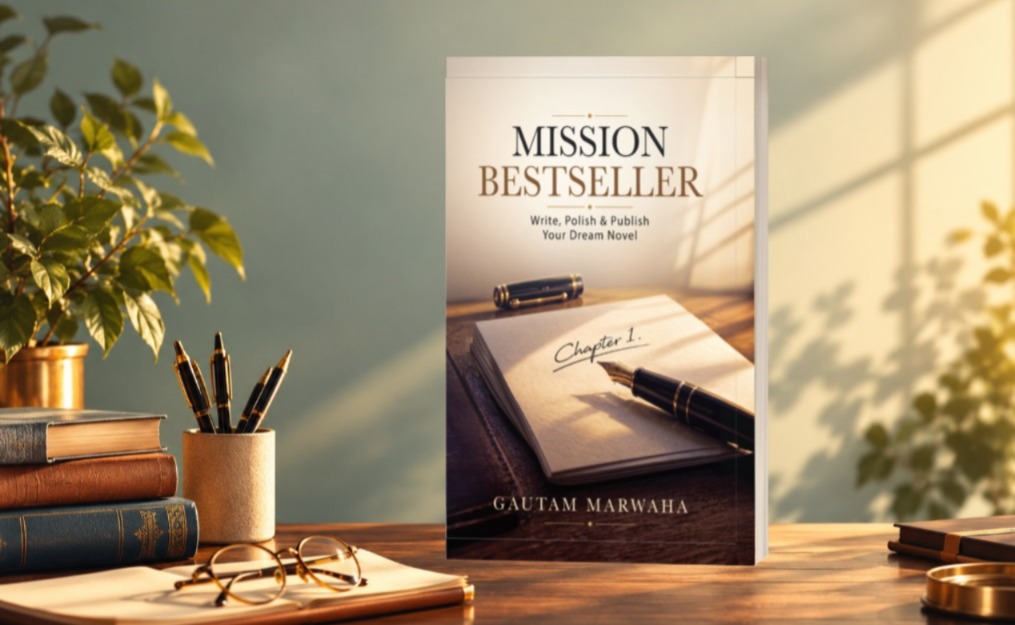
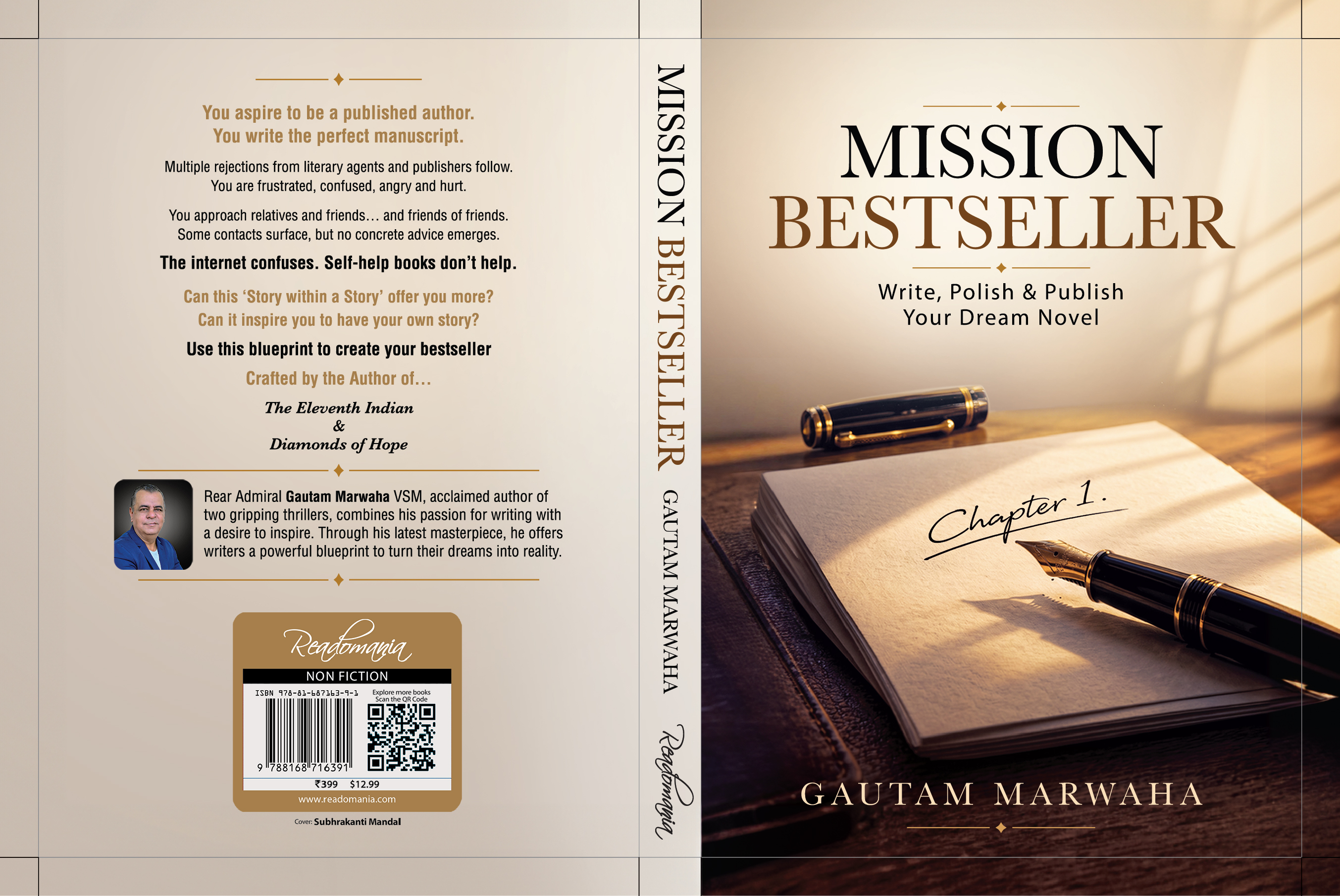
In Mission Bestseller: Write, Polish & Publish Your Dream Novel, Rear Admiral Gautam Marwaha takes readers behind the scenes of his journey as a writer, drawing on his experience of writing and publishing The Eleventh Indian. Among the many lessons in the book is what he calls the “Sugar Theory” of writing—the idea that good prose, much like a cup of tea, needs the right balance.
Too little sugar can make it flat. Too much can make it sickly sweet.
Writing works much the same way.
A sentence can be grammatically correct and still fail. It can contain beautiful words and yet feel artificial. It can be packed with adjectives, descriptions and literary flourishes—and still make the reader want to move on.
The trick is not to make every sentence impressive.
It is to make every sentence work.
When Writers Put Too Much Sugar in the Cup
One of the strengths of Mission Bestseller is Marwaha's willingness to examine his own writing critically. He does not present himself as a writer who got everything right the first time. Instead, he revisits his early drafts, identifies his weaknesses and shows how his writing evolved.
That is an important lesson for every writer.
We become attached to our sentences. We spend hours finding a phrase we love and, because we have worked so hard on it, assume it must be good.
But writing is not judged by how much effort went into creating a sentence.
It is judged by what the sentence does to the reader.
Marwaha discusses some of his own recurring habits—unusual dialogue tags, “sticky” sentences, favourite expressions and a tendency to use ellipses. None of these is necessarily wrong. The problem begins when such devices become repetitive or predictable.
A favourite phrase may work beautifully once. Use it ten times, and the reader begins noticing the writer rather than the story.
A striking dialogue tag may add character to one exchange. Used constantly, it competes with the dialogue itself.
An adjective can sharpen an image. Too many can smother it.
Good writing often lies in knowing when to stop.
The Sentence Should Serve the Story
One of the biggest misconceptions about writing is that better writing means fancier writing.
It doesn't.
Consider:
The man walked into the room.
Now compare it with:
The exhausted, battle-weary, deeply troubled man slowly and cautiously walked into the dimly lit room.
The second sentence looks more ‘written’. But is it better?
Not necessarily.
If the man simply needs to enter the room so that the story can move forward, the first sentence may be exactly right. If his exhaustion or fear is important to the scene, then those details need to earn their place.
This is where the Sugar Theory becomes useful.
Every sentence needs the right amount of flavour for the moment.
Some scenes need simplicity. Others need atmosphere. A thriller may need speed and tension; a reflective passage may need more lyrical prose. The writing must respond to the story—not the other way around.
‘Show, Don't Tell’ Needs Balance Too
Mission Bestseller explores another familiar piece of writing advice: show, don't tell.
Suppose a character is frightened.
You could write:
Rohan was terrified.
Or you could show it:
Rohan's hand remained on the doorknob. He could hear footsteps on the other side.
The second version allows the reader to experience the fear rather than simply being informed about it.
But even ‘show, don't tell’ can be overdone.
If every nervous moment comes with trembling hands, racing hearts, beads of sweat and shallow breaths, the writing quickly becomes heavy.
Sometimes Rohan was terrified is exactly what the story needs.
The lesson is not ‘never tell’. It is choose deliberately.
Show when the moment deserves to be experienced. Tell when information needs to move quickly. Know when a sentence is doing more work than necessary.
That is Sugar Theory in practice.
The First Draft Is Not the Book
Perhaps the most useful lesson for an aspiring writer is that the first version does not have to be the final one.
In Mission Bestseller, Marwaha presents multiple versions of the opening chapter of The Eleventh Indian, allowing readers to see how the same material changes through rewriting.
Revision, therefore, is much more than correcting grammar.
It means asking:
Is this sentence necessary?
Can this paragraph be shorter?
Have I repeated this idea?
Is this the strongest word?
Does this opening make the reader want to continue?
And sometimes the hardest question:
Do I love this sentence more than the story needs it?
That question can save a manuscript.
Writers often resist cutting because every sentence feels like an achievement. But publishing is not a competition to preserve every word.
Sometimes removing words makes the remaining words stronger.
The Editor Takes Away the Extra Sugar
Marwaha's publishing journey also illustrates why writers need editors. During the editorial process for The Eleventh Indian, more than a thousand words were cut from his manuscript.
For a writer, that can hurt.
Those words took time. Some may have contained phrases the writer particularly liked. But an editor brings something the writer often lacks: distance.
An editor can ask:
Does this paragraph repeat what the previous one has already established?
Does this dialogue need the tag?
Can this description be shortened?
Does the story move faster without this section?
Editing is not about making writing less beautiful.
It is about making beauty purposeful.
Sometimes the strongest sentence is the one you are willing to delete.
The Hook Needs the Right Amount of Sugar
The Sugar Theory also applies to the beginning of a book.
In Mission Bestseller, Marwaha discusses the importance of the hook and the challenge of getting literary agents to notice a manuscript. Agents may sift through hundreds of queries, which makes the opening lines especially important.
The same applies to the first page of a novel.
An opening cannot be overloaded with information simply because the author knows the entire backstory. But it cannot be so vague that the reader has nothing to hold on to.
It needs balance.
Enough information to create interest.
Enough mystery to create questions.
Enough clarity to create confidence.
Enough flavour to make the reader want another bite.
The first sentence is not the entire meal.
It is the invitation to stay for it.
Write for the Reader
Writers often write for themselves first. There is nothing wrong with that.
But once a book reaches readers, the writer's knowledge of the story is no longer enough.
The writer knows why a character behaves in a particular way. The reader doesn't.
The writer has lived with the manuscript for months or years. The reader has just met it.
The writer knows what a sentence is supposed to mean. The reader only has the words on the page.
That difference matters.
Mission Bestseller repeatedly advocates an open mind—to learning, revising and accepting that a sentence can be written better. But learning the craft does not mean losing one's individual voice. It means becoming more conscious of the choices being made.
The goal is not to make every writer sound the same.
It is to make every writer more aware of what they are putting on the page.
So, How Much Sugar Is Enough?
There is no formula.
A thriller may need short, sharp sentences. A literary novel may require more lyrical prose. A historical novel may need atmosphere and detail. A memoir may depend on intimacy.
The right amount of sugar changes with the story.
What remains constant is one question:
Is this serving the reader?
If yes, keep it.
If not, cut it, change it or try saying it another way.
Perhaps that is the real lesson behind Marwaha's Sugar Theory.
Good writing is not about adding more. It is about finding the right amount.
The temptation to decorate our writing is understandable. We want our stories to sound important. We want readers to notice our sentences. We want to prove that we can write.
But the strongest writing often disappears into the story.
The reader doesn't stop to admire the sentence.
They simply keep reading.
That is the magic.
Mission Bestseller is ultimately about the journey between having a story and creating a book—a journey of drafts, mistakes, rejections, revisions and learning to look critically at one's own work.
Every writer needs to learn when to add.
Every writer needs to learn when to take away.
Sometimes polishing means replacing ten words with five. Sometimes it means deleting the phrase you loved. Sometimes it means rewriting the same line until it finally says exactly what it needs to say.
Because a book, like a good cup of tea, isn't made better by adding more sugar.
It is made better by getting the balance right.
And when that balance is finally there, the reader doesn't taste the sugar.
They taste the story.
Get your copy of Mission Bestseller here

Comments